- Category
- World of death and ancestors
- Domain
- The dead, ancestors, afterlife, Vėlinės, remembrance
- Source status
- well attested
vėlė, vėlės
What are vėlės in Lithuanian mythology?
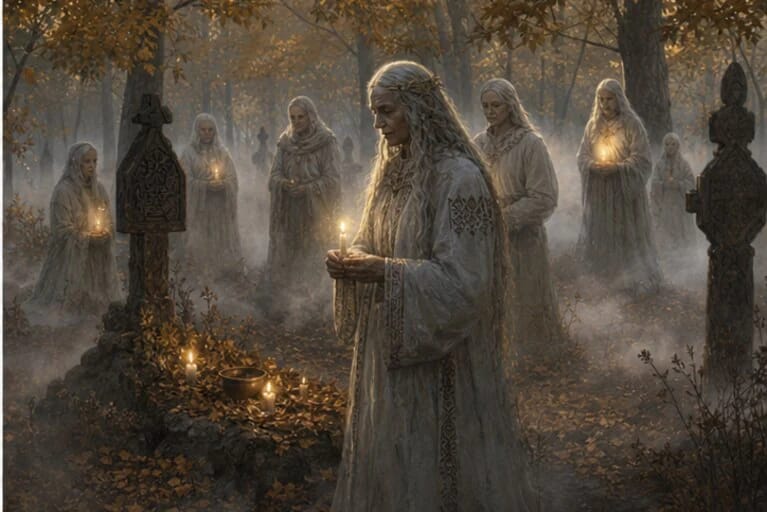
In Lithuanian mythology, a vėlė is the soul or spirit of a dead person, an image of human existence after death. Unlike fairy-tale monsters, vėlės are connected with family, ancestors, remembrance, and the relationship between the living and the dead.
The world of vėlės is not only a realm of fear. In Lithuanian tradition, the dead may be honored, offered food, remembered, and asked for peace or help. Vėlės are therefore one of the most important mythological keys to Vėlinės and the old ancestral cult.
Sources for vėlės and the link with Vėlinės
The Encyclopedia of Lithuania defines vėlė as the soul of a dead person and, in ancient Baltic mythology, the spirit of the dead. The article also links the honoring of vėlės with the autumn feast of Ilgės and the Christianized tradition of Vėlinės.
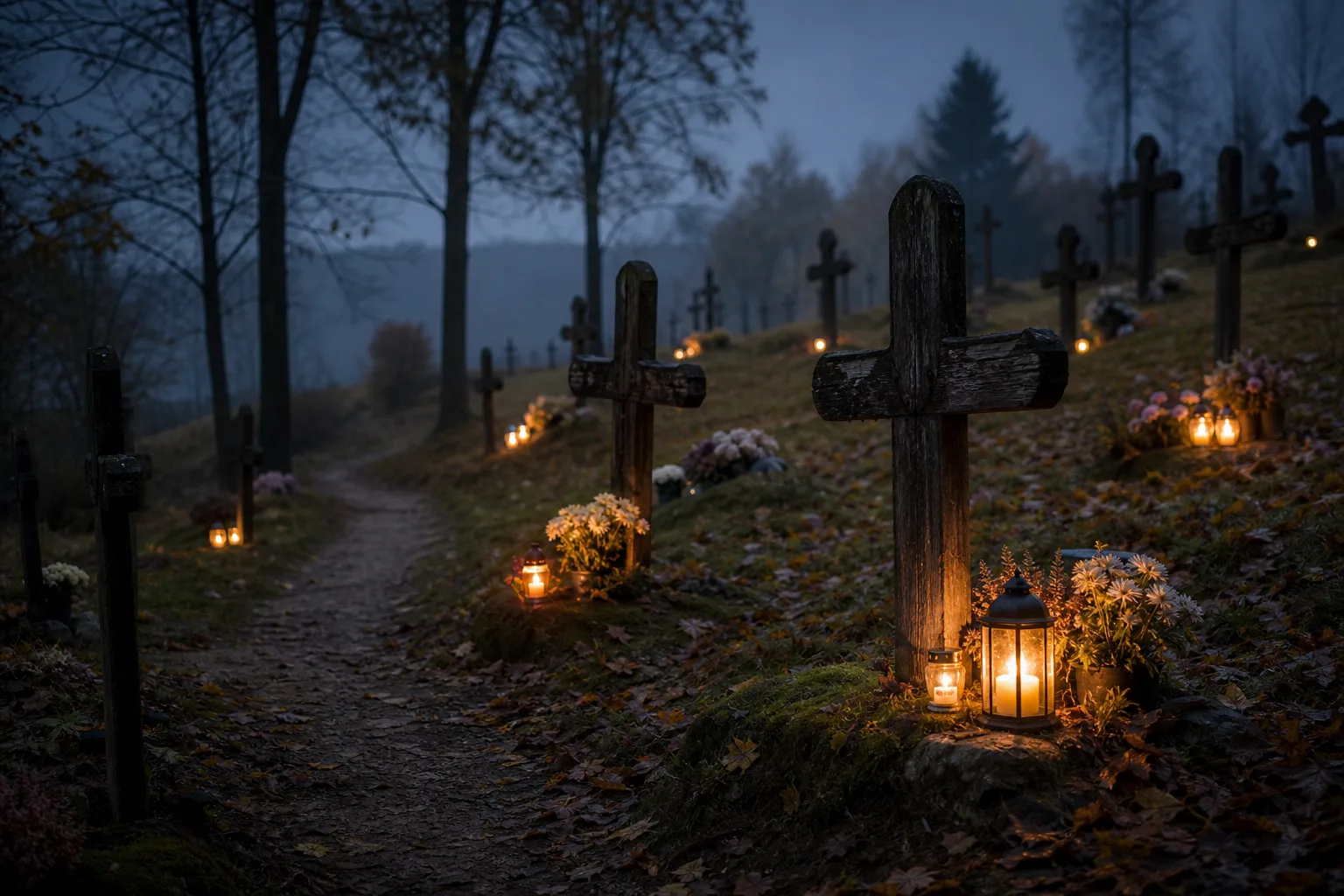
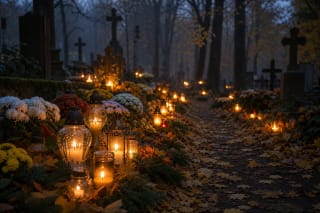
This continuity matters for visitors: Vėlinės is not only modern cemetery visiting. It preserves older motifs of remembrance of the dead, food, fire, graves, and the family's bond with ancestors.
Where do vėlės appear?
Vėlės are associated with cemeteries, homes, thresholds, roads, dreams, autumn time, and special nights. They may be felt as the presence of relatives, as restless spirits, or as signs from the afterlife.
The mythological logic here rests on boundaries: living and dead, home and cemetery, light and darkness, autumn and winter. Vėlės live precisely in this liminal zone.
Vėlės, food, and fire
Food and fire are important images in Lithuanian customs of honoring the dead. Food may be left or offered to the dead, while a candle or flame becomes a sign of remembrance, path, and connection.
This does not mean that every custom connected with vėlės was the same everywhere. Ethnography records that during times of honoring the dead, Ilgės and later Vėlinės, people sometimes left a laid table or food in the house overnight, heated the bathhouse, or left water for returning vėlės to wash. Regions and periods differed, but the central idea remains clear: the dead have not completely disappeared from the memory of the community.
Vėlės and fear
Vėlės may also be frightening, especially if the dead person is considered restless, improperly buried, or lacking due respect. In legends, restless spirits may wander, appear, knock, or remind the living of an unfulfilled duty.
Even so, vėlės are not simply horror figures. They are a form of relationship with the dead: fear, respect, guilt, longing, and remembrance are intertwined here.
Vėlės today
Today the image of vėlės helps explain why cemetery visiting, candles, Vėlinės, and remembrance of the dead have such a strong cultural place in Lithuania. Even in secular settings, these gestures preserve an old logic of boundary and connection.
Beliefs about vėlės, the souls of the dead, connect with Vėlinės, folk songs about death, cemetery customs, and other images of the afterlife, because here mythology directly meets a practice that is still alive.