- Place
- Klaipėda City Municipality
- Region
- Klaipėda
- Type
- public seaside sculptural composition
- Address
- Melnragė, north pier, Vėtros Street, Klaipėda
- Coordinates
- 55.73010, 21.08196
- Visit duration
- 30–60 minutes with a walk along the Melnragė pier
- Best time
- calm daylight weather when the pier is comfortable and safe to return from
“Walking with a Fish”, Melnragė Fisherman and Fish Sculpture
A work on Melnragė’s north pier
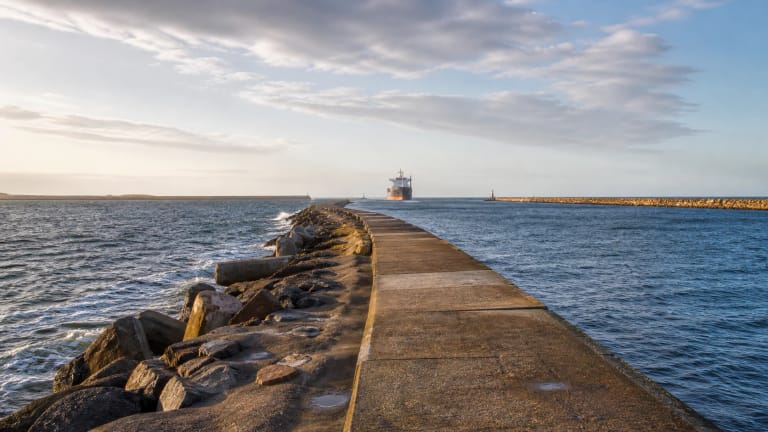
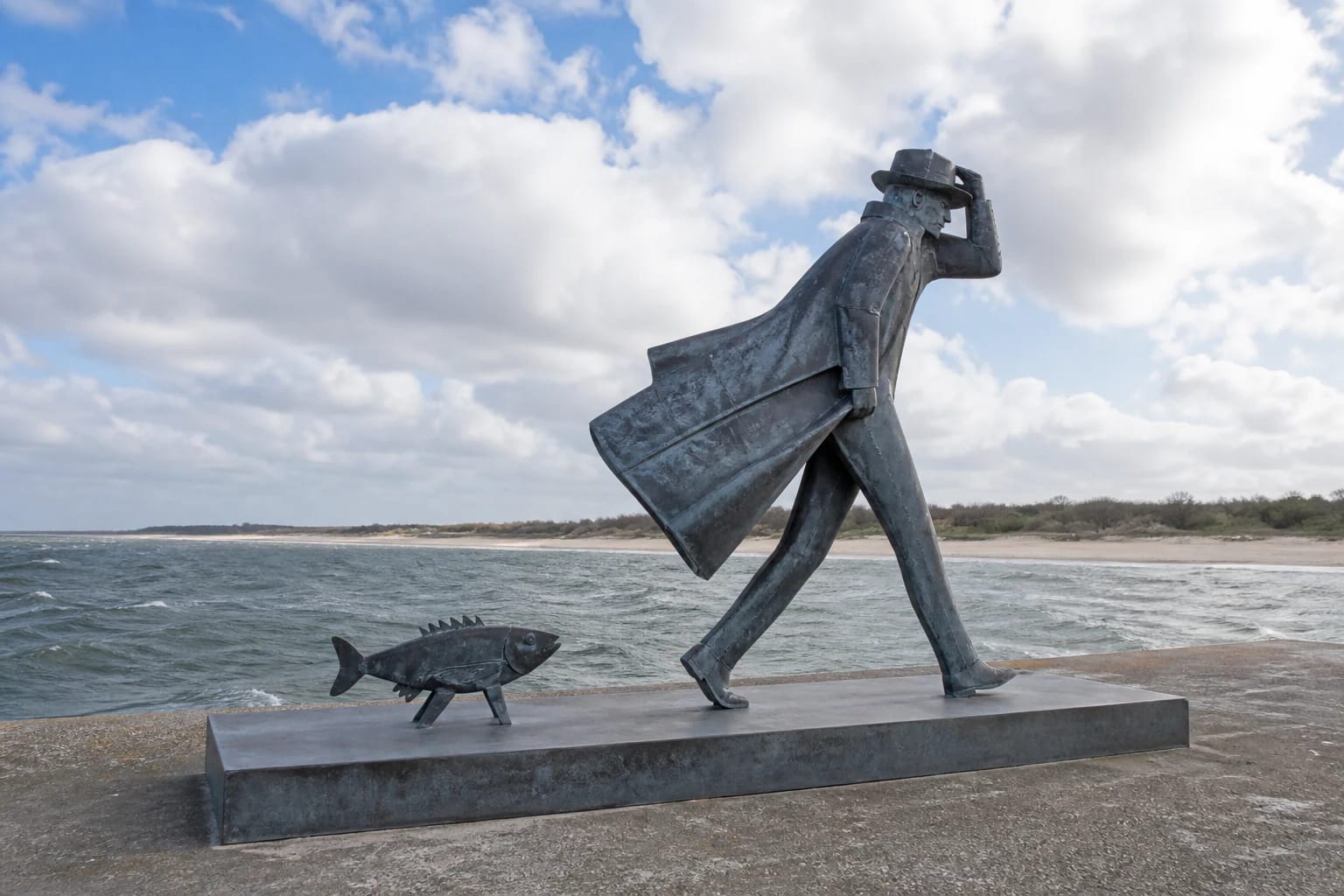
The “Walking with a Fish” Sculpture stands on Klaipėda’s Melnragė north pier beside the Baltic Sea. The official Klaipėda Region Guide records its installation on 18 August 2018, making it a useful stop on a coastal walk, but it should not be confused with the Melnragė piers themselves.
This is outdoor public art whose appearance depends on sky, waves, and wind. The approach follows pier surfacing rather than a museum path, so good footwear and an unhurried pace matter both for photography and for the return from the end.
Two separate figures share one seaside story
The composition includes a more-than-two-metre human silhouette wearing a hat and a coat blown wide by the wind. A smaller fish walks beside it, so the title’s walk is literal: two distinct characters travel the same imagined route by the sea.
The regional guide emphasizes the wind-shaped clothing and the person’s broad stride. From different places along the pier, the gap between the figures, the sea line, and the metal shadow change, making it worth trying more than one viewing angle.
Oxidised steel gives the work its coastal surface
The sculpture uses many four-millimetre galvanised-steel sheets coated with oxide. This is not a polished decorative surface: it absorbs sky, salt air, and changing light, so the metal can appear nearly black or grey-silver at different times of day.
The construction is made for an outdoor setting, but that does not make the plinth a place to touch or climb. Moisture, ice, and sand affect both the pier and the work’s visual presence, so observe it from the route and keep the space around the figures clear.
Makers and an idea of connection with the sea
The listed makers are sculptors Svajūnas Jurkus and Sergejus Plotnikovas, architect Vytautas Paulionis, and blacksmith Gražvydas Černiauskas. The guide names Arijus as the commissioner and links the work to a wish to mark coastal residents’ and visitors’ love of the sea in public space.
The official description interprets the fish as a sign of thought, dream, illusion, and a person’s relationship with sea and nature. That is an interpretive lens rather than a single required answer: visitors may also see an everyday coastal figure moving freely into the wind.
Pier conditions are part of the visit
There is no ticket desk or museum timetable because the sculpture is outdoors in a public seaside space. The north pier is not a neutral plaza, however: strong wind, high waves, ice, wet surfacing, or temporary restrictions can change the safe route.
Before walking onto the pier, check the weather, waves, and local warnings, and keep children on the landward side of the path.