- Place
- Klaipėda City Municipality
- Region
- Klaipėda
- Type
- open-air sculpture display and memory site of the old city cemetery
- Address
- Between K. Donelaičio, Liepų, Trilapio, and S. Daukanto streets, Klaipėda
- Coordinates
- 55.71830, 21.13650
Sculpture Park, Old Klaipėda City Cemetery
A sculpture park that is also a memory site
At first, Klaipėda Sculpture Park looks like a quiet urban park with mature trees, paths, and late modernist sculptures. Its history, however, is much more complex: the History Museum of Lithuania Minor stresses that this is the site of a former city cemetery, where art, nature, and historical memory now meet.
For that reason, the park should be visited respectfully. It is not only a recreational green zone or an open-air sculpture gallery. One territory holds a nineteenth-century city cemetery, memories of war and uprisings, Soviet-period transformation, and a contemporary attempt to return a many-voiced history to the place.
The former city cemetery
The History Museum of Lithuania Minor describes this 10 ha territory as a container of history: an early-nineteenth-century field fortification stood here, the city cemetery operated from 1820 to 1975, and since 1977 the site has been the Sculpture Park.
During the Soviet period, the old cemetery area was reshaped into a park, and many cemetery signs were lost or pushed out of visible space. After independence was restored, several authentic monuments returned to the park, including memorial signs to benefactors Julius Ludwig Wiener, Hermann Gerlach, and Marie Gerlach.
Modernist sculptures
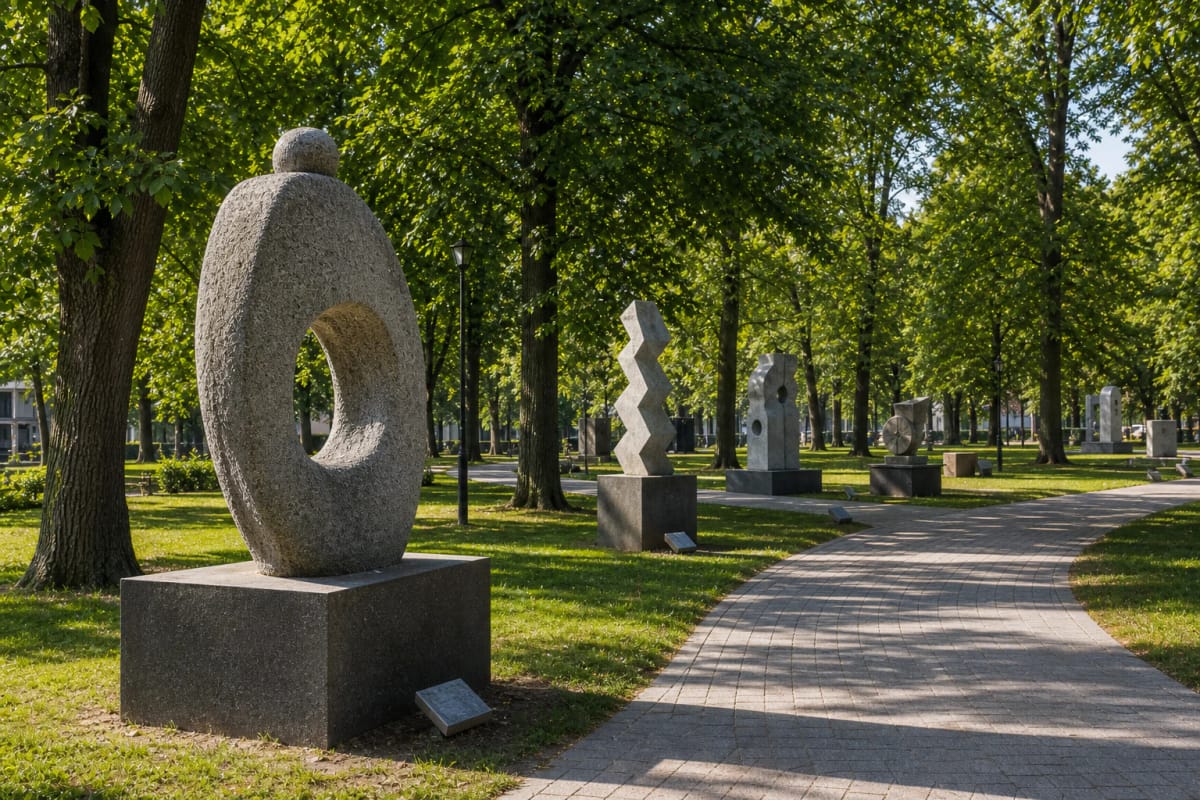
The museum states that the park displays 117 late modernist granite sculptures carved by Lithuanian and foreign sculptors. Earlier park descriptions often mentioned 116 sculptures and 67 authors; newer museum information updates the number to 117 sculptures.
The sculptures are not only decoration. They show the language of Lithuanian sculpture in the second half of the twentieth century: abstracted figures, heavy granite material, rhythm, volume, surface texture, and relationships with tree alleys. It is best to look not only at individual works but also at how they are placed among paths and mature trees.
War memory and Klaipėda Region
The memory layer here is especially dense. The park commemorates French prisoners of war who died after the Franco-Prussian War, German soldiers of the First World War, interwar Lithuanian soldiers, Second World War prisoners, and other burials.
The grave of participants in the 1923 Klaipėda Revolt is also important. In the context of the centenary of Klaipėda Region's attachment to Lithuania, this place became even more visible: the park speaks not only about personal losses but also about changes in political belonging, borders, and memory.
The renewed park
After more than a year of construction work, the renewed Sculpture Park and old historic city cemetery were opened to the public. The project renewed paths, lighting, small architecture, information signs, and memory elements.
The renewal was not only cosmetic. It had to address how to combine a leisure space, sculpture display, and cemetery memory. That is a sensitive question of urban planning, so visitors should read the park as a place of compromises and returning memory.
How to visit Klaipėda Sculpture Park
A simple walk takes about 45 minutes. Enter from the Liepų or K. Donelaičio Street side, follow the main paths, and watch how the sculptures change with light and tree background. If history interests you, allow at least 1.5 hours and look for the memory signs.
The park is always open, but museum-led tours and events depend on the History Museum of Lithuania Minor programme. With a guide, this place is especially interesting because many of its historical layers are not immediately readable at first glance.
What to notice on site
Observe not only the forms of the sculptures but also their material: granite, rough surfaces, the weight of volume, and their relationship with tree trunks. Many works were created for public space, so they change depending on distance and route direction.
The other side of the experience is cemetery memory: memorial signs, monument fragments, memorial objects, and the quietness of the park. This combination is best understood as specific to Klaipėda, a city that repeatedly rewrote its spaces, while parts of old layers still return.