- Place
- Utena, Utena District Municipality
- Region
- Utena District
- Type
- Oval-plan Catholic church built in 2004-2005 with red-clinker façades, a tall bell tower, and contemporary stained glass
- Address
- 78 Aušros Street, Utena
- Coordinates
- 55.50749, 25.59627
- Visit duration
- 20-40 minutes; approximately 1 hour when attending Mass and viewing the stained glass quietly
- Best time
- in daylight outside worship; if seeing the interior matters, plan around the official Mass schedule
Utenos Dievo Apvaizdos bažnyčia, New Church of Utena, Church of Divine Providence in Utena
This is Utena's new parish church, not a replacement for the historic one
The Church of Divine Providence stands at 78 Aušros Street on the edge of the densely populated Aukštakalnis and Dauniškis neighbourhoods. The map point at 55.507489, 25.596266 marks the church site itself. The parish uses number 78, although some online maps label individual buildings in the ensemble 78C; searching for the complete church name is the safest way to navigate.
It is Utena's second Catholic parish church. The Church of the Ascension of Christ by Vytauto Square remains an active historic parish, while the Divine Providence community formed in the city's newer districts after the Soviet period. Locals call this the new church to distinguish the two, not because the older church closed or was replaced.
VLE dates the present building to 2004, reflecting its design and main construction phase. The parish history supplies two later milestones: the state commission accepted the building on 7 January 2005, and the church and altar were consecrated on 19 March. Both years are correct, but they describe different points in the building's completion and liturgical life.
The present church is a second design, following an unfinished pyramid-shaped project
The Catholic community of Aukštakalnis and Dauniškis was registered on 20 March 1990 at the initiative of priest Sigitas Sudentas. A temporary pyramid-shaped chapel was blessed that September. A parish house followed in 1993, and its hall accommodated worship until 13 March 2005, giving the community a settled liturgical space before the church opened.
Architects V. Treinys and J. Šipalis designed the first large pyramid-shaped church complex. Its cornerstone was blessed on 24 October 1992, but construction stopped when funds ran short. That unfinished scheme was later abandoned, so the oval church standing here today should not be described as the completed version of the pyramid project.
Bishop Jonas Kauneckas established the independent Parish of Divine Providence by decree on 16 May 2003. Architects Ričardas Krištapavičius and Mindaugas Jamantas prepared a new, more economical design. The cornerstone of the present building was blessed on 27 June 2004, and on the Feast of Saint Joseph, 19 March 2005, the bishop consecrated both church and altar.
A 44-metre bell tower and white cross rise above the oval red-brick volume
The single-nave church has an oval plan, red-clinker walls, and a low curved roof that emphasises its broad horizontal mass. Tall glazing, pale columns, and a gallery establish the rhythm of the entrance front. Above it rises a slender rectangular bell tower; tower and cross reach 44 metres, making the church legible above the surrounding apartment blocks.
The parish compares the church's form to a ship, while architectural interpretations connect the oval and triangular-plan tower with the Eye of Providence. These are readings of the design's symbolism rather than a literal outline visible from every angle. The composition is easiest to understand after stepping back across the churchyard rather than standing immediately beside the doors.
The interior covers approximately 600 sq m and seats more than 500 people. Four bells blessed on 19 September 2004 bear the names Jesus, Mary, Joseph, and Gerhard. Canon Gerhard Lange and supporters in Germany donated them; automatic controls operate the peal, making the tower a functioning part of parish worship rather than a purely architectural marker.
Kazys Morkūnas's glass shapes the entire interior, where contemporary art meets an older Marian sculpture
Professor Kazys Morkūnas, one of Lithuania's leading stained-glass artists, created the interior's defining work. Above the altar, his spatial composition joins the Eye of Providence to a figure of Christ approximately four metres high, while angels occupy the presbytery windows. Coloured light is not merely a backdrop here: as the sun moves, it changes the atmosphere of the white columns and exposed red-brick surfaces.
Morkūnas also designed stained-glass Stations of the Cross, installed in phases after the church opened. Utena sculptor Valentinas Šimonėlis designed and made the altar and ambo with local craftspeople. A mid-nineteenth-century Virgin and Child in the presbytery brings an older layer of sacred art into this deliberately contemporary setting.
The church has a three-manual, sixty-stop Johannus Gloria electronic organ. It is not a pipe organ, despite a console and stop count that can suggest a traditional instrument. During consecration, relics of Saints Francis and Clare and stone fragments associated with Saint Peter's tomb were placed in the altar, joining the modern artistic programme to Catholic liturgical tradition.
Mass times are the most reliable access guide because no separate tourist hours are published
On 19 July 2026, the parish listed Sunday Mass at 09:00, 11:00, and 18:00, and Saturday Mass at 10:00, 12:00, and 18:00. Services run at 08:00 and 18:00 from Tuesday to Friday, with only an 18:00 Mass on Monday. Feasts, funerals, and seasonal arrangements can alter the timetable, so check the official parish page before making a special journey.
The parish publishes neither guaranteed daily tourist opening hours nor an admission ticket. This is an active place of worship: visitors arriving during Mass may participate quietly but should not tour the presbytery or photograph the rite without permission. For an unhurried look at the stained glass, contact the parish or arrive near a service and wait until the liturgy has ended.
The titular Feast of Divine Providence is celebrated on the final Sunday in August. Saint Joseph's feast is transferred to the Sunday closest to 19 March. The church can be full on those dates and sightseeing is secondary, but a respectful visitor encounters the living community and the significance of the date chosen for the 2005 consecration.
Allow 20-40 minutes for a short visit, and confirm access needs in advance
Begin outside on the more open side facing the curved entrance, then circle the oval volume and compare its low roof with the vertical bell tower. Morning and late-afternoon side light picks out the rhythm of the clinker masonry, while the direction of the sun changes the stained glass inside. Respect privacy before photographing worshippers or any ceremony in progress.
Hard surfaces lead across the church grounds, but official sources provide no complete description of a step-free route, accessible toilet, or reserved visitor parking. Contact the parish in advance about a wheelchair, companion, or other assistance. Park only in legal public or marked spaces, and do not assume that an adjacent commercial car park is guaranteed church parking.
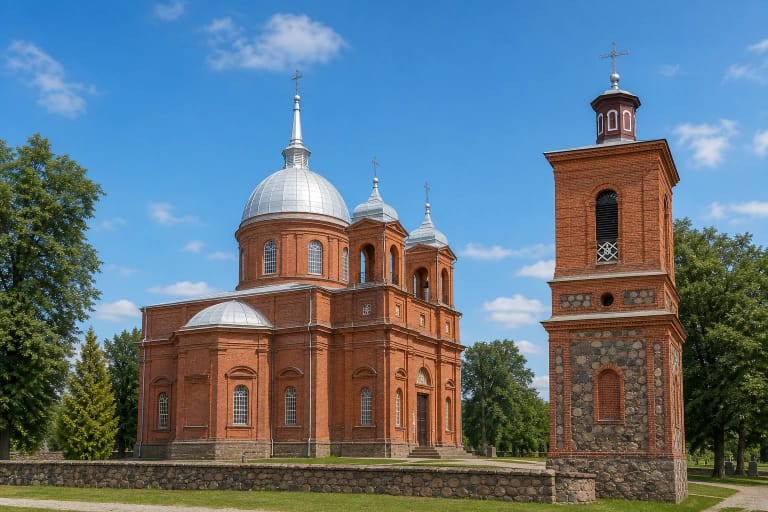
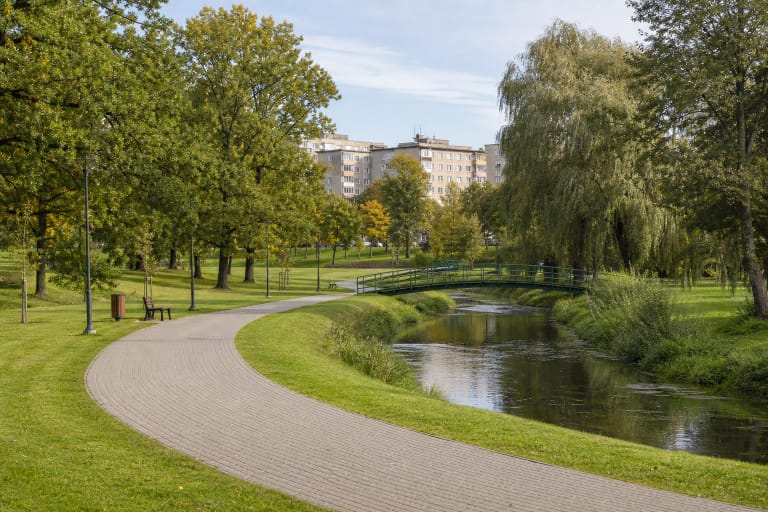
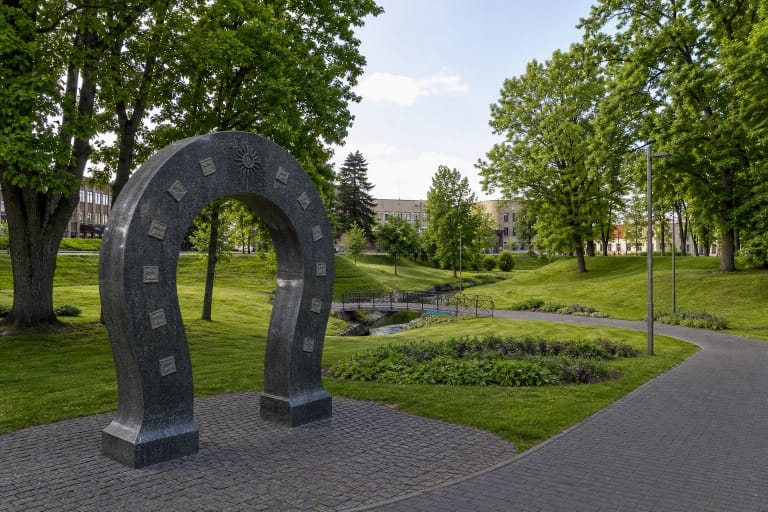
After a 20-40 minute visit, Dauniškis Park is an easy continuation. Travelling onward to the Church of the Ascension of Christ then places the nineteenth-century domed Historicist church beside its oval twenty-first-century counterpart, revealing more than either building in isolation. Utena Regional Museum adds the wider story of the town's growth.