- Place
- Šilutė District Municipality
- Region
- Lithuania Minor
- Type
- historic arched railway bridge
- Address
- Šilutė, beside the railway line in the eastern part of town
- Coordinates
- 55.34079, 21.49289
- Visit duration
- 15-25 minutes from public approaches
- Best time
- daylight and dry weather
Fieldstone masonry and brick arches
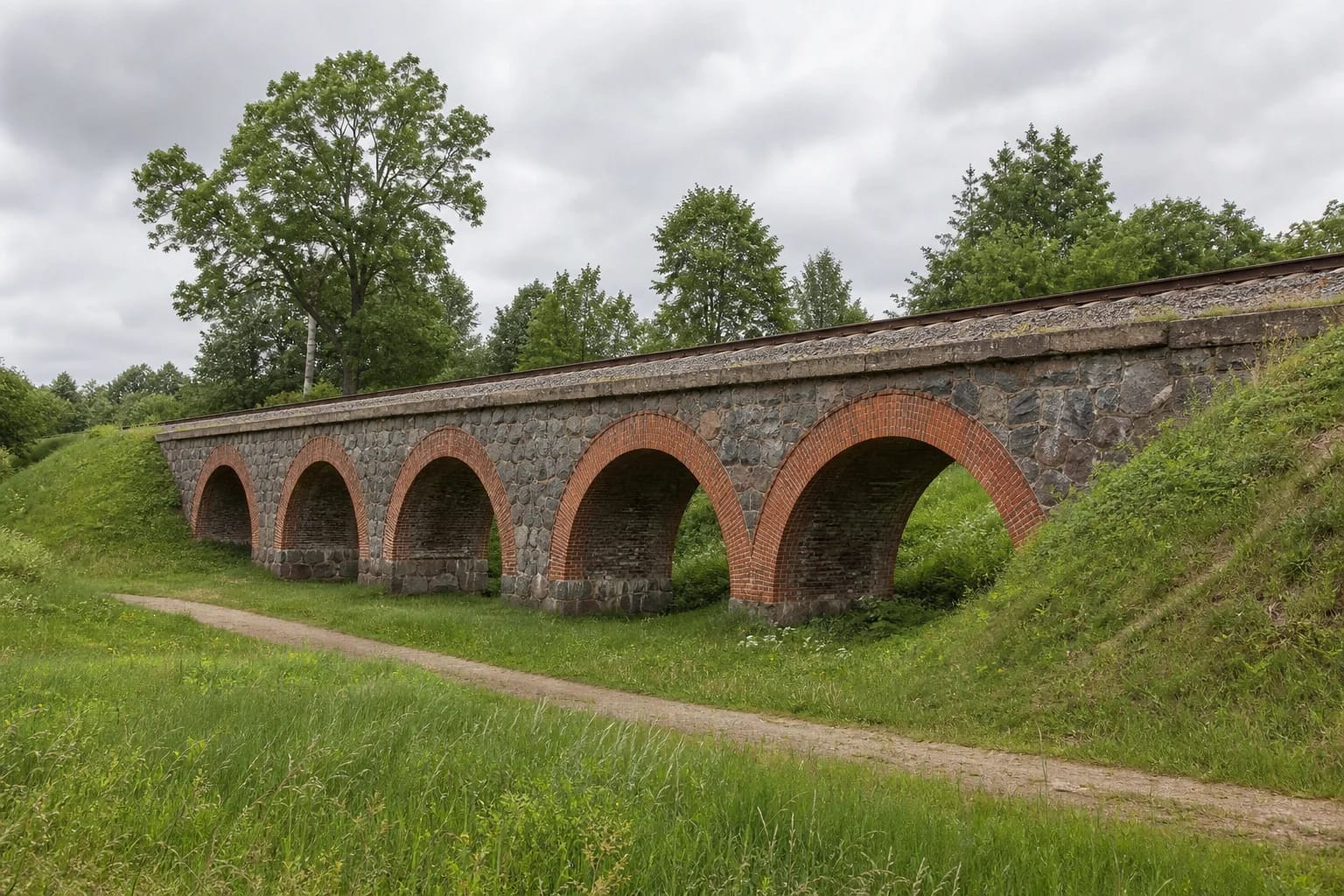
Five arches give the bridge its rhythm, with red-brick rings interrupting darker fieldstone masonry. Krašto gidas gives a length of 82.5 metres and width of 8.25 metres. The structure merges into the embankment and is best understood from a public approach below and to one side.
The bridge carries the Klaipėda-Pagėgiai railway across the Šyša. Municipal heritage records identify it as a state-protected property with Cultural Heritage Register code 4838.
From 1875 to a bridge-within-a-bridge reconstruction
Šilutė District Municipality dates the railway station and bridge to 1875. The railway transformed the town's connections and technical landscape, while the bridge linked the station district with the southern part of Šilutė.
A major 2010-2011 reconstruction retained the historic exterior. Krašto gidas describes a bridge-within-a-bridge solution: new load-bearing structures were installed inside the old masonry, while stones were numbered and returned to recorded positions.
This intervention explains why visitors still see a historic fieldstone-and-brick facade even though modern engineering now carries railway loads.
Reading the railway landscape
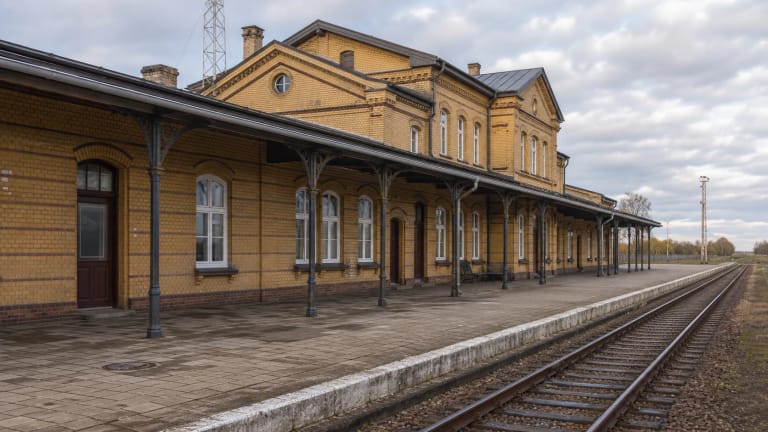
Combine the bridge with nearby Šilutė Railway Station. Together they show that a railway required not only a passenger building but embankments, culverts, bridges and other technical works.
The stone texture and brick arch rings are the best photographic details. Slopes can be slippery after rain, while summer vegetation may hide part of the structure.
Legal and safe approaches only
The coordinates mark the bridge itself, not parking. Leave vehicles only where signs permit and approach by a public path without damaging slopes.
Never climb onto the embankment, tracks or bridge deck, and never pass barriers. Trains can be quiet and fast, so view only from below or beside the bridge at a safe distance.