- Place
- Rusnė, Šilutė District Municipality
- Region
- Nemunas Delta Regional Park
- Type
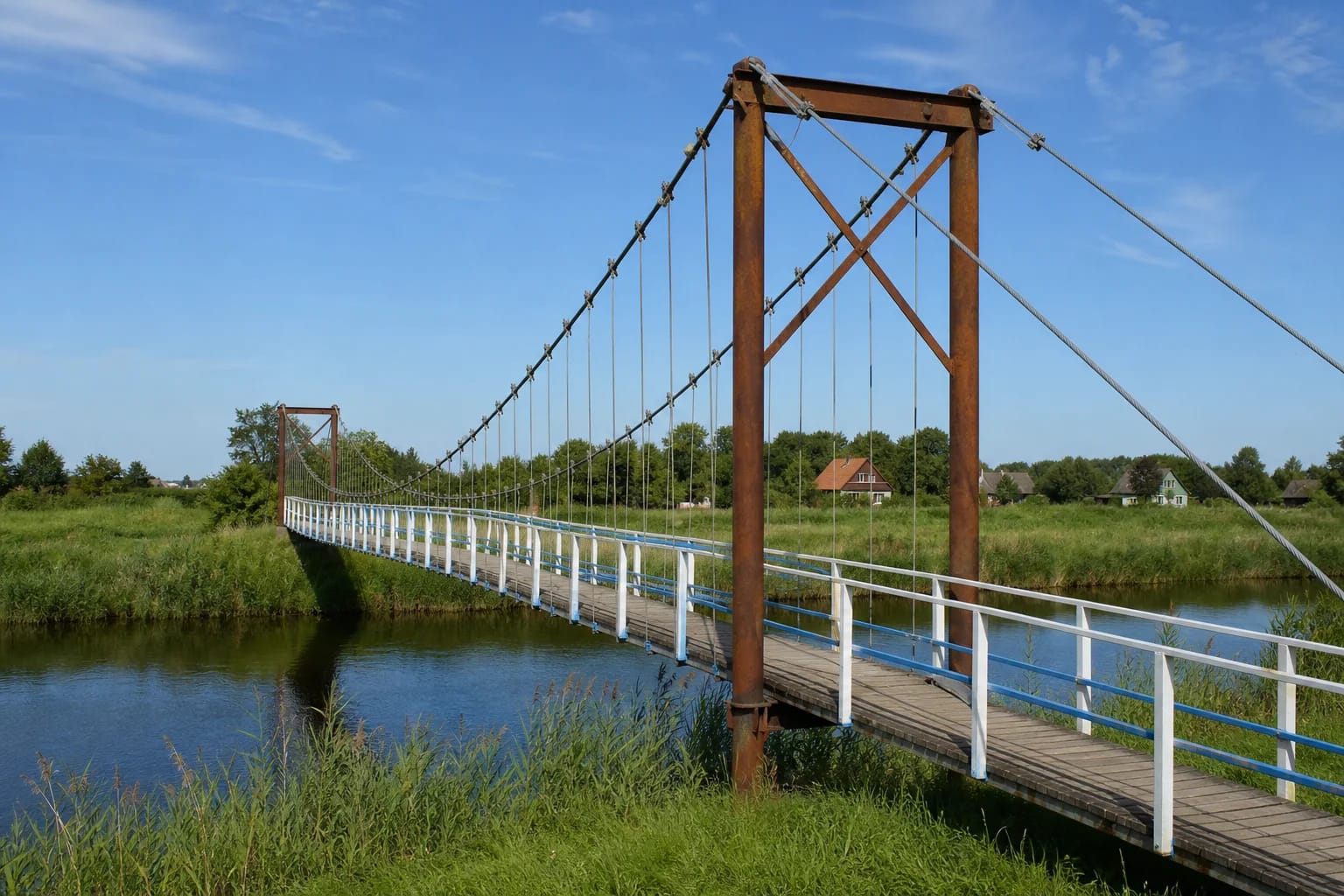
- pedestrian suspension bridge over the Pakalnė River
- Address
- Pakalnė River waterfront, Rusnė, Šilutė District Municipality
- Coordinates
- 55.29665, 21.35756
- Visit duration
- 15-30 minutes; 1-2 hours with the Pakalnė waterfront route
- Best time
- daylight in calm weather; do not cross if barriers are in place or water is high
Rusnė suspension bridge over the Pakalnė, Monkey Bridge
A footbridge over the Pakalnė
The Universal Lithuanian Encyclopedia directly calls the suspension footbridge in Rusnė Monkey Bridge. The official Saugoma.lt page for the regional park separately identifies a rest place beside the suspension bridge over the Pakalnė.
The coordinates 55.2966467, 21.3575597 identify the bridge itself, not a confirmed car park or a particular route start. Approach on foot and leave vehicles only where parking is lawful.
Not the Atmata road bridge
Monkey Bridge crosses the Pakalnė and is described by the encyclopedia as a pedestrian bridge. It is not the principal road bridge over the Atmata used by cars entering Rusnė Island, nor is it the Rusnė causeway.
A 2025 excursion published by the protected-areas directorate was to cross a Pakalnė bridge, visit Skirvytėlė village, and return towards central Rusnė over the suspension bridge. This was a particular event route, not a promise of permanent access.
The Nemunas Delta landscape
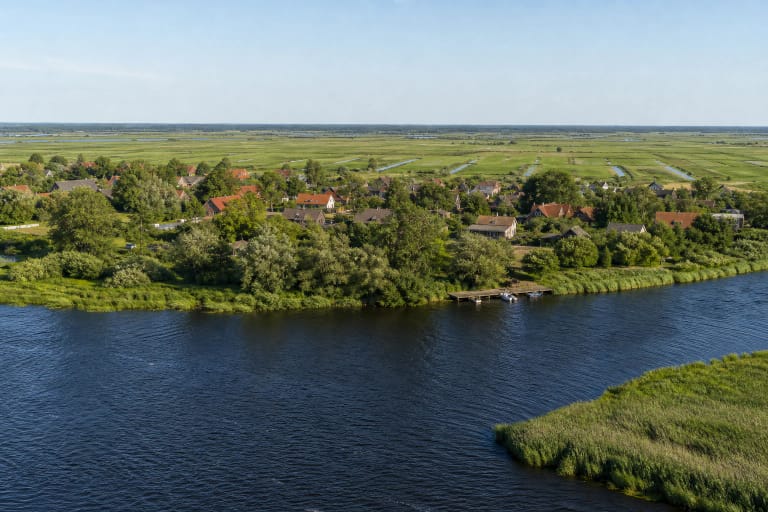
The State Service for Protected Areas includes the Pakalnė in the system of channels protected by Nemunas Delta Regional Park. The park also protects Rusnė Island's landscape, flood meadows, the old part of the town, and polder engineering heritage.
The encyclopedia describes the Pakalnė as a right branch of the Skirvytė in the Nemunas Delta and mentions a 3.5 km circular nature trail in its lower course. Combine the bridge with a waterfront walk only according to signs on site.
Present condition and safety
The reviewed institutional sources confirm the bridge's location and its inclusion in an earlier route, but provide no live technical-condition or access status. Floods, strong winds, damage, or repairs may temporarily affect the crossing.
Do not cross or bypass barriers if the bridge is closed, damaged, or water is high. When it is open, cross calmly, follow posted load limits, and never run or deliberately swing the structure.