- Place
- Šilutė District Municipality
- Region
- Pamarys
- Type
- private ethnographic fisherman's homestead museum
- Address
- Skirvytėlės g. 8, Rusnė, Šilutės r.
- Coordinates
- 55.29380, 21.36210
Ethnographic fisherman's homestead museum, Kazimieras Banys fisherman's homestead
K. Banys Fisherman's Homestead: an authentic Pamarys corner
K. Banys Ethnographic Fisherman's Homestead stands in Rusnė, on an island surrounded by rivers in the Nemunas Delta. It is a more than 200-year-old Pamarys homestead where the life of a typical fishing farmer has been reconstructed; in the delta, people were both fishermen and meadow farmers.
The homestead has three traditional buildings: a dwelling house, a granary, and a cowshed with a barn. They display old objects no longer in use, helping visitors imagine life in a region flooded each spring.
Kazimieras Banys, the founder
The museum was founded in 1997 by Kazimieras Banys (1927-2015), an agronomist and doctor of agricultural sciences, long-time employee of the Rusnė fishery, and local-history researcher. For his service to culture and the region he received state and district awards.
The homestead had previously belonged to Marta Druskutė, a solitary Rusnė resident, who left it by will to the Banys family that cared for her and to theatre scholar Petras Bielskis. Lithuanian and foreign nature-conservation funds helped restore the buildings and adapt them for exhibition.
What you can see in the homestead
The buildings hold fishing tools, household utensils, furniture, work implements, and clothing: the things a delta fishing family needed. One building also contains a theatre-props store linked with co-owner and theatre scholar Petras Bielskis.
According to K. Banys, who cared for the homestead, most exhibits came from this very farmstead; others were bought or donated by Rusnė residents and visitors. That makes the place unusually authentic: not assembled from everywhere, but grown out of one home's story.
The context of Rusnė Island
Rusnė is Lithuania's only town situated on a river island and the lowest town in Lithuania. Nearby, by Lake Dumblė, is the lowest point in the country; older sources give 1.3 m, while a more precise 2007 measurement gives about 0.27 m below sea level.
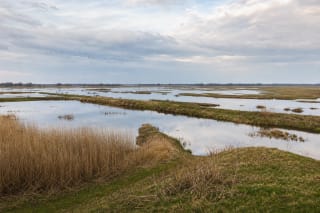
The island lies where the Nemunas splits into the Skirvytė and Atmata branches, forming the delta by the Curonian Lagoon. The right-bank delta is flooded every spring, so all local life, including a fisherman's homestead, was adapted to living with water.
Visiting
The homestead is private, so visits are limited and usually arranged in advance. The most practical way to organize a visit is through the Šilutė Tourist Information Centre or by contacting the caretakers. No exact public opening hours or ticket price is available, so ask before arriving.
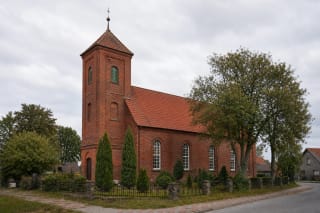
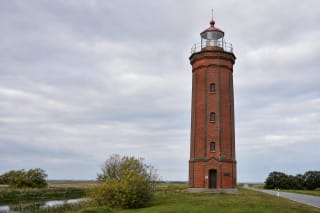
The best time to come is summer or early autumn, after the spring flood has receded and the island is easy to reach. A Rusnė route can be combined with the old church, Uostadvaris Lighthouse, and the Nemunas Delta.