- Place
- Šilutė District Municipality
- Region
- Pamarys
- Type
- historic part of Rusnė and fishing-homestead heritage
- Address
- Skirvytėlės Street, Rusnė, Šilutė District
- Coordinates
- 55.29415, 21.36192
Part of Rusnė known as Skirvytėlė, Skirvytėlė fishing village
Skirvytėlė on the edge of Rusnė
Skirvytėlė is a historic part of Rusnė closely tied to the Skirvytė - described by VLE as the southern (left) distributary of the Nemunas Delta, beginning at Rusnė where the Rusnė branch divides into the Atmata and Skirvytė. The Register lists it as a registered urban part of Rusnė (U47).
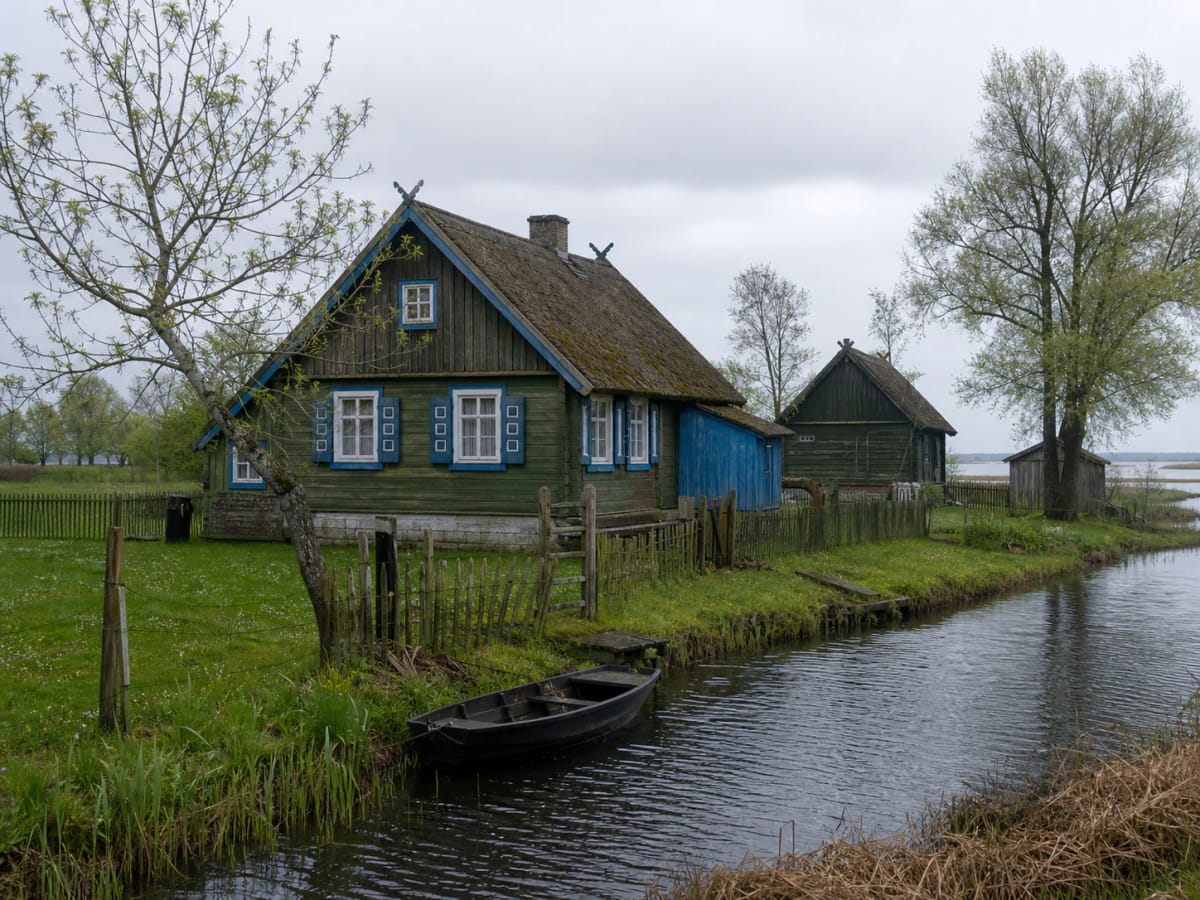
In its Rusnė eldership description, Šilutė District Municipality names Skirvytėlė, Vorusnė, and Pakalnė among especially attractive old fishing villages. That matters for visitors: Skirvytėlė is not only a street name, but part of the wider network of Pamarys fishing settlements.
The Register homestead at Skirvytėlės g. 8
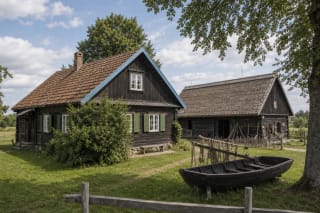
The Cultural Heritage Register protects the Rusnė town ethno-architectural fisherman's homestead (code 31813) at Skirvytėlės g. 8. The complex is registered, of regional significance, entered in the Register in 2008 and dated to the second half of the nineteenth century and the first half of the twentieth. It consists of a dwelling house, a storehouse, and a cattle shed with a barn arranged around a rectangular yard, enclosed by wooden fences with profiled tops and double-leaf gates, with fruit trees planted in the southern part.
This address is today known as the K. Banys ethnographic fisherman's homestead-museum - so at Skirvytėlė you can not only see a typical Pamarys fisherman's homestead from outside, but also understand how fishing, storage, livestock, and everyday work were arranged.
The Skirvytė and the Nemunas Delta
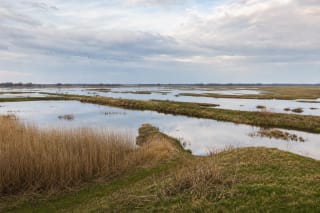
The experience of Skirvytėlė cannot be separated from water. The Skirvytė is a 10.2 km delta distributary along which the border between Lithuania and the Russian Federation (Kaliningrad Oblast) runs; it branches off at Rusnė and flows into the Curonian Lagoon, taking 60-70% of the Rusnė's discharge. Rusnė and Skirvytėlė therefore live among rivers, canals, floods, and the nearby lagoon.
As you walk, pay attention to directions: how streets and homesteads relate to water, how the low delta changes the scale of daily life, and how wooden architecture adapts to a damp landscape shaped by floods. In spring or during flood periods, check the road and water situation before travelling.
How to visit respectfully
The protected object at Skirvytėlės g. 8 works as a homestead-museum, so it is best visited according to the museum's rules. The surrounding Skirvytėlė is still a lived-in or partly lived-in historic environment, so respect private property, avoid intrusive photography into yards, and do not enter homesteads without permission.
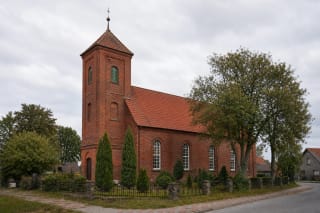
The best approach is a slow walk around Skirvytėlės Street, combined with Rusnė centre, the Evangelical Lutheran church, and Nemunas Delta visitor routes.
Why stop here
Skirvytėlė is a good place to understand that Pamarys heritage is not limited to Ventė Cape or the Rusnė bridge. Here you see the everyday scale of fishing life: small homesteads, wooden buildings, service structures, streets, and the closeness of water.
If you are interested in traditional architecture, compare Skirvytėlė with Mingė village, the fisherman's homestead in Nida, and Curonian Lagoon fishing traditions. Pamarys then becomes a connected landscape of water and work, not only a set of pretty stops.