- Place
- Klaipėda District Municipality
- Region
- Seaside Regional Park
- Type
- strictly protected coastal nature reserve
- Address
- Šaipiai area, Seaside Regional Park, Klaipėda District
- Coordinates
- 55.84000, 21.06600
- Visit duration
- 30-60 minutes from a lawful public edge; a permit is required to enter the reserve
- Best time
- daylight; spring and autumn migration for birds, only from a lawful viewing place
Plocis Nature Reserve, Plazė Reserve
A reserve territory, not a leisure route
Plazė Nature Reserve is a 228-hectare protected area on Lithuania's mainland coast. The official map coordinate marks the reserve's centre, not a car park or the start of a visitor trail.
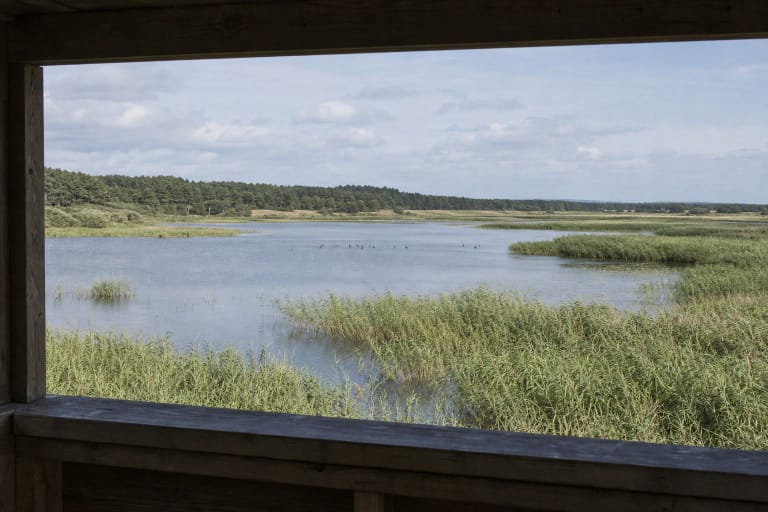
This page describes the reserve territory as a whole rather than only Plazė (Plocis) Lake. The lake and its separate observation place have their own linked page, but that description does not replace the reserve's access regime.
A landscape on Lithuania's mainland Baltic coast
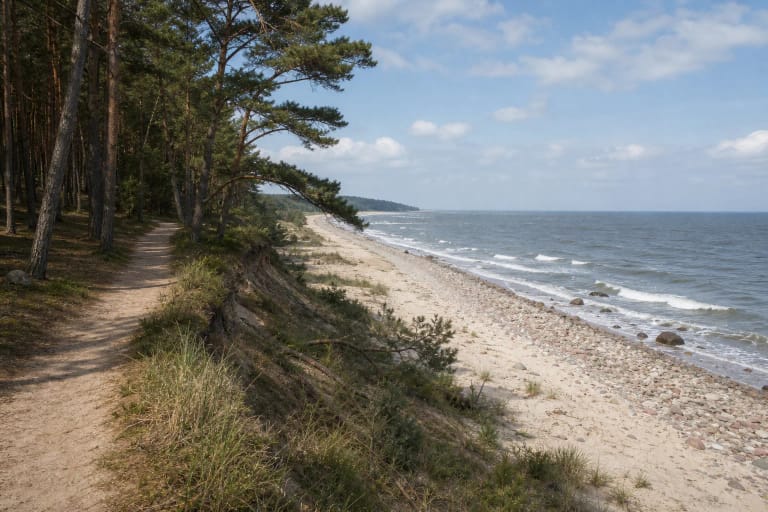
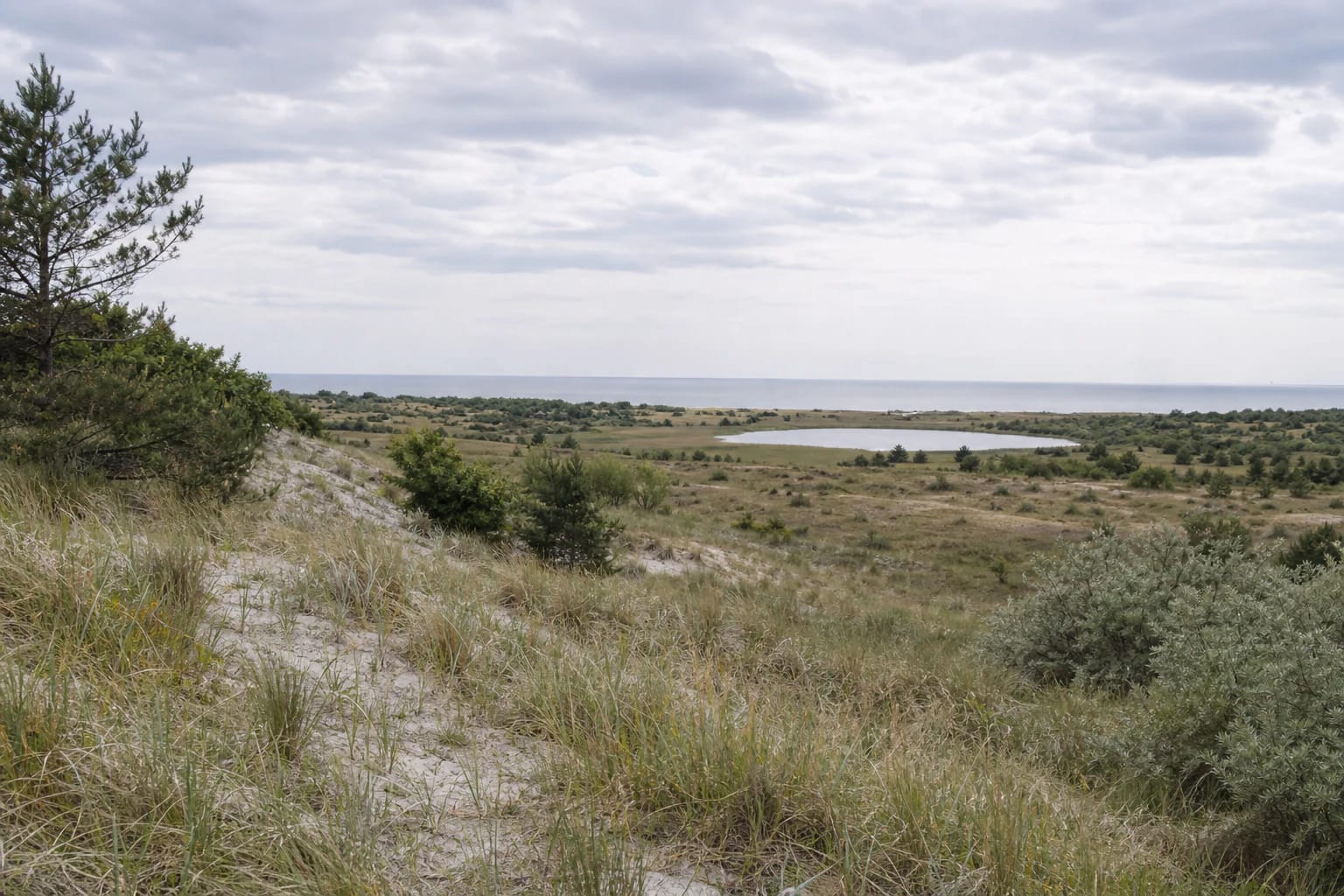
The reserve was established in 1997. It protects a distinctive strip of natural meadows on Lithuania's mainland Baltic coast, the relict Plazė Lake and its surroundings, and the Small Cliff on the coast.
Plazė Reserve is part of Seaside Regional Park. Together with the park's dunes, wet black-alder woods, and natural coastal meadows, it forms a varied landscape complex in a short stretch of coast.
Dunes, sands, and meadows
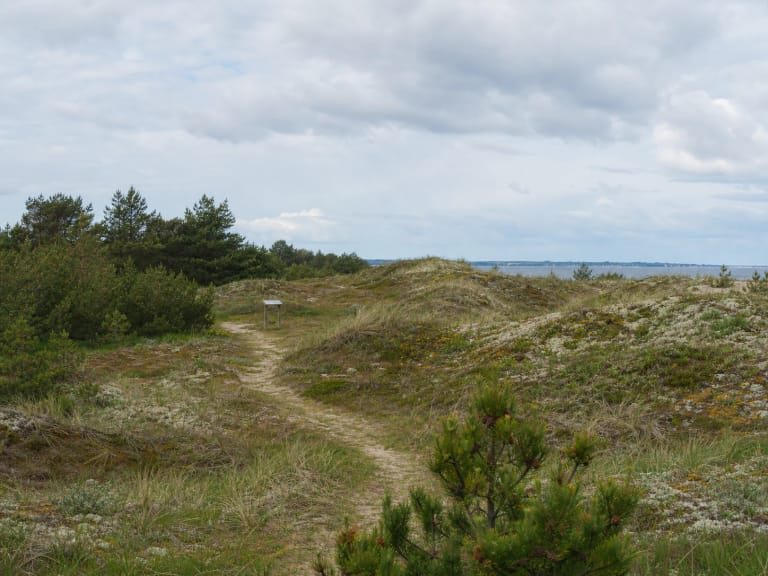
The protected habitats include embryonic shifting dunes, white and grey dunes, dune willow thickets, and wooded coastal dunes. Their character depends on wind, moving sand, and the natural succession of vegetation.
Coastal sandy heaths, steppe meadows, and mown mesic meadows add to the reserve's value. It is therefore not one uniform forest or beach, but a mosaic of vulnerable habitats that depend on one another.
Rare species and quiet observation
The official reserve description highlights the protected plant Linaria loeselii and the tawny pipit, among the Red Book species whose habitats are conserved here. Do not pick plants or disturb animals.
Birds around Plazė Lake and the coast should be watched only from a designated lawful place, without approaching the water or searching for nests. A quiet daytime visit and binoculars are enough; observation should not mean moving through the habitats.
How to behave in a strictly protected area
Visits to a nature reserve are allowed only with a protected-area directorate permit or alongside its specialists, for scientific or educational purposes and on designated routes. Do not plan an independent walk through the reserve interior.
Before travelling, check the current visiting procedure with the directorate responsible for the protected areas. Do not drive off-road, light fires, camp, sail, or swim in reserve waters; at public edges follow signs and leave no litter.