- Place
- Palanga City Municipality
- Region
- Seaside Regional Park
- Type
- botanical educational trail through coastal dunes and dry grassland habitats
- Address
- Nemirseta, Palanga
- Coordinates
- 55.88060, 21.06470
Nemirseta Botanical Trail, Nemirseta Educational Trail
Nemirseta Botanical Educational Trail - a short trail through a fragile seaside landscape
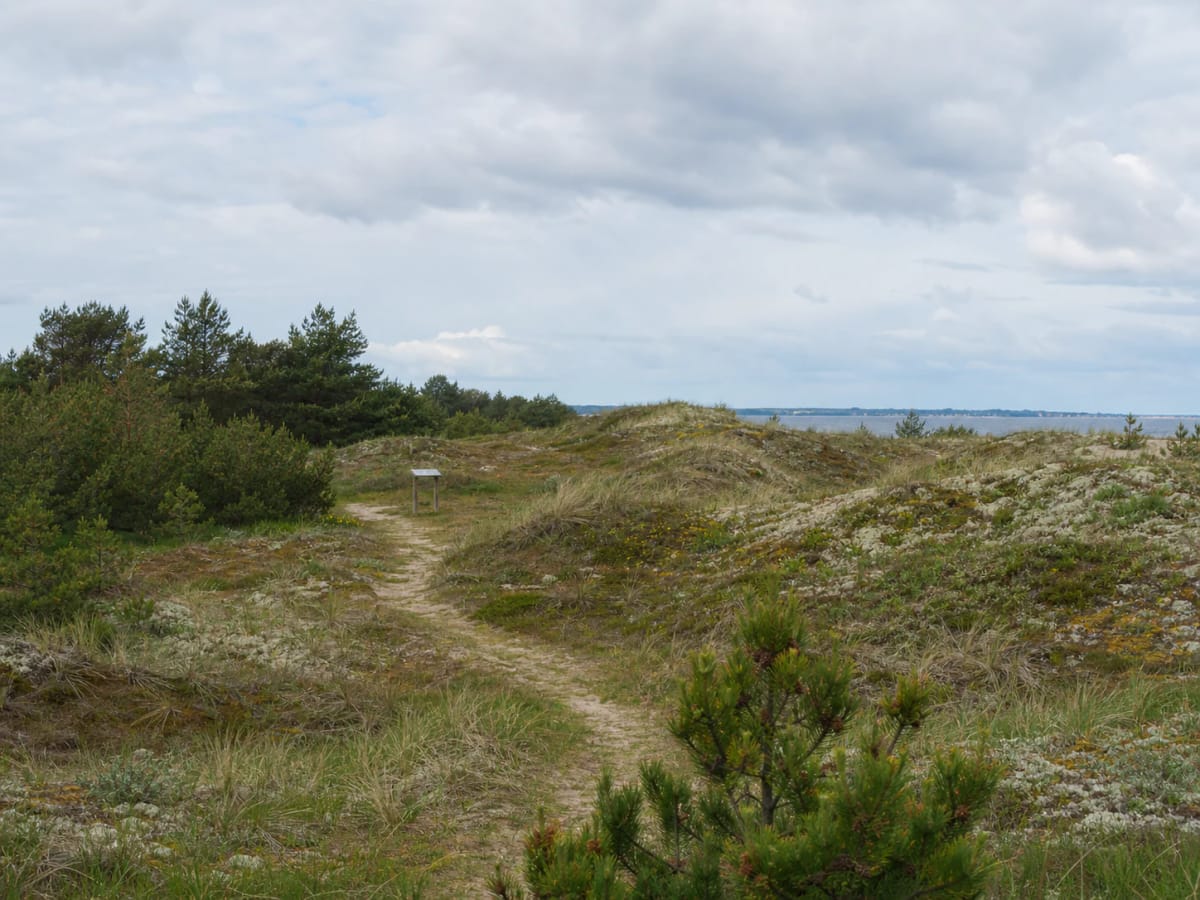
Nemirseta Botanical Educational Trail lies in Seaside Regional Park, in the Nemirseta coastal area between Palanga and Karklė. Saugoma.lt's object description gives it as an approximately 1.5 km scenic foredune trail with information boards about characteristic plants and the insects associated with them, while Seaside Regional Park data records it as a 0.9 km linear trail.
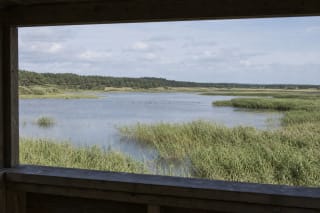
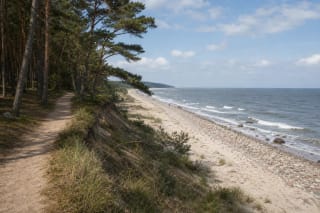
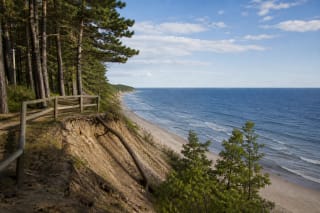
Whichever figure is more exact, this is a short route whose value is not measured in kilometres. Sand patches, dry meadows, low pine forest, dune hummocks, and coastal plant communities change quickly here. It suits slow observation rather than a noisy walk, especially when plants are flowering.
Nemirseta dunes and the Litorina Sea dune ridge
Nemirseta is in Seaside Regional Park - a protected area established in 1992 that runs along the mainland coast between Klaipėda and Palanga and covers 5,865 ha (about 2,735 ha on land and 3,130 ha of the Baltic Sea). The park protects a natural coastal landscape in an active zone of marine processes.
In the park's description, Nemirseta stands out for the dune ridge formed by the Litorina Sea and for a mosaic of dunes, sand, meadows, and woodland. This is one reason the short trail is valuable even so close to resort Palanga - it crosses a living, still-forming coastal relief.
European-priority dune habitats
European-priority habitats are protected here: embryonic shifting dunes, white dunes, grey dunes, wooded coastal dunes, and dry sandy coastal grasslands. Together with reefs, they form the park's most valuable natural complexes.
For an ordinary visitor, that means a delicate landscape where there is no need to leave the marked path. Even light trampling can damage grey-dune and sandy-grassland vegetation, which recovers very slowly.
Rare coastal plants and birds
The trail boards give names of coastal plants and the insects associated with them. In Seaside Regional Park, sand-adapted communities grow along with six species of East Baltic endemic plants, among them the Baltic toadflax (pajūrinė linažolė).
Walk slowly and look closely at low grasses, lichens, sand plants, and pine edges. About 140 bird species have been recorded in the park, more than 60 of them breeding, including the tawny pipit; not everything is easy to identify without a naturalist, but species like these make the trail a living guide to seaside nature.
Nemirseta on the old border of Lesser and Greater Lithuania
Nemirseta (German Nimmersatt) was historically a border settlement: until the early twentieth century the frontier between the Prussian and Russian empires - and thus between Lesser and Greater Lithuania - ran here. The short botanical trail therefore sits in a coastal landscape that is not only natural but also historical.
This background explains why Nemirseta is quieter and different from the resort shore of Palanga. Instead of resort noise, what remains here is the impression of sand, wind, plants, and low seaside relief - a reminder of what the older, less urbanised coast looked like.
Visiting without tickets and what to combine
Nemirseta Botanical Educational Trail is an outdoor nature route, so there are no tickets or opening hours. The visit depends on weather, season, and trail condition: after rain, sandy places can be slippery, and in summer parts of the route can be dry and hot. Plan about 30-45 minutes, wear comfortable shoes, and keep to the marked route.
The short Nemirseta trail pairs well with other Seaside Regional Park places: Plazė Lake, Karklė coast, Olando Kepurė, and the longer 2.8 km Litorina trail along the historic Litorina Sea shore. Together they turn one small stop into a broader route through coastal nature.