- Place
- Plungė District Municipality
- Region
- Samogitia
- Type
- former underground Soviet ballistic missile base and museum
- Address
- Šilinės g. 4, Plokščiai village, Plungė District
- Coordinates
- 56.03039, 21.90623
Cold War Exhibition, Plokštinė missile base, Plokštinė underground missile base, Soviet Plokštinė Missile Base
Cold War Museum in Plokštinė: why this place is powerful
The Cold War Museum in Plokštinė is not a stylised military exhibition. It operates in a real former Soviet underground missile base hidden in the forests of Žemaitija National Park near Plateliai. The park directorate formally calls the venue the Cold War Exhibition, while the museum and Plokštinė Missile Base names are widely used for the same visitor site.
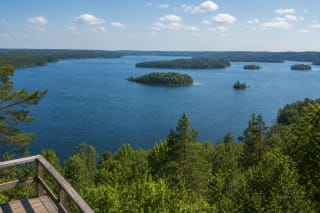
The force of the place comes from contrast: a calm forest, a lake-filled national park, and underground infrastructure where medium-range ballistic missiles were kept. It gives a very direct sense of Cold War logic.
History of Plokštinė Base
Plokštinė underground missile base was built from September 1960 to 31 December 1962 by about 10,000 soldiers, mostly Estonians. VLE states that it was one of the first Soviet underground R-12 missile bases, installed in a secret forest location, and accepted into service on 5 January 1964 after being armed with R-12U missiles.
The base had four reinforced-concrete silo launch installations and four 23 m R-12 Dvina medium-range ballistic missiles, known to NATO as SS-4 Sandal. They carried 1-2.3 Mt thermonuclear warheads, had a range of roughly 2,080 km, and were aimed at Western European cities; targets changed every 3-4 years with the political situation. The silos were about 27-34 m deep and about 5 m in diameter.
The base's end should be stated precisely: VLE says it was closed on 18 June 1978 after United States intelligence identified its location; the main equipment was dismantled in 1981, and the missile division serving the complex was finally redeployed in 1984.
Secrecy and everyday life
During the Soviet period the base operated in a closed territory, and its purpose was not publicly explained. Several rings of security barriers surrounded the launch site, underground corridors connected technical rooms, and a nearby military settlement of about 20 buildings contained barracks, headquarters, dining halls, garages, and warehouses.
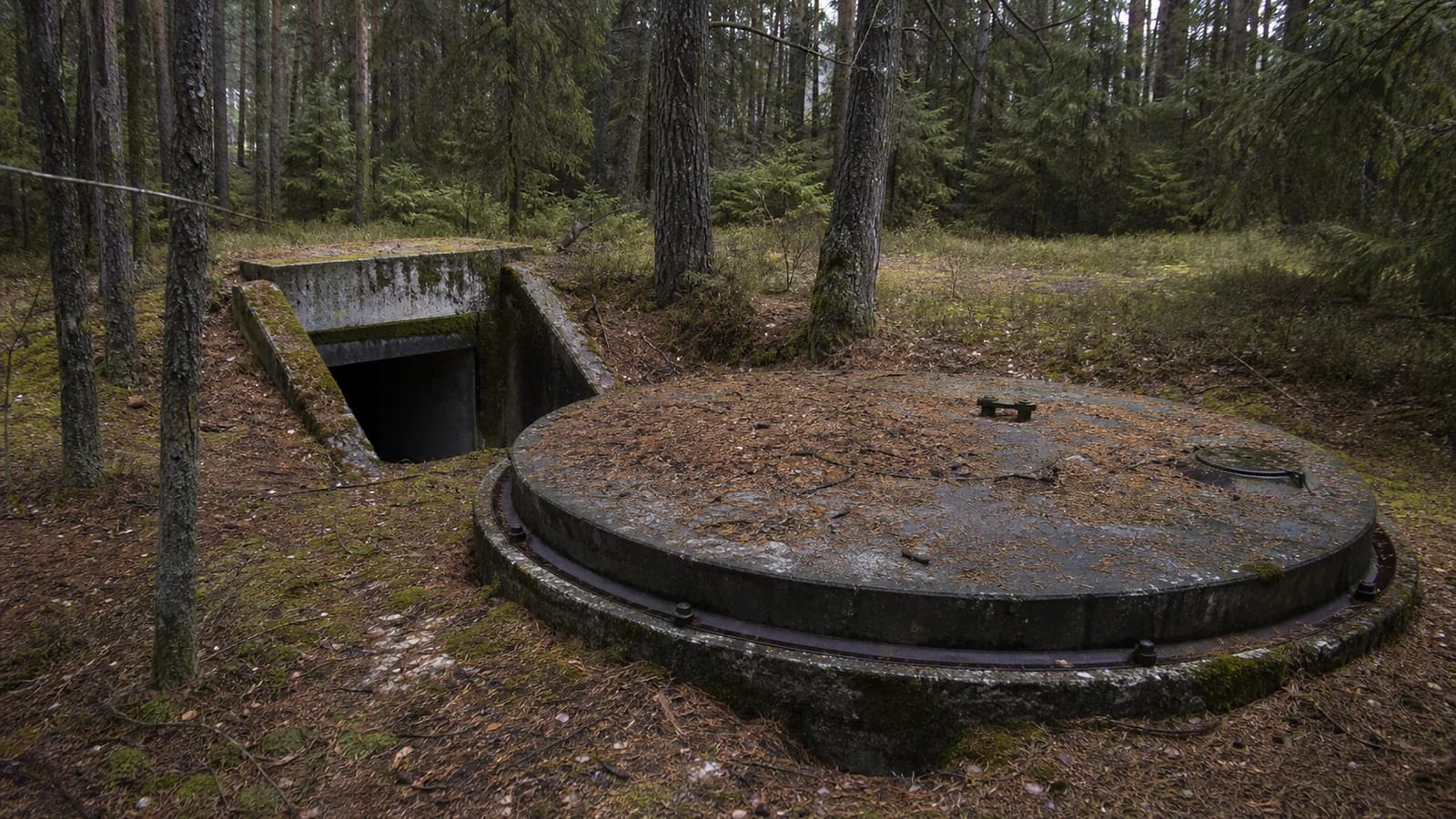
The silo covers were designed to withstand the effects of an atomic blast and could be moved aside on special rails in about 30 minutes before launch. Today visitors see only part of the system, but tunnels, concrete rooms, the silo, and technical spaces clearly show the scale of the former complex.
A museum underground
After Soviet forces left, metal thieves badly damaged the unmaintained base, while a pioneer camp operated for a time in the military settlement's barracks. In 1992 the territory was transferred to the Žemaitija National Park directorate. A small militarism exhibition opened in 1996 and received about 16,000 visitors in 2008.
The current Cold War Museum officially opened at the end of 2012 after reconstruction financed with European Union funds: one silo and part of the underground rooms were adapted for visitors, while the other three damaged silos were conserved. VLE describes it as the only museum of its kind in Europe and one of few in the world. Unadapted parts of the former base are not open for independent exploration.
The Žemaitija National Park directorate says the exhibition attracts more than 38,000 visitors from around the world each year. In this museum, the space matters as much as the exhibits: the underground rooms and silos explain what text alone cannot convey, that nuclear-war infrastructure was concrete, technical, and frighteningly routine.
How to visit the Cold War Museum in Plokštinė
The museum is in Plokščiai village near Lake Plateliai, at the official address Šilinės g. 4. Opening hours, ticket prices, last admission, and tour arrangements can change, so check them on the official Cold War Exhibition page before travelling.
Part of the exhibition is underground, so consider claustrophobia, stairs, dampness, and cooler temperatures. Visiting with children is possible, but topics of nuclear weapons and war should be explained according to their age.
What to notice
Outside, notice how the base is hidden in the forest. Concrete elements, silo covers, and entrances are not decorative; they were functional, built for secrecy and protection.
Inside, look beyond the missile theme to traces of human routine: chains of command, technical rooms, communication systems, and the museum's story of geopolitical fear.
What to see nearby
The Cold War Museum is easiest to combine with Lake Plateliai, Žemaitija National Park viewpoints, Žemaičių Kalvarija, or Orvidai Homestead. Such a route makes clear how many different historical layers fit into Samogitia.
If travelling with family, choose a nature site after the museum so the day is not only a heavy historical experience. Lake Plateliai is the most natural choice.