- Place
- Neringa Municipality
- Region
- Neringa
- Type
- ethnographic fisherman's homestead and Curonian Spit household museum display
- Address
- Naglių g. 4, Nida, Neringa
- Coordinates
- 55.30840, 21.01150
Fisherman's Ethnographic Homestead in Nida, Nida Fisherman's Homestead
A Curonian Spit fisherman's homestead on the lagoon shore
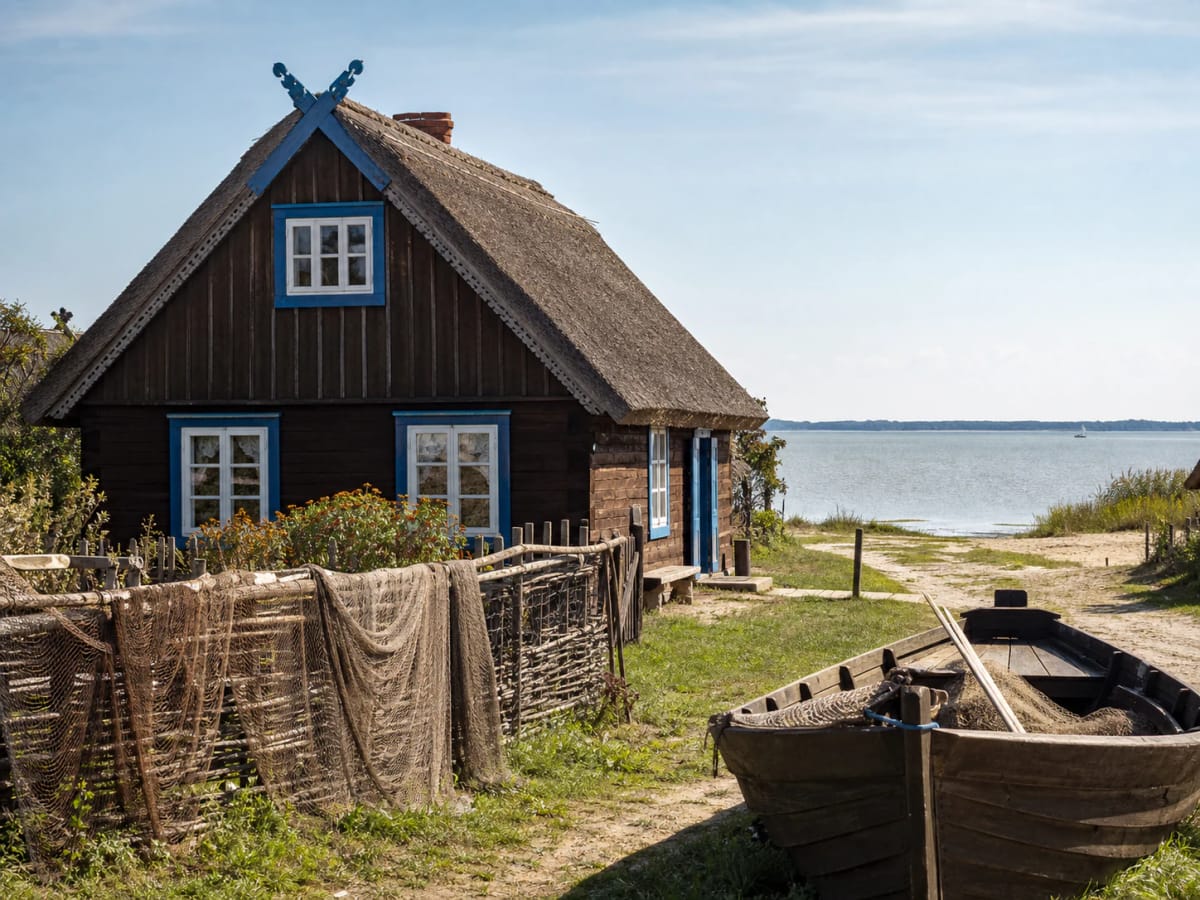
Nida Fisherman's Ethnographic Homestead stands on the shore of the Curonian Lagoon in the southern part of old Nida, in the former village of Haken. Neringa Museums presents it as a typical Curonian Spit fisherman's homestead, letting visitors see not abstract ethnography but a specific lagoon-shore home setting.
The homestead is a branch of Neringa Museums. It is precisely the small scale, the window colours, and the direct relationship of the yard with the lagoon that make clear how a Nida fishing family's household life was bound to water.
The 1927 construction and Lithuania Minor fisherman's-house architecture
The homestead was built in 1927 by local craftsmen, and it consists of two connected dwelling houses. This form is typical of Curonian Spit fishing culture: when a son or daughter married, the young couple often added a living section to the parents' house.
The Curonian fishermen's houses in Nida are a characteristic Lithuania Minor lagoon-architecture type. According to the Universal Lithuanian Encyclopedia, the mid-nineteenth- to early-twentieth-century fishermen's houses stand gable-end to the Curonian Lagoon, with hipped-and-gabled reed roofs bearing carved finials, painted brown or blue, and gables decorated with ornaments. The Nida homestead lets you see this type up close.
The Purvinas and Peleikis family story
In the early twentieth century, the part now presented by the museum was home to fisherman Martynas Purvinas (1857-1943) and his family. After his wife's death in 1907, he married Ana Peleikis from Preila, who came with her son Johanas Peleikis. Johanas later took over the fishing trade.
In 1932 Johanas Peleikis married Henrietta Kubillus from Preila, and their family raised five children. Like many Curonian Spit residents, the family withdrew to northern Germany in 1944. The homestead therefore also speaks about an interrupted everyday life of the spit's Curonians.
The 1970 ice drift and the 1973 reconstruction
The homestead suffered a dramatic ice drift in 1970, when ice from the Curonian Lagoon badly damaged the building. Neringa Museums recounts that the ice floes came so close and struck so hard that the sleeping owner seemed to travel away together with the house.
In 1973, restorers from Klaipėda rebuilt two residential buildings and one farm building. Today, then, visitors do not see an untouched time capsule, but a restored, museum-adapted homestead based on local building and household traditions.
What to see in the fisherman's-house display
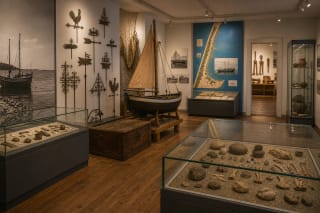
The museum display introduces the interior of a Curonian Spit fisherman's house from the late nineteenth and early twentieth centuries. Rooms are arranged to convey an old fishing family's environment: living spaces, household objects, textiles, kitchen details, and signs of work rhythms. It is a fisherman's homestead of exactly this period that the Universal Lithuanian Encyclopedia lists among Nida's architectural monuments.
The key impression is scale and closeness. Nida Fisherman's Homestead is not a large museum, but its small rooms, blue windows, yard relationship with the lagoon, and fishing objects make clear how household life was bound to water.
Opening hours, tickets, and a Nida route
Nida Fisherman's Ethnographic Homestead belongs to Neringa Museums, so opening hours and ticket prices are published on the official Neringa Museums pages. Museum seasons in Nida can change, so check current hours and prices on the official website before going.
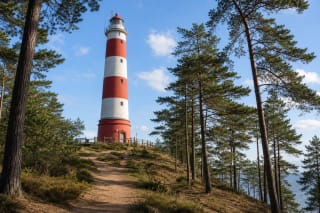
A visit usually takes 30-60 minutes. It pairs well with a walk along the lagoon shore, the Curonian Spit History Museum, Nida Lighthouse, and the Thomas Mann Memorial Museum. If you are interested in fishing tradition, also read about Curonian Lagoon weathervanes.