- Place
- Marijampolė Municipality
- Region
- Suvalkija
- Type
- parish church and historic churchyard complex
- Address
- 15 Birutės Street, Liudvinavas
- Coordinates
- 54.48368, 23.35346
- Visit duration
- 30-60 minutes; allow longer during Mass or an indulgence feast, and respect the parish rhythm
- Best time
- daytime outside worship; on Sundays, check the timetable first
Liudvinavas Church, Liudvinavas Parish Church of St Louis
Liudvinavas Church is a living parish and town-centre sanctuary
Liudvinavas St Louis Church stands at 15 Birutės Street in Liudvinavas, about 9 km south of Marijampolė. It is best understood not as an isolated photograph stop but as an active parish where prayer, the churchyard, and the everyday life of the local community meet.
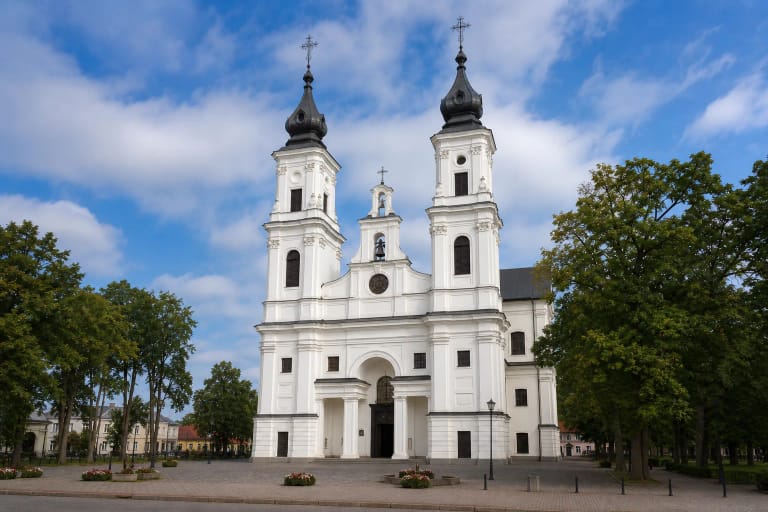
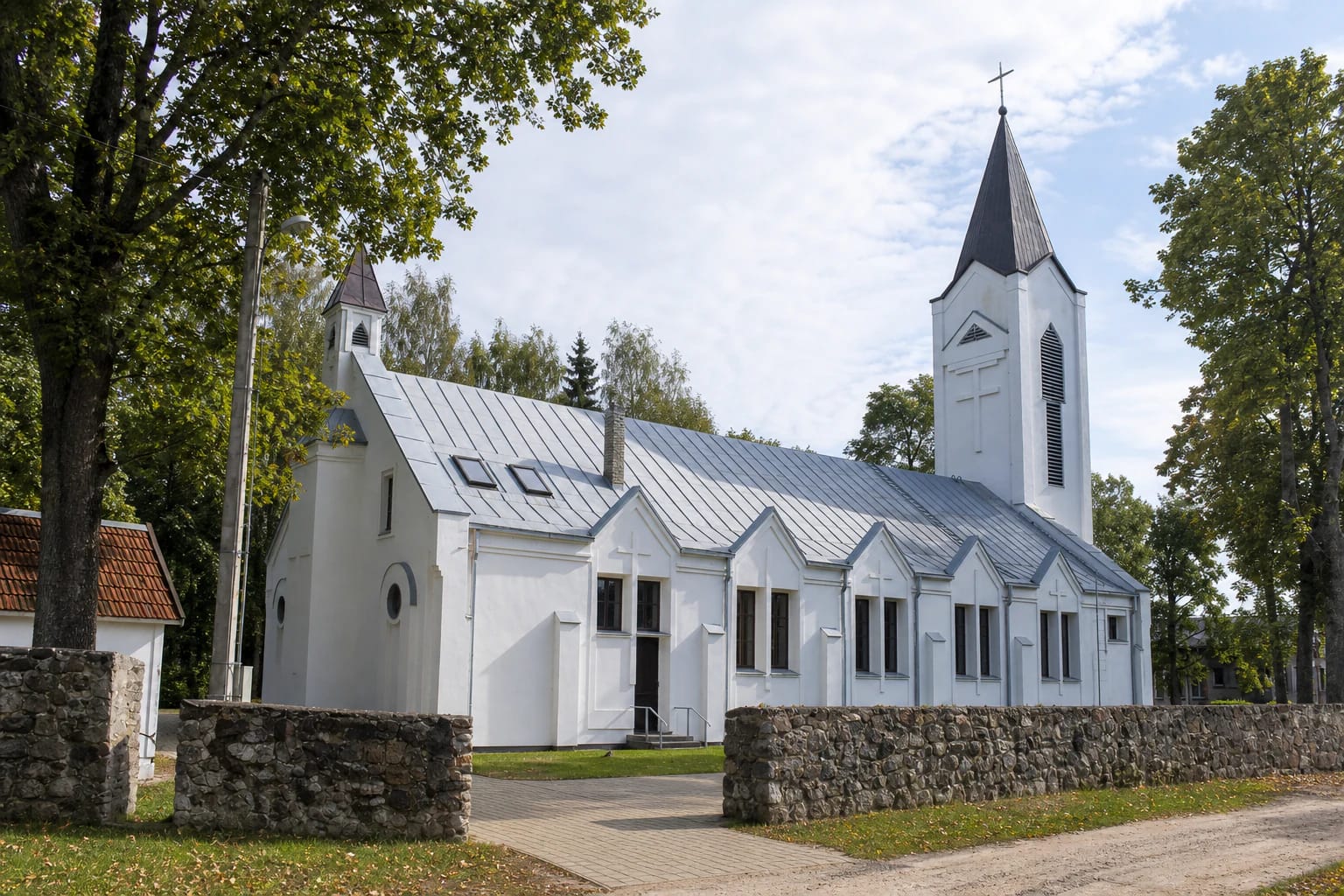
The pale building, tall main tower, smaller turret, grey metal roof, and rough-stone churchyard wall give the site a distinctive silhouette. Visitors can examine the exterior, but should enter the interior and sacred spaces according to parish arrangements, especially during worship or parish events.
The parish story begins in 1715, while Lithuanian-language life grew in the nineteenth century
In 1715 Liudvikas Konstantinas Pacas built a church and assigned 4 valakai of land for its upkeep. Around 1850, through the care of priest S. Lapinskas, hymns and sermons began to be given in Lithuanian, and after 1864 a new church was built.
The parish story was also entangled with political upheaval. Vicar Simonas Lapinskas, who lived from 1800 to 1889, was accused in 1864 of urging local people to join the uprising and was exiled to Siberia. These facts show why the church matters not only to faith but also to the history of language and local memory.
From 1907 to 1914, a Lithuanian cultural network worked around the parish
In 1907, a branch of the Žiburys Society was established in Liudvinavas, chaired by priest Juozas Sriuoginis. In 1908, a library and reading room opened, and in the same year the Žiburys members organised the first public Lithuanian evening. The parish surroundings became a place for reading, community organising, and a stronger Lithuanian public life.
A branch of the Lithuanian Catholic Temperance Society operated from 1911 to 1914. This episode shows that the church's history goes beyond liturgy: societies, educational initiatives, and community habits formed around it, leaving traces in the story of Liudvinavas as a whole.
Fire and rebuilding changed the churchyard's architectural view
The church burned in 1915, so worship moved to the local administrative office. After 1918, a modest wooden church was built in the churchyard, and after the Second World War the sanctuary was neglected. In 1975 it was repaired through the care of pastor Jonas Maksvytis. Construction of a new masonry church began later, so the present view contains several layers of the parish's surviving history.
The older church was rectangular in plan, with an apse and 2 turrets, and the churchyard was enclosed by a plastered masonry fence. When exploring the site, distinguish the building's forms from later repairs and avoid disturbing the privacy of the parish or the quiet of the cemetery.
Plan a visit around worship, the indulgence feast, and the parish rhythm
Mass is at 10:00 on Sundays and weekdays, and at 10:00 and 18:00 on Saturdays in summer or 10:00 and 17:00 in winter. Confession is heard before Mass; adoration takes place on the first Sunday of the month after Mass, while May, June, and October devotions follow their own arrangements.
The St Louis indulgence feast is held on the last Sunday of August, so that day can be much livelier than an ordinary visit. During worship, keep quiet, ask permission before photographing, and respect worshippers.
Allow 30-60 minutes to see the exterior, towers, and churchyard, and plan to enter during worship or after arranging a visit with the parish. Check the parish timetable before travelling, since feast days, funerals, and other parish events can change normal access.