- Place
- Kelmė District Municipality
- Region
- Kelmė District
- Type
- active wooden Baroque Roman Catholic church with a freestanding bell tower
- Address
- 41 Nepriklausomybės Street, Lioliai, Kelmė District
- Coordinates
- 55.55735, 22.95341
- Visit duration
- 30-50 minutes; longer during a service
- Best time
- in daylight, after checking whether the valuable interior will be open
Lioliai Church
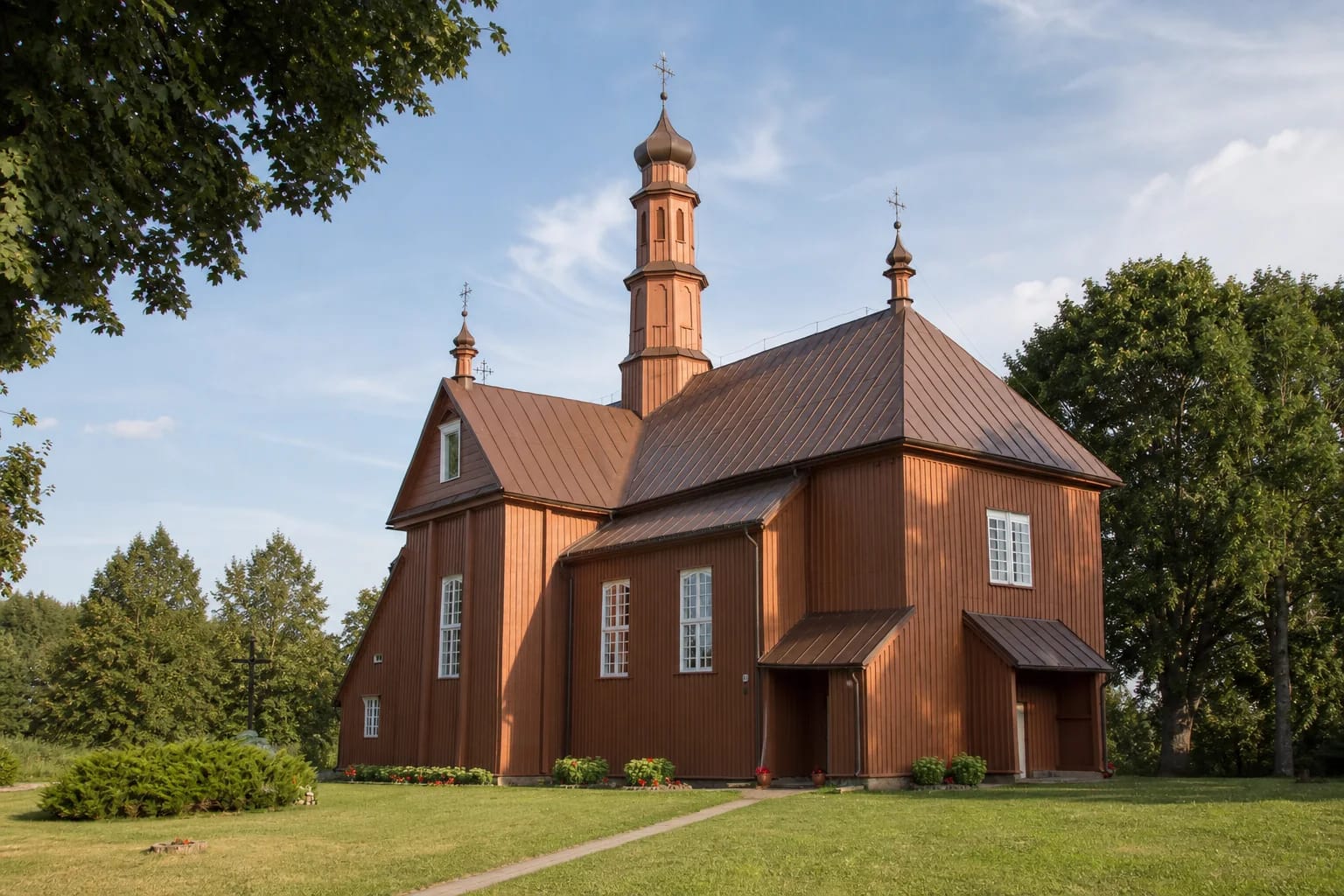
A wooden Baroque church built in 1768
A church existed in Lioliai by 1522, but the present timber building dates from 1768. VLE describes it as Baroque and says its tall tower was probably added in 1878, meaning that the present form developed over several centuries.
The cruciform plan, three-sided apse and vertical tower axis distinguish it in the townscape. Its timber construction and restrained exterior make a strong contrast with the ornate altar inside.
The high altar preserves a late-Baroque composition
The late-eighteenth-century high altar is considered the most valuable interior feature. Although repainted several times and partly repaired, its original late-Baroque composition and decorative carving survive.
Its lower level carries St Casimir and St Stanislaus, the middle has St Stephen and St Lawrence, and the top shows the patron apostles Simon and Jude Thaddeus. View the sculptures without disrupting worship and avoid flash photography.
An 1808 organ and monumental bell tower
The organ was probably made in East Prussia in 1808. Its case combines Baroque and Classical detail, and the instrument is among the oldest in the Šiauliai region, although sources describe its condition as poor.
The monumental timber bell tower is not a secondary utility structure but part of the ensemble. Its volume, construction and eighteenth-century bells help explain the historic layout of the churchyard.
An active parish church, not a daily museum
There are no general tourist opening hours or admission ticket. On July 22, 2026, Šiauliai Diocese listed Mass at 13:00 on Sundays, 09:00 on weekdays except Monday, and by arrangement on Saturdays. Reconfirm the schedule before travelling.
Interior access between services can change. To see the altar and organ, arrange access with the parish instead of assuming that the doors remain open throughout the day.
If the doors are closed, the cruciform volume, tower, bell tower and relationship with the street remain worth examining. Do not enter fenced technical areas or touch fragile old timber structures.