- Place
- Tytuvėnai, Kelmė District Municipality
- Region
- Samogitia
- Type
- Bernardine monastery, church, and pilgrimage ensemble
- Address
- Maironio g. 2A, Tytuvėnai
- Coordinates
- 55.59617, 23.20105
Why the Tytuvėnai ensemble is exceptional
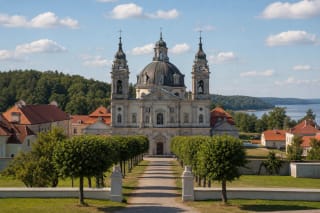
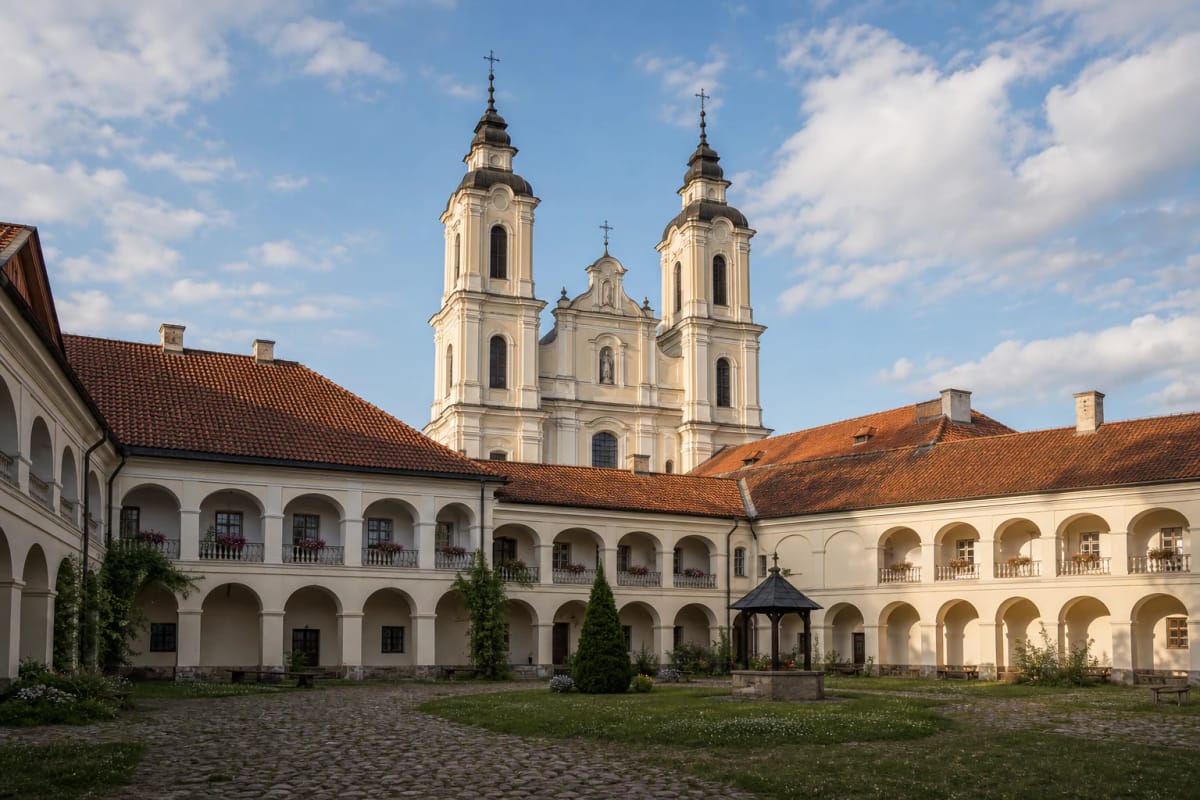
Tytuvėnai Ensemble is not just a church. It is a coherent sacred complex in which the church volumes, Bernardine monastery wings, enclosed courtyard, Stations of the Cross galleries, and Holy Stairs Chapel work as one pilgrimage architecture, a post-Tridentine New Jerusalem. The Cultural Heritage Register lists 11 parts in the complex.
The place is especially important because it shows how a monastery was used not only for prayer but also for processions, meditation, reflection on the Stations of the Cross, and community life.
Seventeenth-century Bernardine beginnings
The ensemble's history is connected with Andriejus Valavičius, who funded the settlement of the Bernardines, the Observant Friars Minor or OFM, in Tytuvėnai. The monks arrived around 1614, and construction of the church and monastery took place in 1614-1639.
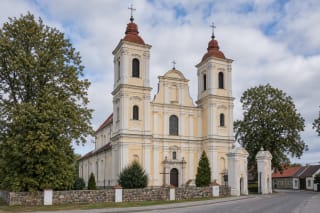
The church was consecrated on November 1, 1635, and dedicated to the Blessed Virgin Mary Queen of Angels; the second tower was added in 1735. The early history of the ensemble shows the connection between magnate patronage, a religious order, and local devotion characteristic of the sacred landscape of the Grand Duchy of Lithuania.
Eighteenth-century galleries and Holy Stairs
In the eighteenth century the Tytuvėnai ensemble took on a strong pilgrimage form. Major reconstruction took place in 1759-1783, and the Stations of the Cross galleries surrounding the quadrangular courtyard were installed in 1771-1778. They contain 25 painted and 14 gypsum relief compositions. The Stations were established by Bernardine Antanas Burnickis after his journey to the Holy Land in 1765.
The Holy Stairs Chapel, begun in 1775 in the centre of the courtyard, is essential to the experience of the site. The stairs were built of stone brought from Sweden, have 28 steps with Holy Land relics, and were first walked devotionally on May 28, 1778. Pope Clement XIV granted indulgences in 1774 to those who ascended them on their knees.
Monastery, closure, and later layers
The monastery house is a late-Renaissance example: a two-storey, three-wing horseshoe-plan building with a small inner cloister; the refectory has star vaults, and hypocaust heating operated there. The church interior, altars, and galleries are late Baroque and Rococo, with early Classicist features.
After the 1863 uprising, the tsarist authorities closed many monasteries; Tytuvėnai Bernardine Monastery was closed in 1864. In the twenty-first century the ensemble remains alive but has suffered losses: a 2012 fire damaged the monastery roof and second floor, so today's visitor also sees the constant need for care and restoration.
Visiting, services, and tickets
During research, the official services page listed Sunday Mass at 11:00, weekdays except Monday at 10:00, and Saturday at 11:00. Indulgence celebrations are also held: St Anthony around June 13, the Visitation of the Blessed Virgin Mary on the first Sunday of July, and Porziuncola on the first Sunday of August; on the last Sunday of August a pilgrims' walk to Šiluva takes place.
To visit exhibition or pilgrim-centre spaces, check the official Tytuvėnai Pilgrims' Centre information in advance. Services, tours, education programmes, and events may have different rules and prices, so verify the liturgical schedule before travelling.