- Place
- Areas of Švenčionys, Molėtai, and Utena District Municipalities
- Region
- Aukštaitija
- Type
- forest, lake, and protected-area landscape
- Coordinates
- 55.26670, 25.77220
Labanoras Woods
Forest, lakes, and regional park
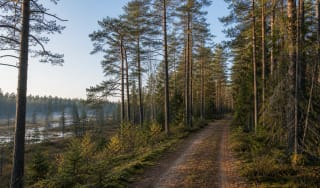
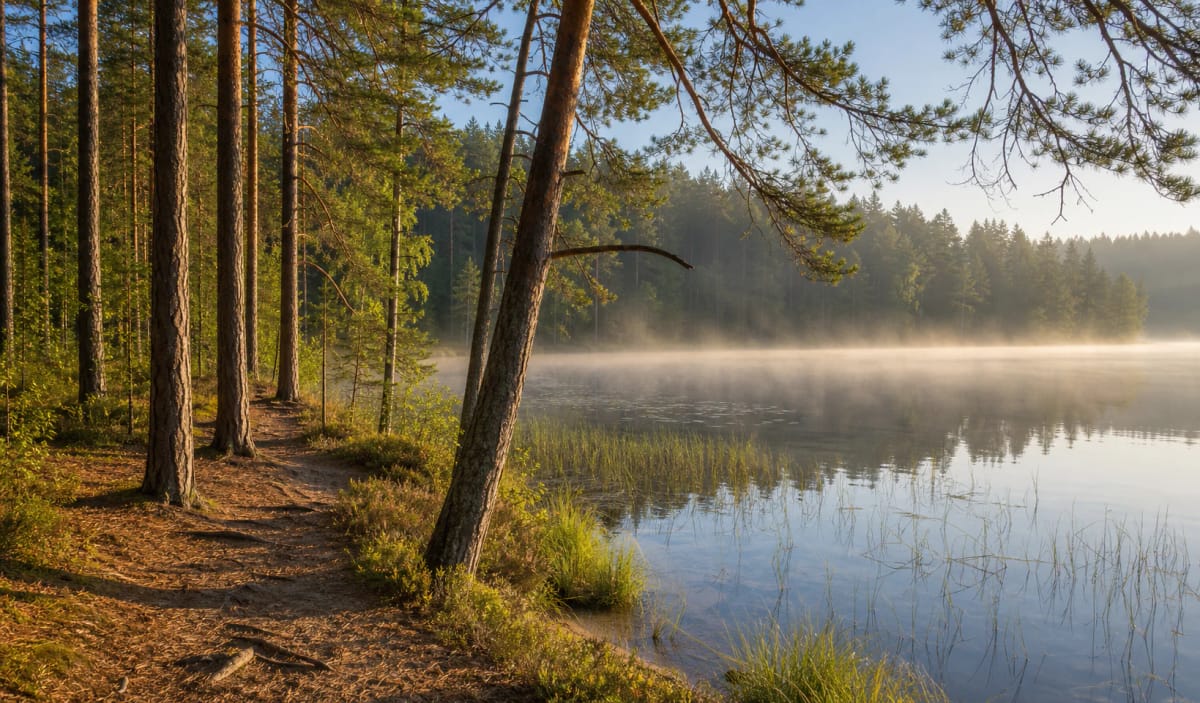
Labanoras Forest is best understood as a large forest-and-lake landscape, not a single point on a map. Labanoras Regional Park, established in 1992, protects this lake-rich forest world and is Lithuania's largest regional park: VLE gives its area as 55,317 ha, while saugoma.lt gives 55,320 ha. About 7,000 ha of the park is Labanoras Forest itself.
Do not treat the forest and the administrative park boundary as exactly identical. Forests cover about four fifths of the park, and Labanoras Forest is regarded as Lithuania's largest wooded area with the densest lake network. The park is the best official framework for discussing the forest's natural values, visiting rules, and protected-area network.
A lake-rich forest: 285 lakes and Ščiūrio Ragas
VLE states that the park has 285 lakes, including Stirniai, Baltieji Lakajai, and Kertuojai, and 30 rivers and streams, including the Lakaja, Dumblė, and Luknelė. This is one of those Lithuanian regions where forest repeatedly opens onto water, and a car, bicycle, or walking route quickly becomes a reading of linked lakes. Pinewoods dominate.
Among the strongest landscape forms are Ščiūrio Ragas, a long and very narrow peninsula separating Baltieji and Juodieji Lakajai lakes, and glacial Kertuojai Lake. This relief makes Labanoras suitable not only for walks but also for Lakaja water trips, birdwatching, and longer weekend routes; panoramas open from the Mindūnai and Rudesa observation towers. Check local rules for each activity.
Protected values and Girutiškis Ramsar wetland
The park's symbol is the osprey. Official sources emphasize high biodiversity: according to VLE, the park has 1,020 plant species, 40 mammal species, 40 fish species, and about 150 nesting bird species, including black storks, lesser spotted eagles, and Eurasian pygmy owls. Rare plants include water lobelia (Lobelia dortmanna) on lake shores and dwarf-birch thickets in raised bogs.
Labanoras Regional Park has two strict nature reserves, Girutiškis and Kiauneliškis, and 36 reserves. Girutiškis is designated a wetland of international importance under the Ramsar Convention. Visitor freedom can therefore differ greatly: in some places marked trails are appropriate, while other areas have stricter limits.
Cultural layer and the Labanoras bagpipe
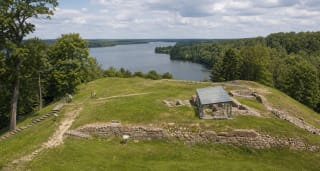
Labanoras Forest is not only wild nature. The park was also established to preserve cultural heritage: traditional architecture, the Labanoras dūda or bagpipe, and ethnocosmological traditions. VLE lists more than 20 barrow cemeteries, ancient settlements such as Kulionys and Kertuojai, hillforts including Budriai, Čiulėnai, Kertuojai, Kulionys, and Želvai, cup-marked stones, and Labanoras village with its wooden church and belfry.
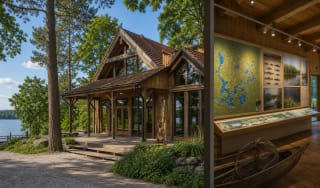
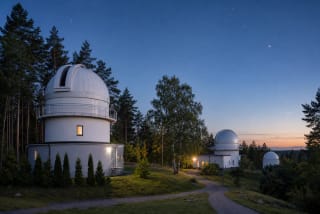
The Lithuanian Museum of Ethnocosmology and Molėtai Astronomical Observatory operate in the region, while the park directorate is in Palūšė and the visitor centre in Labanoras. On a trip, notice villages, homestead scale, old roads, and place names: they show that forest culture here is as important as pinewoods and lakes.
How to plan a visit
Labanoras Forest itself has no single ticket or opening time. For official information, start with the Labanoras Regional Park Visitor Centre and the protected-areas pages.
Before a longer route, check rules for camping, fires, fishing, reserves, and strict nature reserves. The Labanoras landscape is large and varied, so a good plan matters more than turning into the first forest road spontaneously.