- Place
- Molėtai District Municipality
- Region
- Aukštaitija
- Type
- museum of space, ethnology, and astronomy in the Molėtai region
- Address
- Žvaigždžių g. 10, Kulionys village, Molėtai District
- Coordinates
- 55.31600, 25.55700
Museum of Ethnocosmology, Molėtai Ethnocosmology Museum
What ethnocosmology means
This museum is not simply an astronomy display. Ethnocosmology explains the human relationship with the cosmos through the calendar, mythology, folk worldview, science, technology, and modern space research.
That is why the museum appeals to very different visitors: children because of clear space imagery, adults because of the cultural layer, and astronomy enthusiasts because of the telescopes and the surrounding Molėtai observatory environment.
How the museum began
The idea and foundation came from astronomer Gunaras Kakaras and ethnologist Libertas Klimka. Their aim was to show that the cosmos in Lithuanian culture is not only a scientific object: it appears in the calendar, customs, signs, and ideas of world order. Kakaras was the museum's first director from 1990 to 2019.
VLE states that in 1978, in the telescope tower of the Molėtai Observatory then under construction, Kakaras and Klimka opened a public museum with the first ethnographic exhibits reflecting links to celestial phenomena. The Lithuanian Museum of Ethnocosmology was established as a separate institution on March 15, 1990.
The building and the way upward
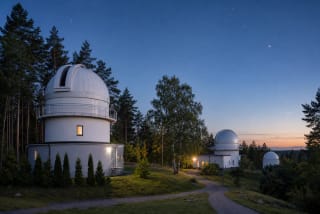
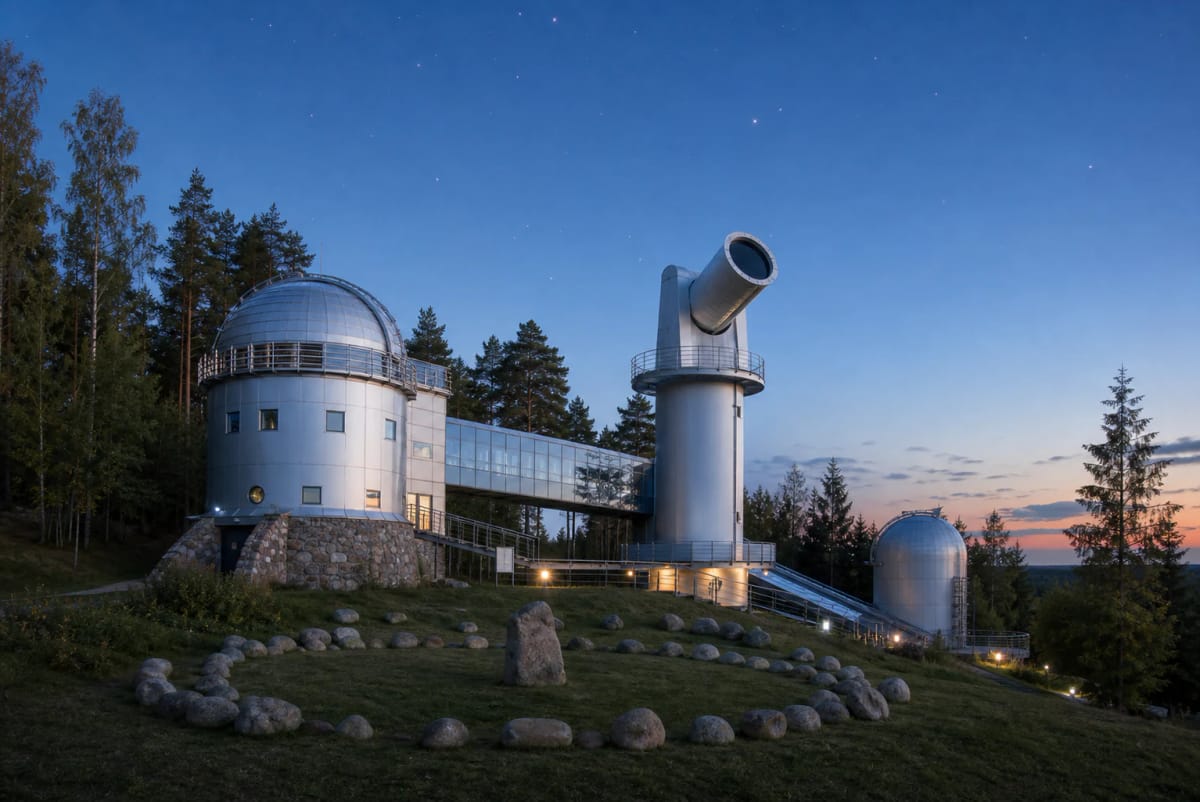
The museum architecture deliberately creates a cosmic impression: silver towers, circular forms, and glass-and-metal connections stand out from the Labanoras-region forest. It is one of those Lithuanian objects you recognize before reading the name.
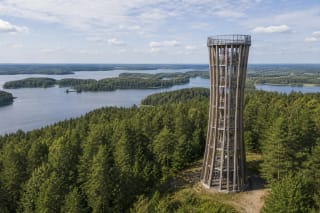
A daytime tour usually leads through exhibition spaces and up to the viewing platform. VLE states that the museum consists of an underground gallery with five halls for conferences and education, an observatory tower with an 80 cm telescope at 40 m for night observation, and a viewing platform at 30 m overlooking the lake-rich Molėtai region.
Lietuvos Saulė
The Lietuvos Saulė, or Lithuanian Sun, stone circle beside the museum is an outdoor space worth seeing before or after a tour. It links sky directions, the calendar, and earth signs.
This object helps explain the museum's logic: the cosmos here is not only a telescope, but also humanity's attempt to arrange time, direction, light, and customs into a meaningful system.
Night programmes
Night programmes are among the museum's most attractive experiences, but they depend on weather. Cloud, strong wind, or technical conditions can change observation possibilities.
Plan a night programme carefully: book in advance, check confirmation on the same day, and have a backup plan if the sky is unsuitable. This is not a guaranteed star show, but real sky observation.
How to visit
The museum is in Kulionys village, on Žvaigždžių Street, Molėtai District. Because exhibitions are visited with a guide or according to a set programme, spontaneous arrival is not always the best choice.
Before travelling, check the official pages for tours, tickets, and night programmes. With children, a daytime tour is usually best; with astronomy enthusiasts, choose a clear-evening programme.
What to see nearby
The most natural combination is Molėtai Astronomical Observatory, Mindūnai Observation Tower, Labanoras Regional Park, and the Molėtai lakes. Such a day connects science, nature, and landscape.
Even if you have only a few hours, the museum works as a self-contained destination. It has enough content to be more than a quick photo stop.