- Place
- Anykščiai and Kupiškis district municipalities
- Region
- Aukštaitija
- Type
- Aukštaitija forest massif, protected habitats, and partisan-history landscape
- Coordinates
- 55.56720, 25.17070
Šimonys woods
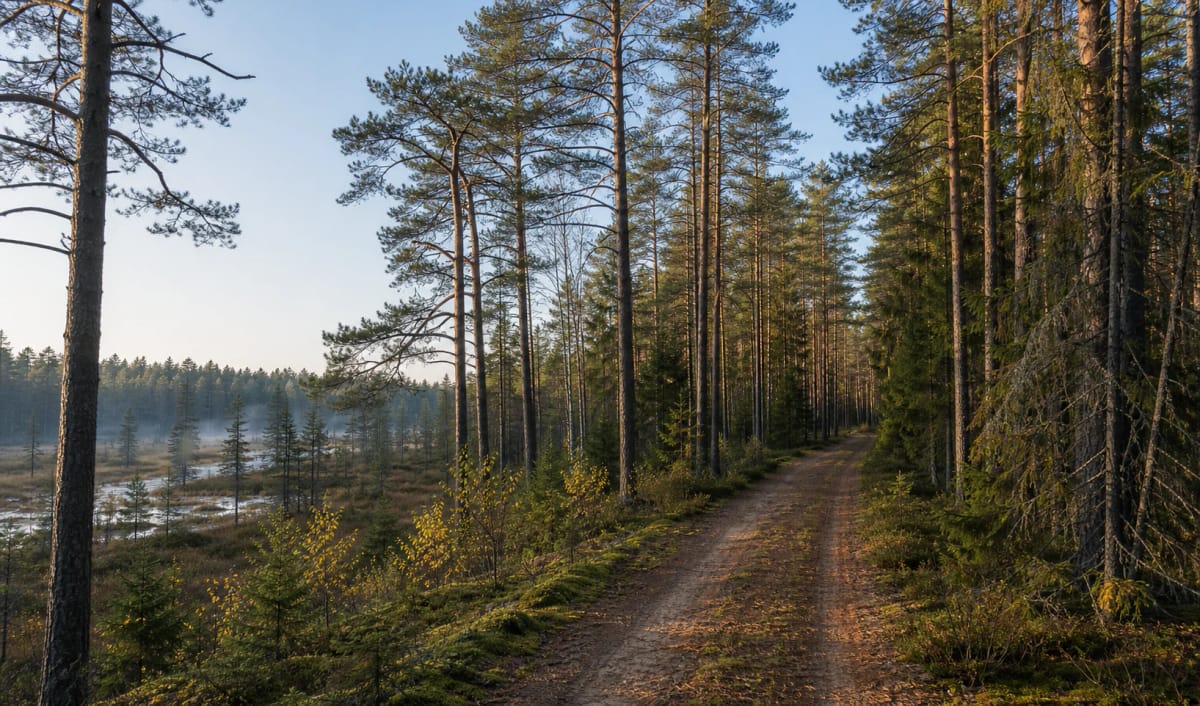
A large Aukštaitija forest massif
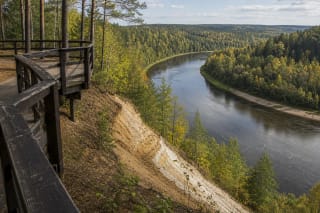
Šimonys Forest spreads through Anykščiai and Kupiškis districts on the right bank of the Šventoji, about 4 km west of Svėdasai. VLE gives a total area of 13,500 ha, of which 10,870 ha are forested. About 89 percent of the massif is state forest managed by the State Forest Enterprise's Rokiškis regional unit and the Šimonys forest district, plus the Mikieriai and Troškūnai districts of the Anykščiai unit; the rest is private forest.
It is not a national or regional park as an administrative unit, so it is more accurate to call it a forest, forest massif, and protected-habitat landscape. The relief is rolling and locally hilly, with stands averaging about 54 years old, so the forest feels mature while still containing young growth. Parts of the area fall within reserves and other protected territories.
Woods, lakes, and wetlands
The massif includes the Šimonys, Akmena, Andrioniškis, and Asiūklinė forests. Through it flow the Šventoji's right tributaries Pelyša and Šaltupis and the Jara's right tributary Iženas, so the forest is not a uniform block but a weave of streams, valleys, and watersheds.
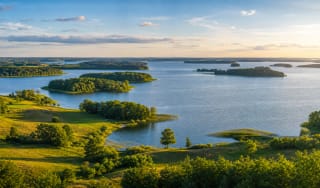
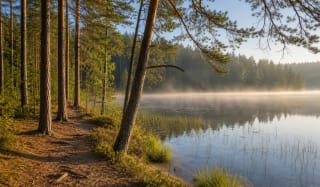
There are 15 lakes in the forest, with Iženas, Kuojinis, Priegodas, and Skaistis among the larger ones. The biggest wetlands are Iženas and Uogšilis. Because of its wetlands, lakes, and streams, Šimonys Forest is a system of water bodies and bogs as well as dry pinewoods.
Tree stands and protected habitats
VLE gives the stand composition as 55 percent pine, 22 percent spruce, 15 percent birch, 6 percent black alder, and 1 percent each aspen and grey alder. These numbers explain why visitors often experience the forest as pine country, even though it is more varied.
The forest contains the Šventoji Landscape Reserve, Pelyša Geological Reserve, and Iženas Telmological Reserve. VLE also mentions three capercaillie leks, three key forest habitats covering 5.1 ha, and nesting and breeding sites of birds listed in Lithuania's Red Data Book. Natural and cultural objects include Pelyša outcrop, Aluotai (Druskiai) hillfort, the mythological Katinai Stone, and Pašventys ethnocultural homestead.
Partisan history of Šimonys Forest
During the Second World War a Soviet partisan group operated in the forest, and after the war Lithuanian partisans gathered here. In 1944-1953 the forest was used by fighters of the Vytautas District and, from 1 May 1947, the Šarūnas Unit of the Algimantas District. At one time six detachments, about 180 armed partisans, were based in the forest; regional commanders' meetings and contacts with liaison officers from western and southern Lithuania often took place here.
The event of 1-2 November 1949 was especially tragic: Soviet troops blew up eight bunkers, killing 33 partisans, capturing 10, and destroying the headquarters of the Algimantas District and Šarūnas Unit. After 1950 the Algimantas District was disbanded, but organised resistance in the forest continued until 1953. This is not only a natural place but a resistance-memory landscape, so behave respectfully at partisan death sites.
Visiting cautions
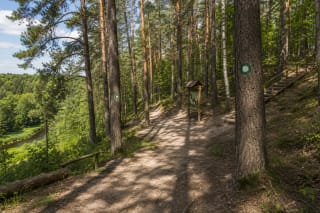
Šimonys Forest has no single ticket or opening schedule. Visits depend on the roads, paths, protected areas, and season you choose. In protected habitats and reserves, follow local rules.
If visiting for the first time, choose a clear route and avoid unmarked forest roads without navigation. The forest is large and some places are wet, so footwear, water, and a fallback plan matter more here than in a short park.