- Place
- Kuršėnai, Šiauliai District Municipality
- Region
- Šiauliai Region
- Type
- early 19th-century manor ensemble beside the Venta, centred on a timber residence, landscape park, and surviving service buildings
- Address
- Ventos g. 7E, Kuršėnai, Šiauliai District
- Coordinates
- 56.00003, 22.93290
- Visit duration
- 45-90 minutes for the residence and park; 1.5-2.5 hours with a tour or workshop
- Best time
- May to September, when the centre publishes longer hours and the park is comfortable for walking; book workshops in advance
Kuršėnai Manor, Gruževskis Manor, Kuršėnai Manor House
A timber residence worth examining closely
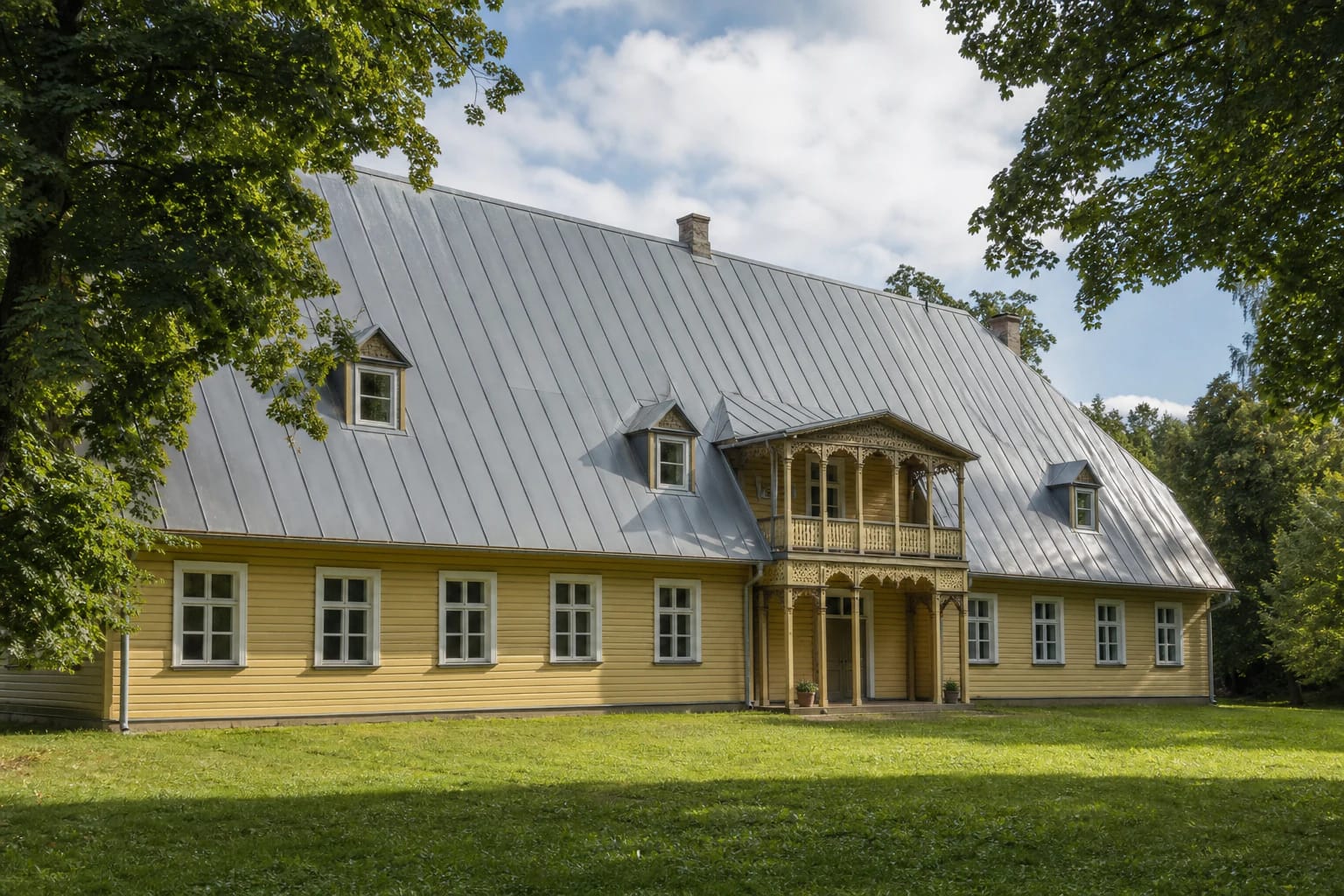
Kuršėnai Manor House is distinctive through timber detail rather than monumental scale. A high grey roof with dormer windows crowns the long pale-painted volume, while an ornate open balcony marks the centre of the facade. Its carved posts and fretwork make the structure appear unusually light.
The residence was built in 1811-1812 with craftsmen brought from Prussia. Restoration sought to retain old doors, window frames, stairs, and structural elements, so the interiors reward attention beyond the displays. Historic joinery helps explain how a prestigious timber residence was built and used.
The official crafts centre describes this as Lithuania's only surviving manor associated with perpetual fief tenure. That is the centre's formulation; for visitors, its essential meaning is that the Gruževskis family held the estate across several generations rather than for a short lease and shaped the ensemble seen today.
From the Pac family to seven Gruževskis generations
The official history records that Grand Duchy of Lithuania treasurer Steponas Pacas received Kuršėnai in 1621. In 1631 King Sigismund Vasa granted it to Jurgis Gruževskis as a perpetual fief. Seven generations of that family subsequently held the estate.
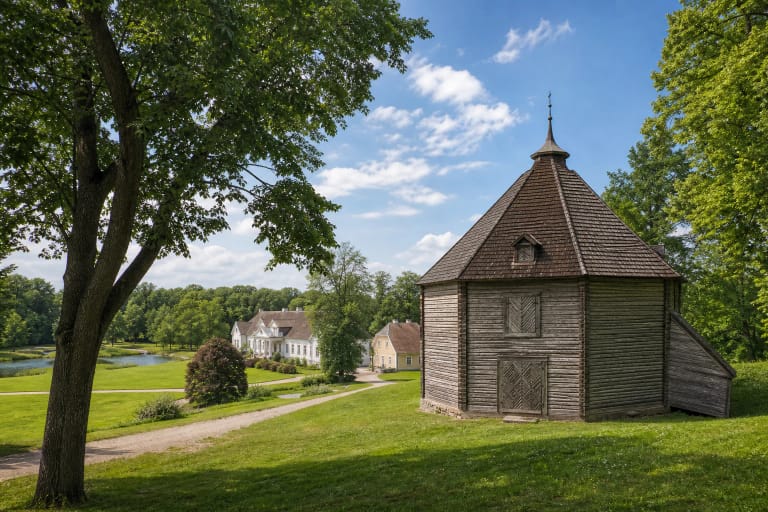
Construction of the current house in the early 19th century accompanied wider changes to the property: a landscape park, service zone, and relationship with the Venta valley took shape around the residence. The ensemble was damaged during the First World War and valuables were removed, but the principal timber volume survived.
The estate was nationalised in 1940 and the building's uses changed thereafter. Continued occupation helped it survive, while altering interiors and services. What visitors see is therefore a restored historic building rather than a completely untouched Gruževskis residence from the 19th century.
The estate continues beyond the front door
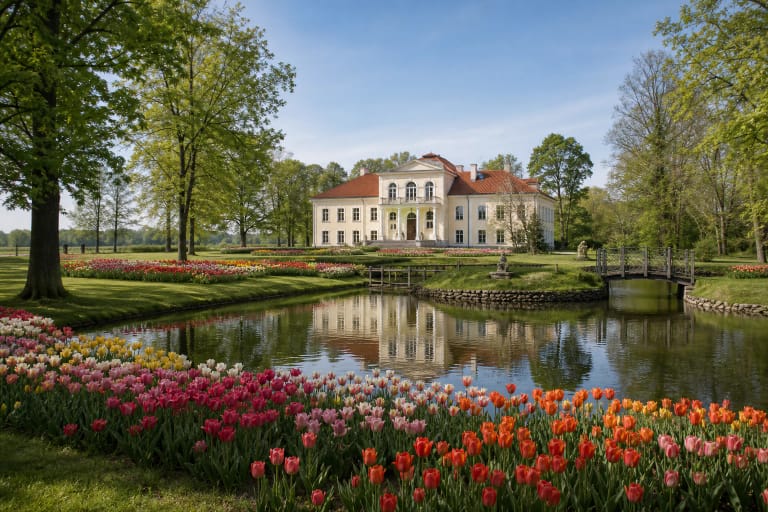
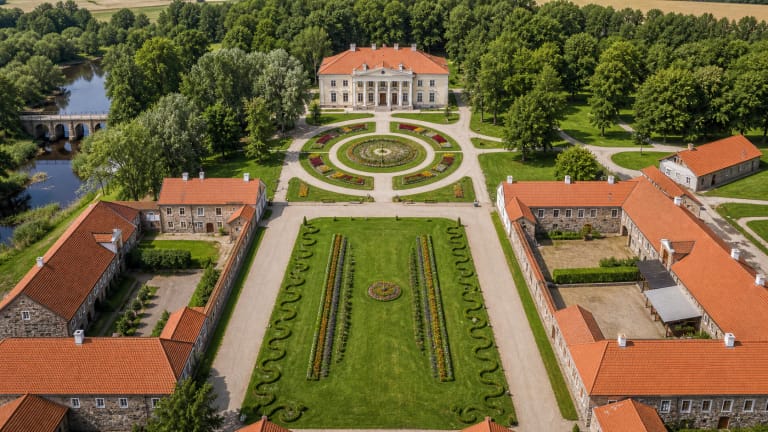
The Cultural Heritage Register protects Kuršėnai Manor Estate as an ensemble, not just its main house. Surviving spatial relationships, old trees, path alignments, and service buildings remain visible in and around the park. Even when the interiors are closed, the facades and grounds reveal the former property's organisation.
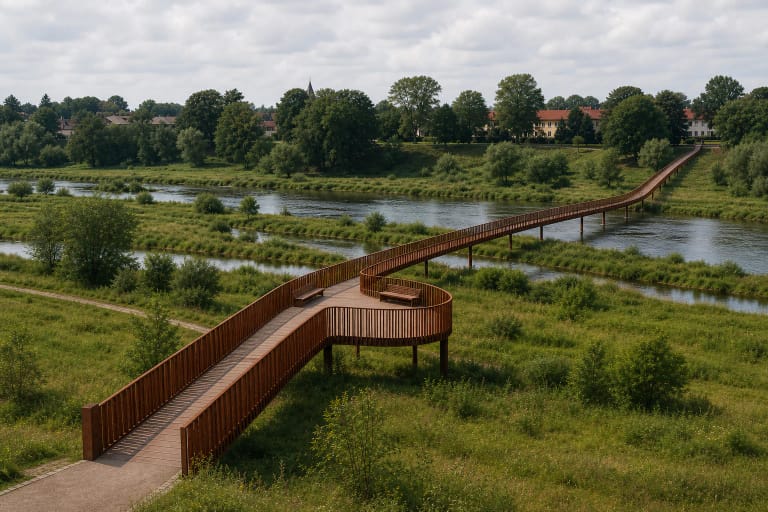
Paths descend from the house towards the Venta. The riverbank walk can be linked with Kuršėnai Pedestrian Bridge, making the manor more than a short roadside stop. Park surfaces can soften after rain, so choose footwear for the weather.
The municipality is carrying out a project to improve the grounds for visitors. Individual paths or courtyard sections may be fenced temporarily and approaches can change. This does not necessarily mean the whole ensemble is closed, but check current information before a formal photo session or group visit.
The restored house became a centre for traditional crafts
The Centre for Ethnic Culture and Traditional Crafts moved into the manor setting in 2000 and became an independent municipal institution in 2006. One estate building was adapted in 2011-2012, while the restored main residence formally reopened to visitors on 6 July 2021.
The centre presents Kuršėnai pottery and other regional crafts, including wood carving, woven bands, basketry, felting, and egg decoration. Changing exhibitions, guided visits, meetings with makers, and practical workshops are organised here. The available programme depends on the date and advance booking.
A collection of roughly 5,000 calendars is among the less expected displays. It is not Gruževskis household material and should not be mistaken for original manor inventory. It is a collection assembled by the present cultural centre alongside narratives about the house and crafts.
Opening hours, prices, and planning a visit
For the 2026 season from 1 May to 30 September, the official centre website listed Monday to Saturday from 8 am to 6 pm and Sunday from 10 am to 3 pm. Hours outside that season and on public holidays can differ, so check the official site or call +370 41 41 64 44 before travelling.
The park can be explored independently, but match an interior, exhibition, or workshop visit to the centre's opening hours. Official offers list separate prices and group sizes for tours and activities, and these may be updated. When booking, confirm whether the quoted amount applies per participant or per group.
Allow about 45 minutes for a short visit encompassing the exterior, an open display, and a park path. Reserve at least 90 minutes for a tour or craft session and arrange it in advance. Visitors with mobility needs should ask the centre about the easiest current entrance, because routes through the historic building and grounds under improvement can vary.