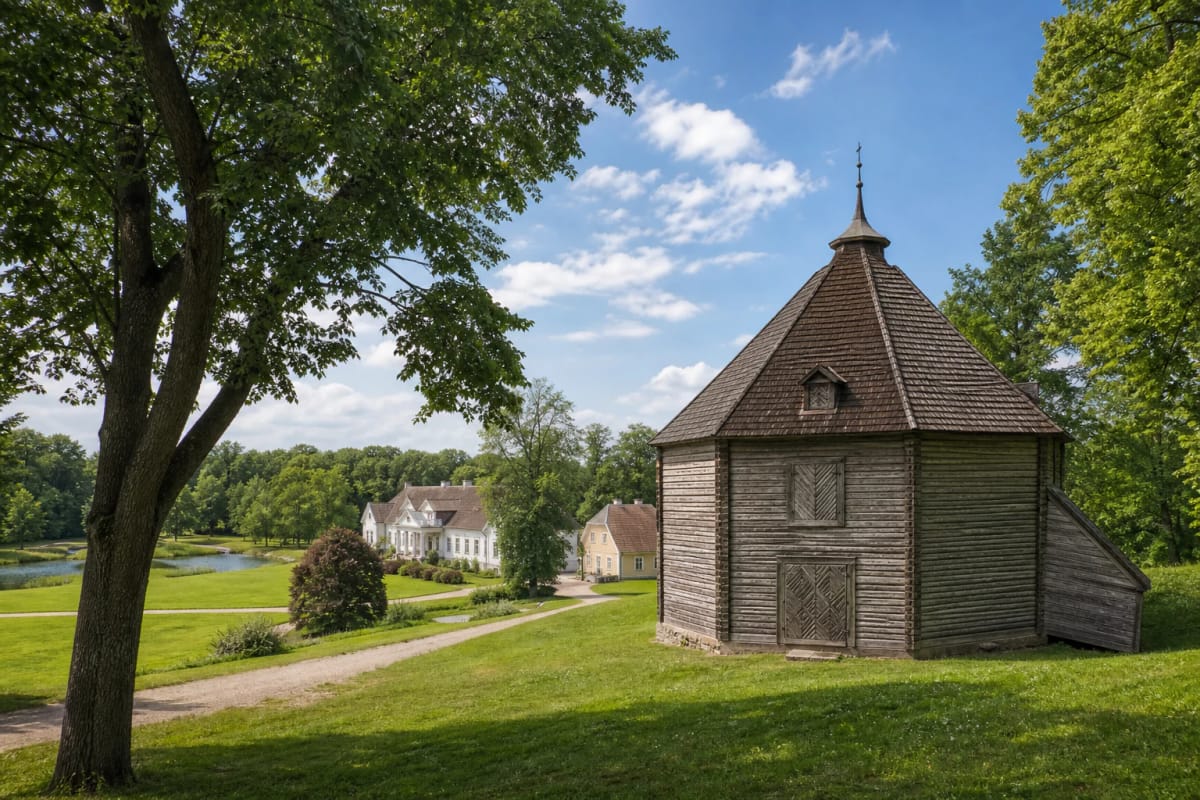
- Place
- Šiauliai District Municipality
- Region
- Samogitia
- Type
- old manor homestead with a wooden granary, park, ponds, and riding centre
- Address
- Kurtuvėnai, Šiauliai District
- Coordinates
- 55.82700, 23.04900
Kurtuvėnai Manor
Kurtuvėnai Manor Site: One of the Oldest in Samogitia
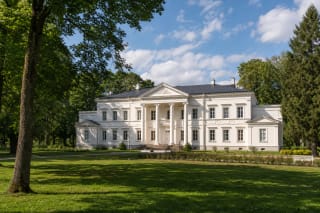
Kurtuvėnai Manor Homestead is one of the oldest manor sites in Samogitia. Saugoma.lt describes it as known from the fifteenth century, while Visuotinė Lietuvių enciklopedija mentions Kurtuvėnai already from the thirteenth century. Over the centuries the manor was owned or leased by notable families: Kęsgailos, Karpiai, Skaševskiai, Nagurskiai, Tiškevičiai, and the Plater-Zyberk, also written Sieberg, family.
One detail matters for visitors: the last manor palace burned in 1919 and was not rebuilt. At Kurtuvėnai you should therefore look not for a palace facade, but for the whole homestead structure: the granary, park, farm buildings, ponds, and landscape. The town had suffered earlier as well: it burned in 1915 during the First World War and was damaged by Bermontian forces in 1919.
Baroque Wooden Granary
The most valuable building in the homestead is the eighteenth-century baroque wooden granary. This is unusual, because manor visitors often expect a palace, while at Kurtuvėnai an agricultural building has become the main symbol. Today the granary hosts a gallery and exhibitions.
The svirnas shows the economic side of manor life: storage, harvest, and estate organization, while also displaying wooden-architecture skill. It is worth viewing from several sides to notice its construction, proportions, and relationship to the courtyard.
Park, Fish Ponds, and Riding Centre
The fish-pond economy is associated with the Plater-Zyberk family. Fish ponds still lie near Kurtuvėnai, so the manor homestead is strongly connected with water management and landscape shaping, not only with buildings.
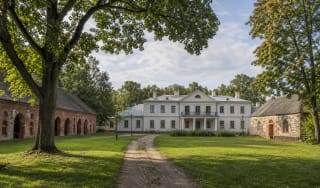
The authentically restored complex includes the park with ponds, an office building, riding-centre stables, workers' houses, the gardener's house, barns, and a forge. In 1995 the Kurtuvėnai Regional Park riding-services centre was established here, and visitors have an approximately 1 km educational trail with information stands.
Church, Hillfort, and Town History
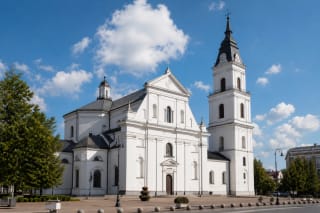
Beside the manor homestead stands the brick Church of St James the Apostle, built in 1785-1796. The first Catholic church in Kurtuvėnai is mentioned as early as 1495, and from the late sixteenth century until 1614 it belonged to the Evangelical Reformed community. The town of Kurtuvėnai is mentioned in 1573 and received a market privilege in 1766.
South of the town is Kurtuvėnai Hillfort, another layer in the homestead landscape. In the mid-nineteenth century the manor even had a serf theatre, showing that Kurtuvėnai was a lively cultural centre for the area.
How to Visit Kurtuvėnai
The manor homestead lies within the setting of Kurtuvėnai Regional Park, so it is worth combining with the park's nature routes. With children, plan the educational trail, the ponds, and the riding-centre surroundings; the manor garden also has the Kurtuvėnai campsite.
Official sources do not always give one single ticket or opening-hours model for the whole area, because parts of the homestead are open while individual buildings, events, and riding-centre activities have different conditions. Check current regional-park or site information before travelling.