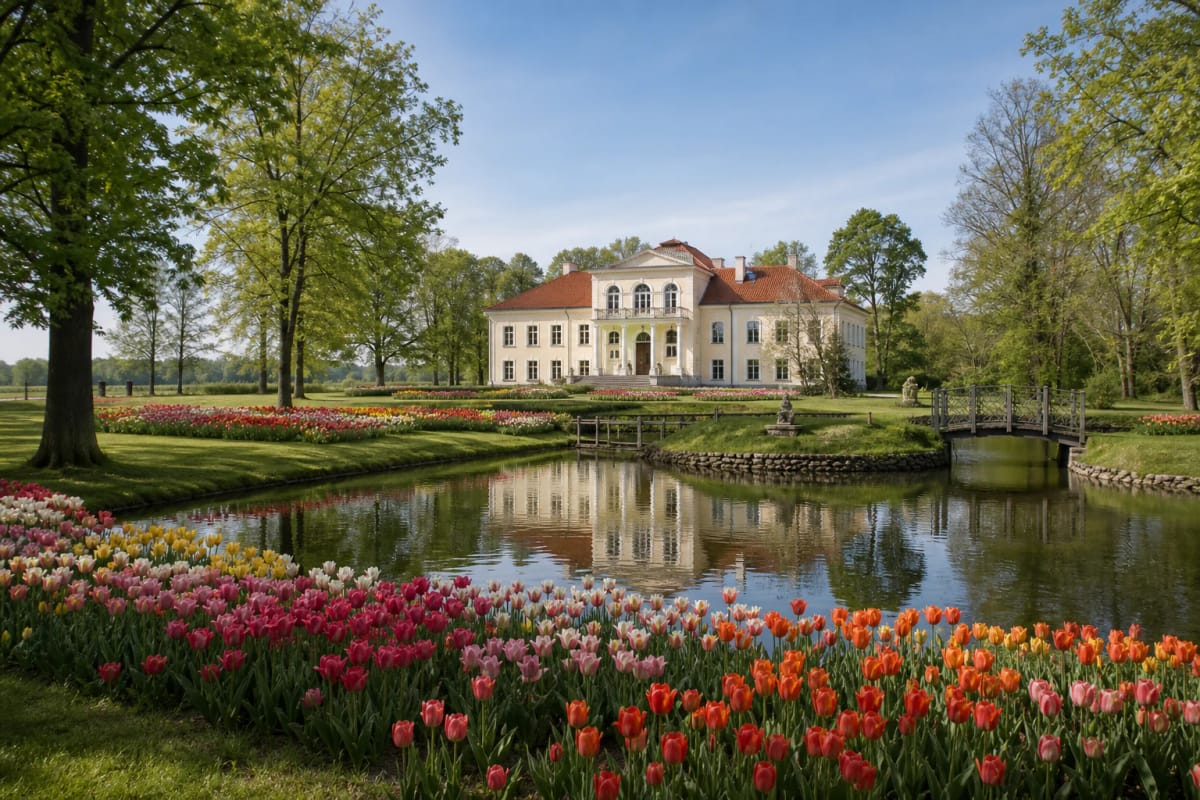
- Place
- Burbiškis, Radviliškis District Municipality
- Region
- Šiauliai Region
- Type
- manor ensemble with park, ponds, and tulip tradition
- Address
- Burbiškio k. 1, Pakalniškiai eldership, Radviliškis District
- Coordinates
- 55.78227, 23.89732
The impression of Burbiškis Manor
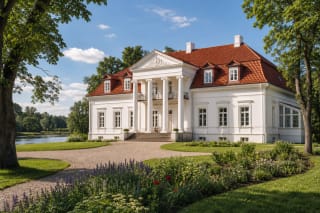
Burbiškis Manor greets visitors with more than a palace. Its identity is a park with ponds, islands, small bridges, sculptures, and seasonal tulip beds. Plan time not only for the museum but also for a slow walk.
The manor belongs to the Daugyvenė Cultural History Museum-Reserve and lies within the Daugyvenė Landscape Reserve. That matters because the site is protected not as one building, but as a historic and landscape composition.
From the Drobišas family to the Baženskis family
The written history of Burbiškis Manor reaches the seventeenth century: its owners included the Drobišas family, with Konstantinas Drobišas buying it in 1692, later the Tovianskis, and in the eighteenth century the Straševičiai, who began digging ponds. From 1819 the manor is linked with the Baženskis family.
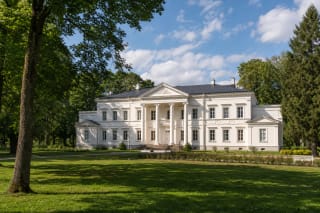
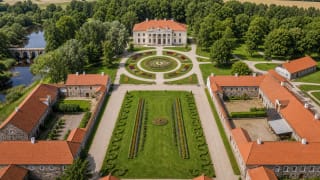
Mykolas Baženskis was especially important. Under him the decorative park, pond system, islands, bridges, and sculptural accents were formed. After the wooden palace burned, he rebuilt it around a stone office building with additions that created a closed, fortress-like courtyard; the palace style combines Romanticism and Historicism with Neo-Gothic and Neoclassical elements.
Park, islands, and Ulianskis sculptures
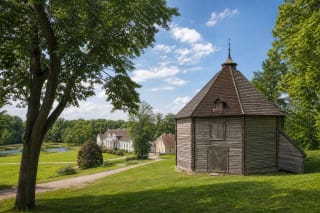
The park is one of the manor's essential parts. It is an approximately 28 ha landscape park; its pond contains 18 islands connected by bridges, and the park has about 17 wooden bridges plus masonry arch bridges. A central birch alley leads from the gate to the Lions' Bridge.
The park sculptures were made for Mykolas Baženskis by sculptor Kazimieras Ulianskis: the Adam Mickiewicz monument of 1911 is considered the first monument to the poet in Lithuania, the Vytautas the Great monument of 1912 the first Vytautas monument in Lithuania, while the 1913 Virgin Mary sculpture and the 1911 Lions' Bridge lions complete the memorial and representative space.
Museum and tulip tradition
After the Daugyvenė Cultural History Museum-Reserve was founded in 1991, Burbiškis became one of its departments. In 1992, Mykolas Baženskis's son donated the manor to Radviliškis District Municipality for Lithuanian cultural needs; major restoration took place in 2007-2011. The manor-history department explains the Baženskis family, the buildings, and the park's development.
For a broad audience, Burbiškis is best known for the spring Tulip Bloom Festival, held since 2000; the manor grows a collection of about 300 tulip species and forms. During bloom, allow more time and check museum announcements; in quieter seasons, the manor reveals itself as a park, water system, and heritage ensemble without event crowds.
Opening hours and tickets
At research time, the official Daugyvenė Museum page listed seasonal visiting for Burbiškis: April 1-October 31, Tuesday-Sunday 9:00-18:00; November 1-March 31, Tuesday-Saturday 8:00-17:00.
At research time tickets were listed as 5 EUR for adults, 2.50 EUR reduced, and free for children under 7. Prices, event-day rules, and seasonal changes may vary, so check the official page before travelling.