- Place
- Kūlupėnai, Kretinga District Municipality
- Region
- Žemaitija
- Type
- 1932 railway bridge over the Salantas
- Address
- Kūlupėnai, Kretinga District (bridge over the Salantas; representative point)
- Coordinates
- 55.96809, 21.51437
- Visit duration
- 30-60 minutes for a safe view from a public road or bank
- Best time
- a dry part of the day, when the trusses and pier are easiest to read from the valley
Kūlupėnų Railway Bridge over the Salantas
What you see in the Salantas valley
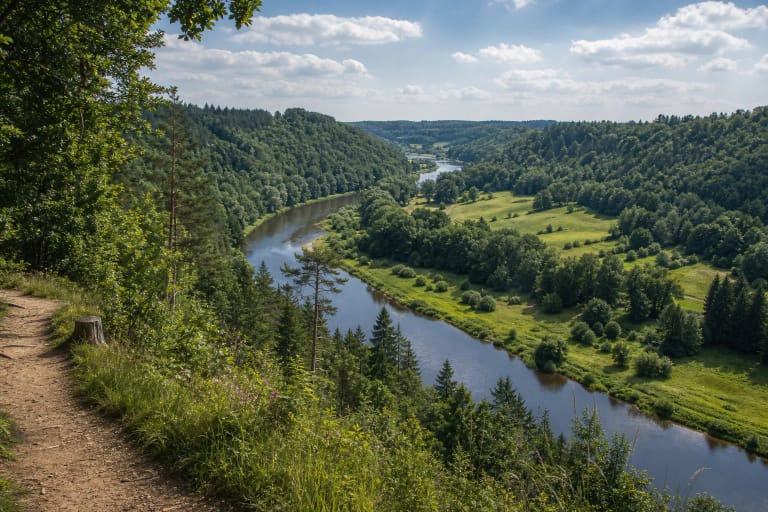
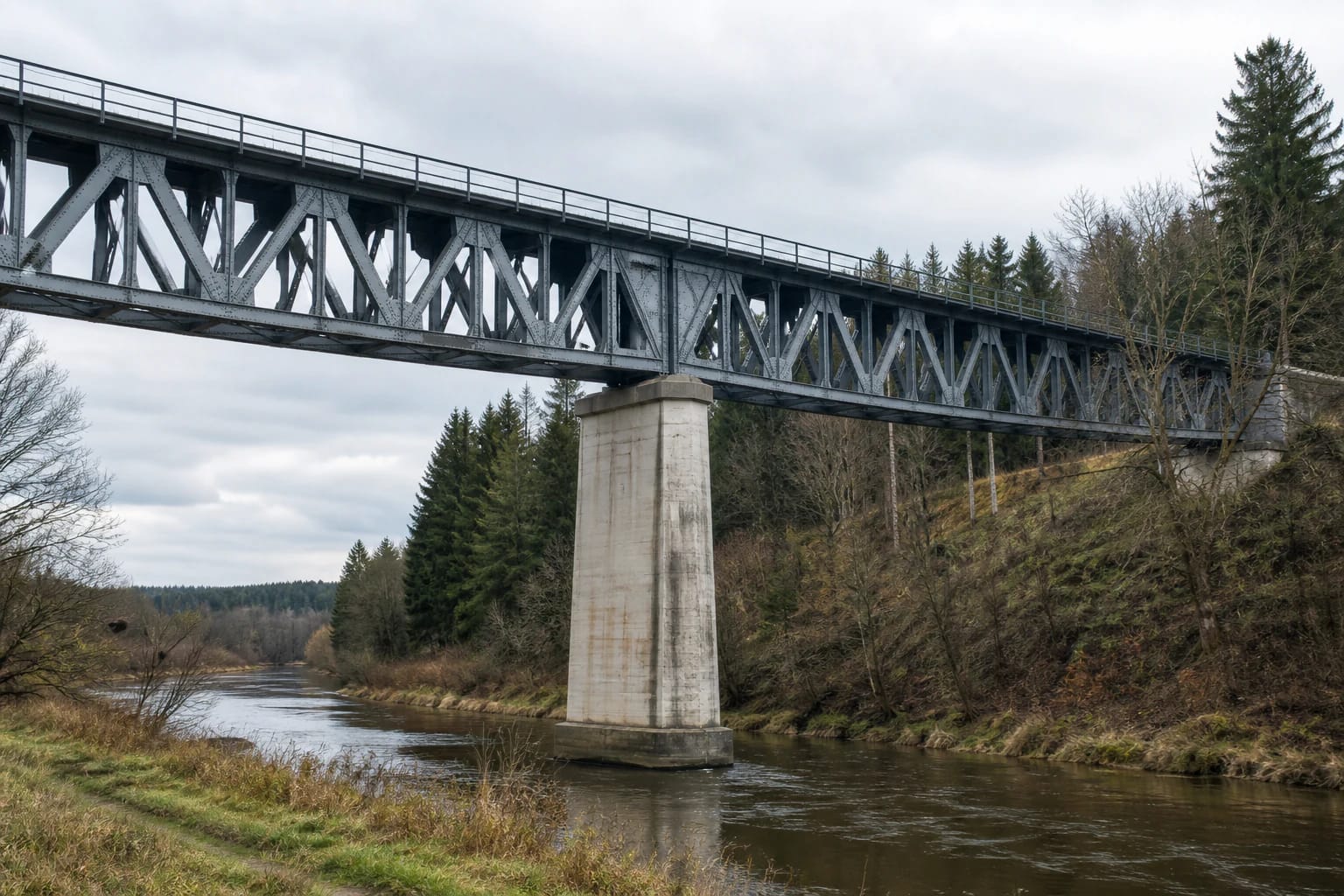
Kūlupėnų Railway Bridge stands above the Salantas valley in Kretinga District. From a safe public road or the valley side, you can see its long gray steel truss, tall concrete pier, and repeated rows of rivets. It is a place where an engineering structure is read together with the river and woodland landscape.
The bridge is one continuous structure whose scale is best judged from the valley side. The representative point helps locate its surroundings but does not give permission to climb onto the rails or walk the structure; view it from a public place and follow railway safety rules.
A 1932 railway-line structure
The Cultural Heritage Department dates the bridge over the Salantas to 1932, when the Telšiai-Kretinga railway was being built. The line connected Kaunas with the port of Klaipėda and became an important interwar transport link in western Lithuania. The bridge opened on 29 October 1932.
The Danish company Højgaard and Schultz built the railway line and bridge. This matters as more than a date: the structure belongs to a period when railway infrastructure was planned as one engineering network, and the Salantas valley had to be crossed by a long, high span.
Height, length, and the logic of riveted trusses
Kūlupėnų is considered the highest railway bridge in Žemaitija, rising about 27.5 m. Its almost 113 m length explains why the structure reads as such a strong horizontal line from the valley, and why stepping back gives a better sense of scale than standing close beneath one section.
Visible rows of rivets join the steel members rather than the bolts familiar from many modern repairs. The riveting technique was revived during restoration, so look at the rhythm of the joints, the pier's proportions, and the diagonal truss members. These details distinguish a historic railway structure from an ordinary contemporary bridge.
Restoration and heritage status
Kūlupėnų Railway Bridge is listed in the Cultural Heritage Register under unique code 24809. In December 2025, a commission accepted the completed repair work. The bridge's story therefore continues today, but restoration does not turn railway infrastructure into a visitor path.
UAB Švykai restored the authentic riveting technology. On many historic structures, old rivets were replaced with bolts because suitable equipment was unavailable. In Kūlupėnai, preservation includes not only the visible finish but also the way the steel members are joined.
A safe stop and a practical plan
The bridge is not a museum with a ticket desk or visitor timetable, and railway land is not open for free access. Find a public viewing place, stay off the rails, do not go under the structure if a slope or path is unsafe, and follow local signs and the conditions you actually find on arrival.
In dry daylight, 30-60 minutes is usually enough for a safe view and a few wide photographs from a public point. After rain, slopes and paths may be slippery, so wear shoes with good grip and keep back when the route is unsafe.