- Place
- Anykščiai District Municipality
- Region
- Anykščiai District
- Type
- historicist brick pseudo-basilica
- Address
- Šaltinio g. 14, Kavarskas, Anykščiai District
- Coordinates
- 55.43319, 24.92707
- Visit duration
- 30-60 minutes; longer if your visit coincides with worship or you walk around the whole churchyard
- Best time
- in daylight, after checking the parish worship schedule and whether the interior can be entered
Kavarskas Church
The church beside the Šventoji
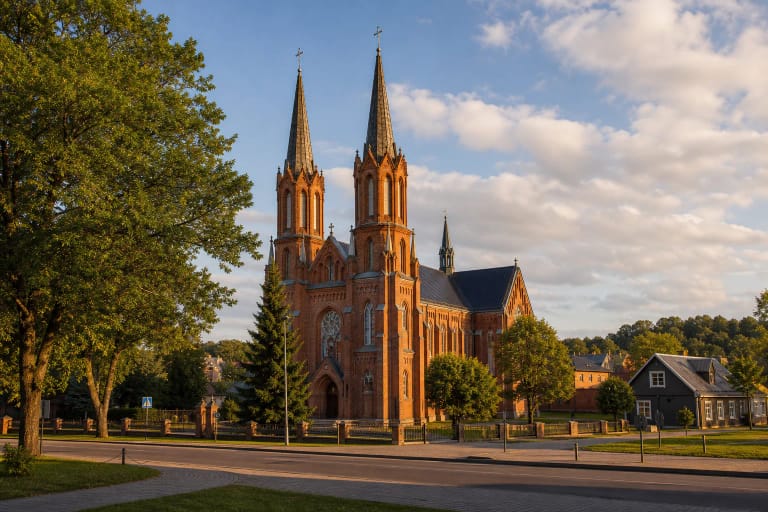
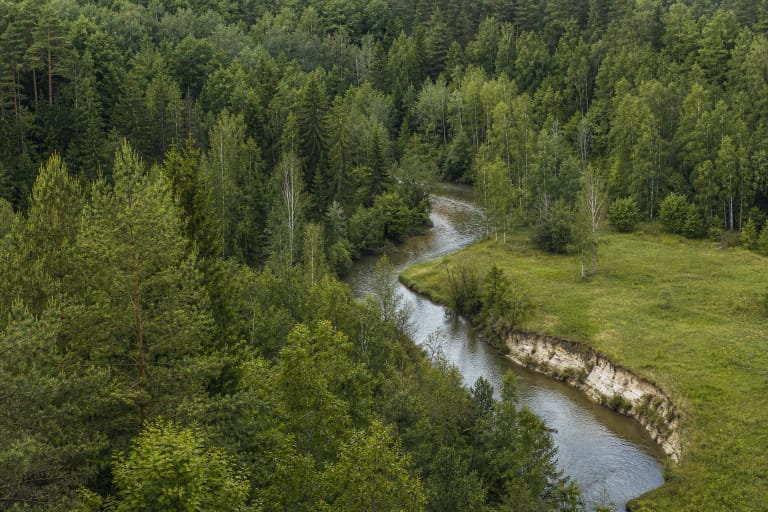
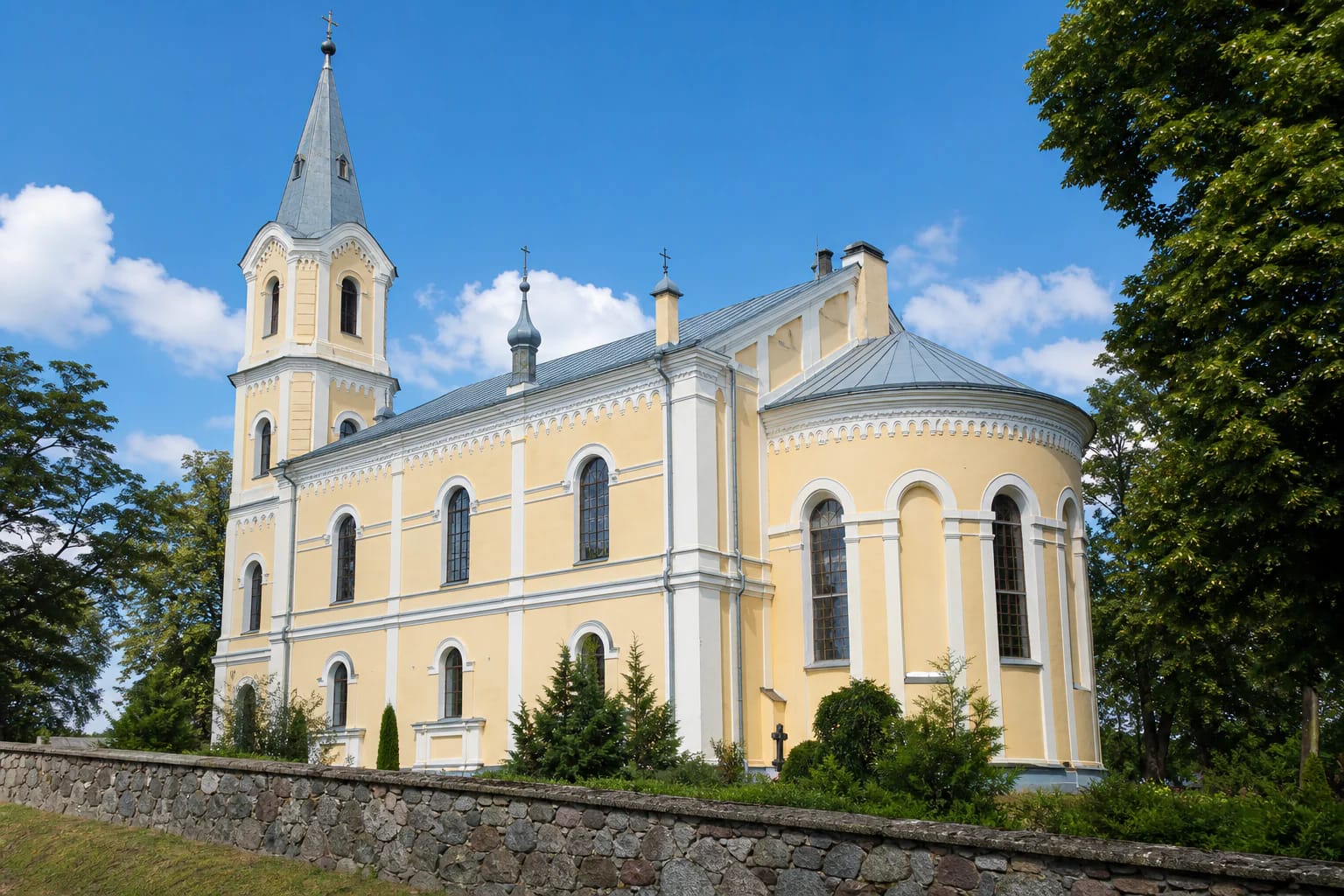
Kavarskas St John the Baptist Church stands at Šaltinio g. 14 on the right bank of the Šventoji. From the street, its pale yellow and white masonry, tall single tower and rounded rear volume stand out behind the stone churchyard wall.
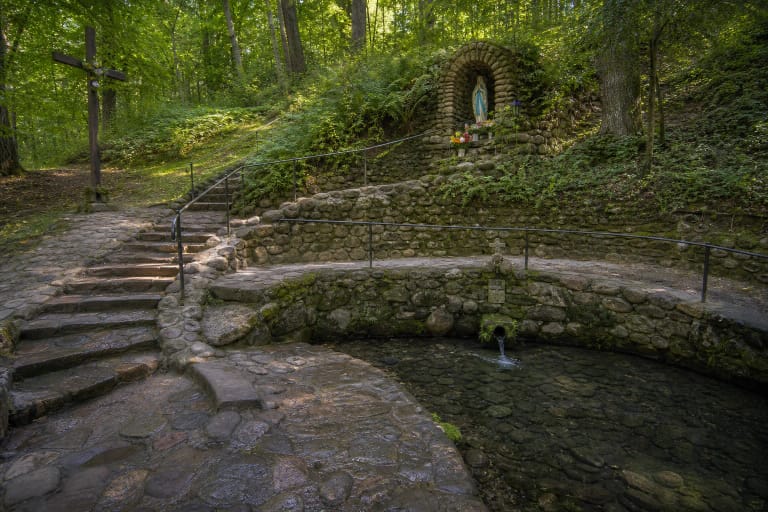
Visitors often combine the church with Kavarskas St John Spring and Lourdes, but they are not one map object. The spring and grotto have their own visitor locations; here you can explore the parish church, its building, and its churchyard complex.
The historicist building and its construction
VLE describes the present church as a historicist pseudo-basilica built between 1857 and 1887. Parish information associates the 1887 building with Leonas Daumantas and mentions repairs in 1928, so the dates are best understood as the longer formation of the current brick church.
The three-nave plan and tall side tower give the building a vertical silhouette, but the composition is not only about the tower. White trim around the arches, a round facade window, small roof turrets and the broad semicircular apse create a coherent light historicist design.
Bells, organ and interior space
VLE records three bronze bells dated 1769, 1883 and 1889. These dates let visitors read the church as more than an attractive facade: it is also a set of parish layers, with liturgical objects and a sound tradition that belong to different periods.
The church has a three-manual organ, which VLE dates to 1925 and associates with the maker J. Tučekas. If the doors are open, notice how the bright nave, altar, side windows and organ position complement the architecture visible from outside.
The churchyard as one heritage complex
Anykščiai Municipality's heritage information describes the churchyard together with the church. Its components include a chapel, stone fence and gates, Stations of the Cross features and a 1929 stogastulpis, so an inspection is worth beginning beyond the main facade.
The parish feast of Saint John is held on 24 June, and the churchyard brings everyday parish worship together with Kavarskas's visitor tradition. Outside services, keep quiet, do not enter locked areas and do not photograph people or ceremonies without permission.
How to visit the church
Allow 30-60 minutes to see the exterior, tower, apse and churchyard gates. This is an active parish church rather than a museum with fixed tourist hours and ticketing, so check the parish's current schedule before travelling.
The church pairs naturally with the spring and Lourdes, but follow actual local routes and signs between the destinations. Stone paving can be slippery in wet weather, while feasts or funerals change access, so keep the itinerary flexible and respect parish life.