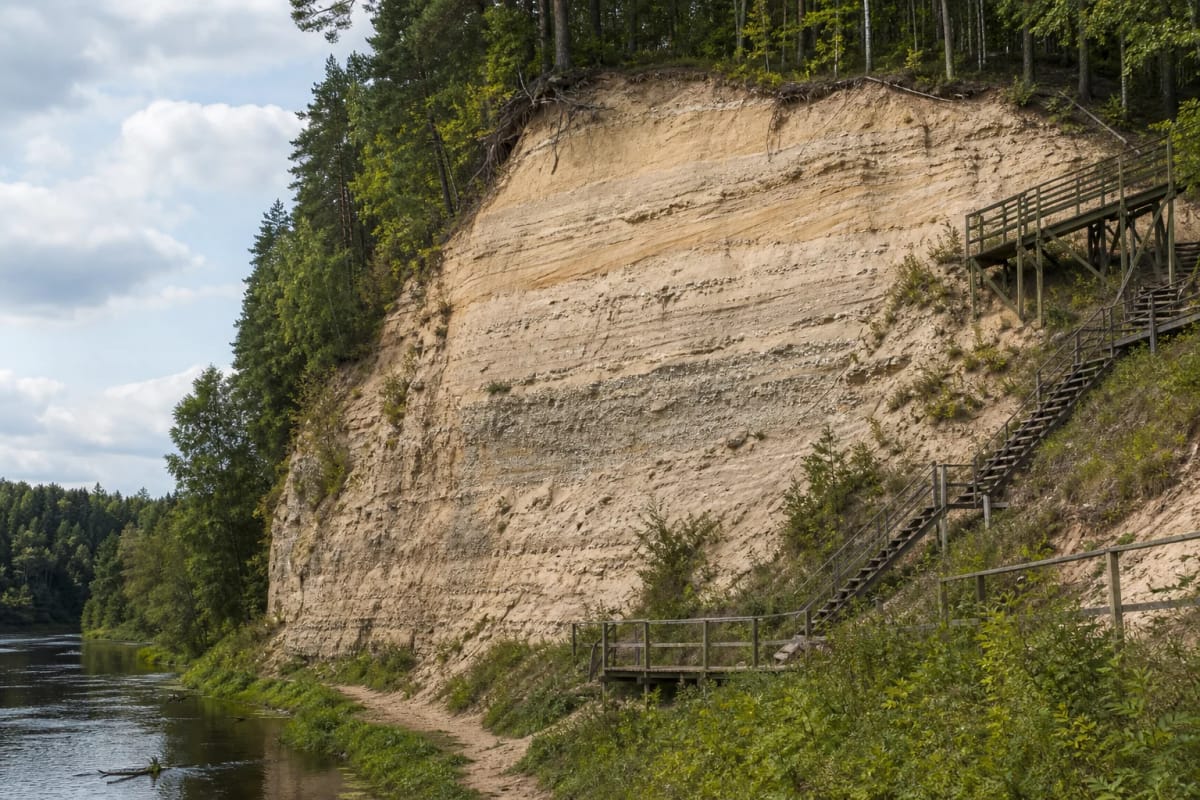
- Place
- Kavarskas elderate, Anykščiai District Municipality
- Region
- Anykščiai District
- Type
- Šventoji valley geological outcrop with steps and viewing platforms
- Address
- near Vetygala, right bank of the Šventoji, Kavarskas elderate, Anykščiai District
- Coordinates
- 55.45480, 25.00190
Žėbos Hill
Vetygala Outcrop in the Šventoji valley
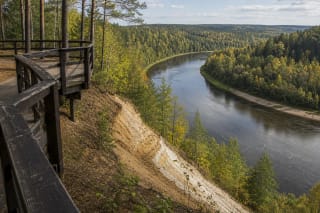
Vetygala Outcrop is in Anykščiai District, Kavarskas elderate, on the right bank of the Šventoji, within Anykščiai Regional Park. It is one of the largest pre-Quaternary outcrops in Lithuania and forms the southern part of long Žėbos Hill. VLE gives the outcrop height as 26 m, so it is like an opened book of the region's natural history.
Geologists have described the outcrop since the early twentieth century: one of its first descriptions was made by Juozas Dalinkevičius in 1926, and detailed lithological and paleobotanical studies were carried out here in 1966-1967. The outcrop has been protected since 1964, and since 2000 it has been a geological natural-heritage object and natural monument.
What the sand layers tell
Several geological layers are visible in the outcrop. At the top lie Late Pleistocene moraine, sand, and gravel; below them is fine quartz sand of the early Quaternary Daumantai formation, with silt interlayers; and the base consists of cross-bedded Late Devonian sand of the Šventoji Formation with abundant mica plates. The deepest layers are Devonian, dating to about 370-400 million years ago.
The oldest armoured-fish remains found in Lithuania, Asterolepis, are linked with Devonian rocks of the Šventoji valley. It is important to note that these fish are treated as a regional Šventoji valley Devonian find, not as fossils excavated specifically from this outcrop wall; record-book dates also differ. Asterolepis is therefore best mentioned as a natural-history fact connected with the place, not as a discovery made directly from this exposure.
Steps, platforms, and Kavarskas dam
The outcrop is adapted for visitors, with steps, paths, and viewing platforms at the upper and lower parts of the slope. From the top there is a panorama of the Šventoji and surrounding forests, making the place interesting both geologically and as landscape.
One less-known fact is worth noting: after the Kavarskas hydroelectric dam was built in 1962, the Šventoji water level rose and the lower part of the outcrop went underwater. As a result, the full historic height of the outcrop wall is not visible today.
How to visit Vetygala Outcrop
This is an open, freely visited natural-heritage object, with no tickets or opening hours. The outcrop is reached by built steps and paths; after rain, slopes can be slippery, so comfortable footwear is needed, and visitors should avoid damaging the actively eroding sand wall.
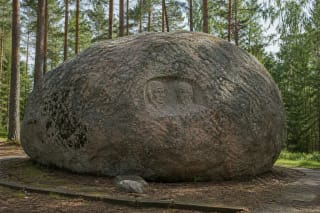
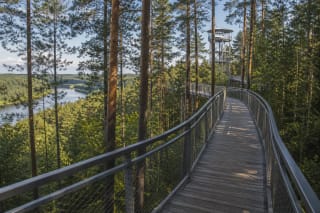
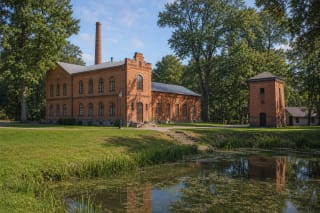
Half an hour is usually enough for a visit. Vetygala Outcrop combines well with other Anykščiai Regional Park places: Mikieriai Outcrop, Puntukas Stone, the canopy walk, and the Kavarskas surroundings.