- Place
- Kaltinėnai, Šilalė District Municipality
- Region
- Samogitia
- Type
- outdoor sacred and memorial park with the Exiles' Calvary, a monumental cross and a viewpoint
- Address
- 16 Didžioji Street, Kaltinėnai, Šilalė District Municipality
- Coordinates
- 55.56751, 22.43787
- Visit duration
- 45-90 minutes for the park and panorama; longer to follow every station or continue to the neighbouring Pilių Hillfort
- Best time
- in daylight from late spring to autumn; dry weather makes the hilly paths easier
Kaltinėnai Exiles' Calvary, Cross of the Nation's Resurrection in Kaltinėnai, Kaltinėnai Calvary
The Exiles' Calvary is both a Way of the Cross and a memorial
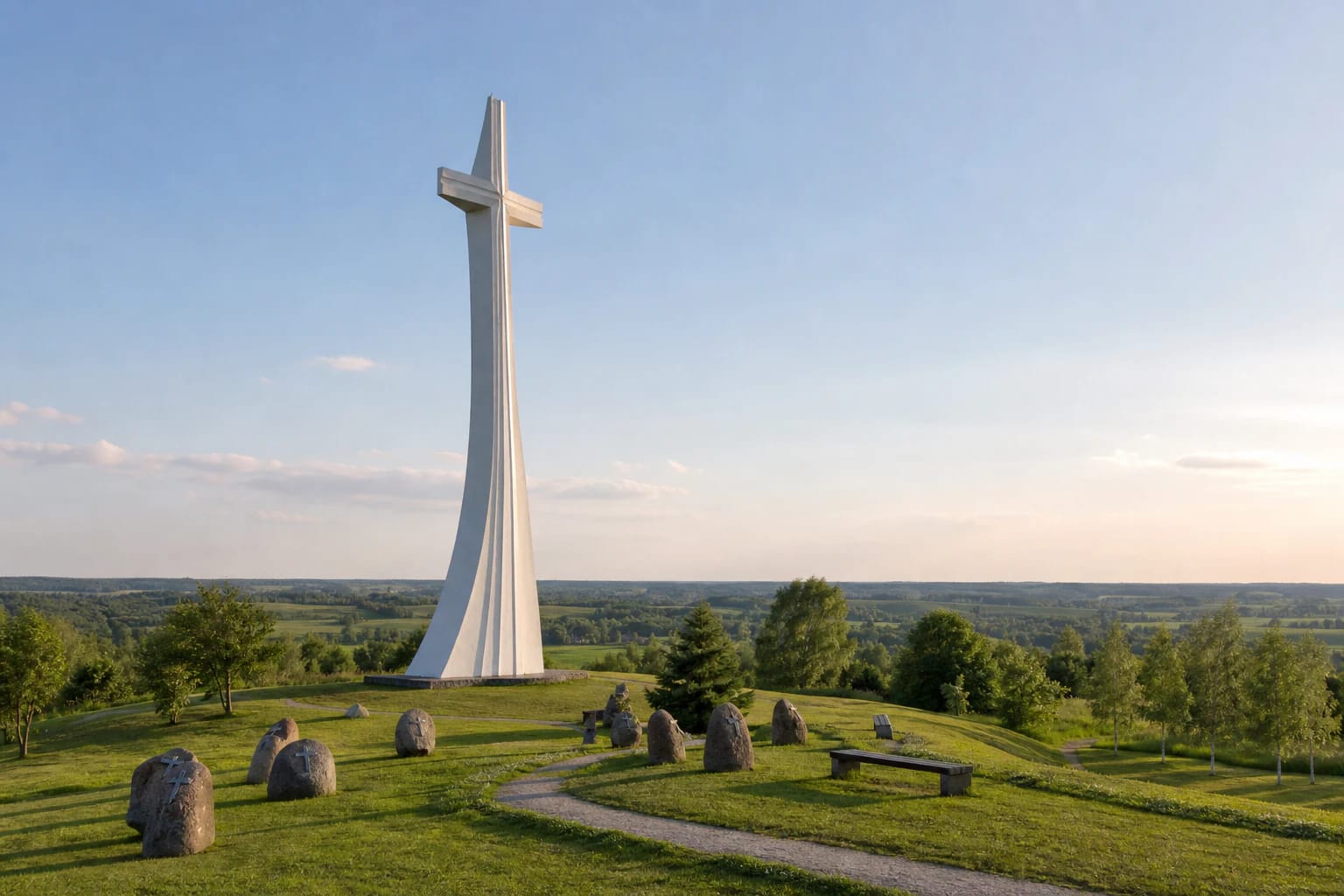
The Exiles' Calvary forms the spine of Kaltinėnai Spiritual Park. Traditional stations of Christ's Passion are linked here with Lithuanian experiences of deportation, imprisonment and other Soviet repression. The stone compositions therefore operate on two levels: as a Catholic Way of the Cross and as a route commemorating the nation's suffering in the 20th century.
Public descriptions do not count the stations in exactly the same way. Krašto Gidas and the Šilalė municipal publication mention 21 sculptures, while the park's own material describes the great cross as the concluding element of a 20-station route. The practical solution for visitors is to follow the sequence marked on site rather than interpret the two figures as different parks.
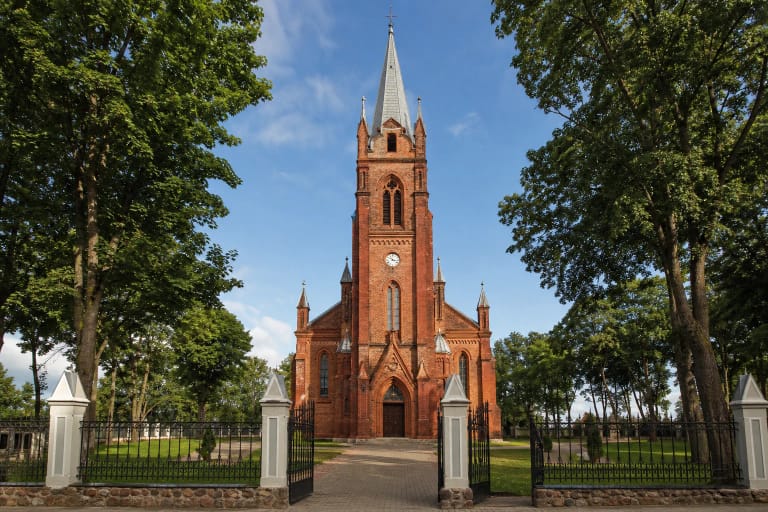
A park that grew after the 1988 church fire
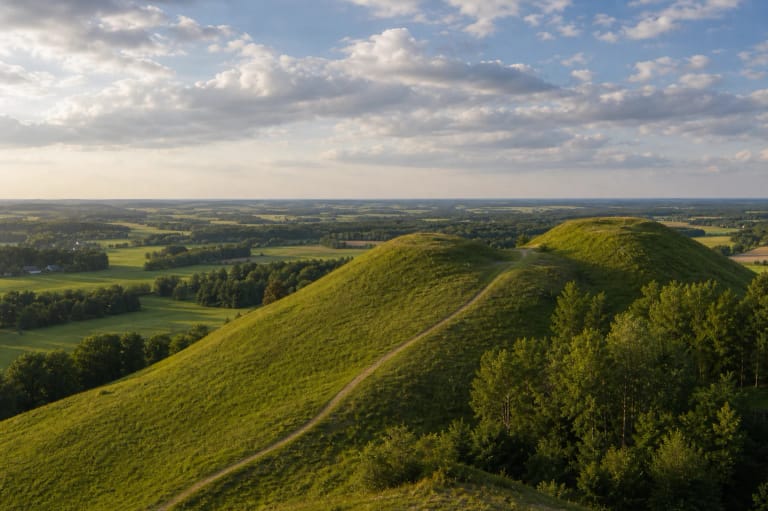
Kaltinėnai's old timber church burned down in June 1988. Parish priest Petras Linkevičius took the initiative in constructing a new sanctuary and shaping its surroundings. The park's official history recounts that gravel required for the new church was extracted from the neighbouring hill and that the altered landform inspired the creation of a place for prayer and gatherings.
Bishop Antanas Vaičius supported the Calvary project. The excavation hollow became a natural amphitheatre, while paths and stations appeared on its slopes; an inscription dates the park's creation to 1989-2006. A timber angel added later commemorates Linkevičius, so the park also preserves the memory of the priest who turned the idea into reality.
The nearly 20-metre Cross of the Nation's Resurrection
The park's tallest landmark is the white reinforced-concrete Cross of the Nation's Resurrection designed by sculptor Juozas Rupšys. It was erected in 1990 and consecrated in September that year. Official and municipal sources describe it as nearly 20 metres high, making it both a distant landmark and the visual anchor of the Kaltinėnai landscape.
This is not a conventional cross made of straight beams. Its trunk rises in a wave-like form that tapers towards the top, while the composition incorporates the Columns of the Gediminids. The park's creators associated the wave with Lithuania's national revival and the Sąjūdis movement. The year 1990 is therefore more than a construction date: the cross became a symbol of the restoration of independence.
Boulder reliefs by eleven artists and a Marian grotto
Eleven Lithuanian artists worked on the Calvary stations. The park's official material singles out Antanas Kmieliauskas, who helped carve reliefs into field boulders and painted frescoes, and also names Stasys Žirgulis, Virginija Babušytė-Venckūnienė, Vytautas Martišius and other contributors. Their different hands mean that the stations are not identical serial plaques: each stone has its own rhythm of figures and treatment of the surface.
Another landmark is the grotto of the Virgin Mary, also called the Lourdes grotto. It extends the pilgrimage theme, but it is a local prayer space rather than a literal copy of the historic Lourdes sanctuary in France. To understand the park, do more than photograph the great cross: follow the stations slowly, read the inscriptions and examine the carved reliefs at close range.
Panorama, paths and respectful visiting
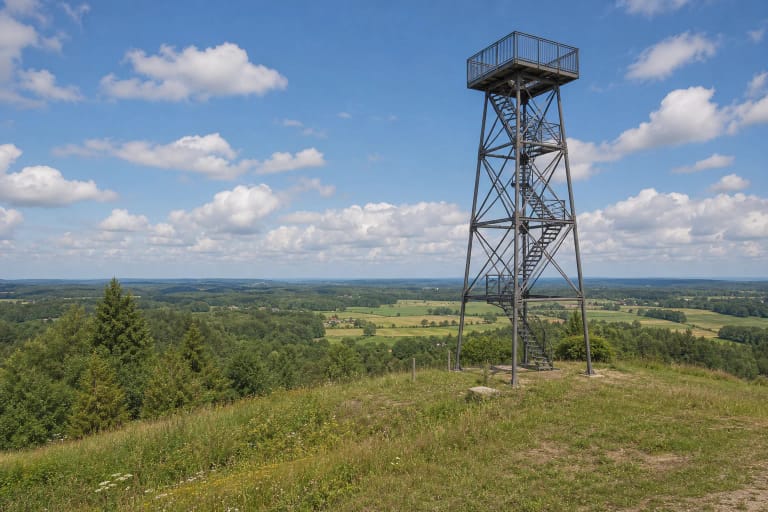
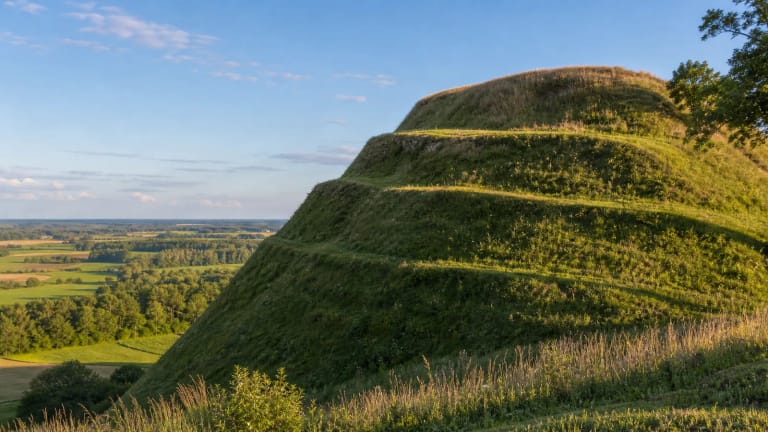
The park occupies hilly ground above Kaltinėnai, and its higher points overlook the town and the Samogitian Upland. Allow roughly 45-90 minutes for the principal landmarks. A longer walk can continue to the neighbouring Pilių Hillfort, also known as Kepaluškalnis. The slopes and paths are easier in dry weather.
No fixed official opening hours or admission price are published. As this is an outdoor place of prayer, visit in daylight and check current conditions on the official website before a special journey. The terrain includes steeper slopes, and there is no detailed published description of a step-free route or accessible toilet, so travellers with mobility needs should confirm access in advance. Do not climb on sculptures or altar stones, and maintain quiet when worship is taking place.