- Place
- Kėdainiai District Municipality
- Region
- Kėdainiai District
- Type
- active wooden Catholic parish church with historicist and Gothic features
- Address
- 62 Tujų Street, LT-58266 Gudžiūnai, Kėdainiai District
- Coordinates
- 55.51114, 23.77110
- Visit duration
- 30-60 minutes; longer if attending services according to parish arrangements
- Best time
- during the day or before publicly listed Sunday services, after checking the schedule
Gudžiūnai Parish of the Sacred Heart of Jesus
A vivid wooden sanctuary in Gudžiūnai village
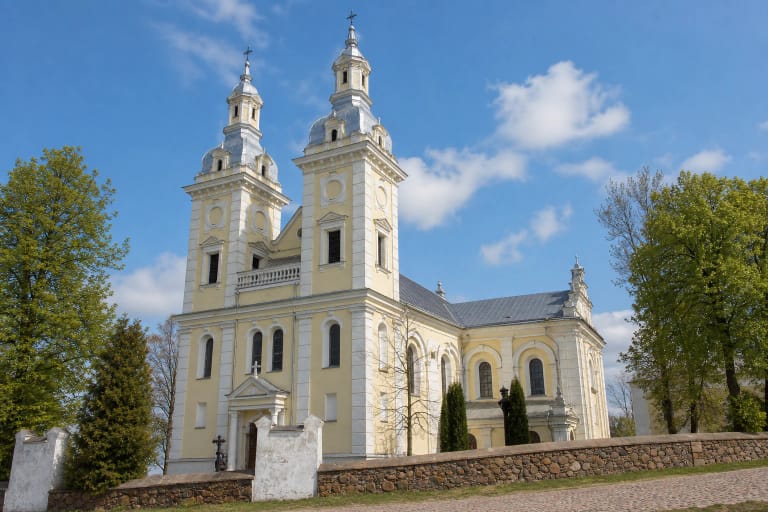
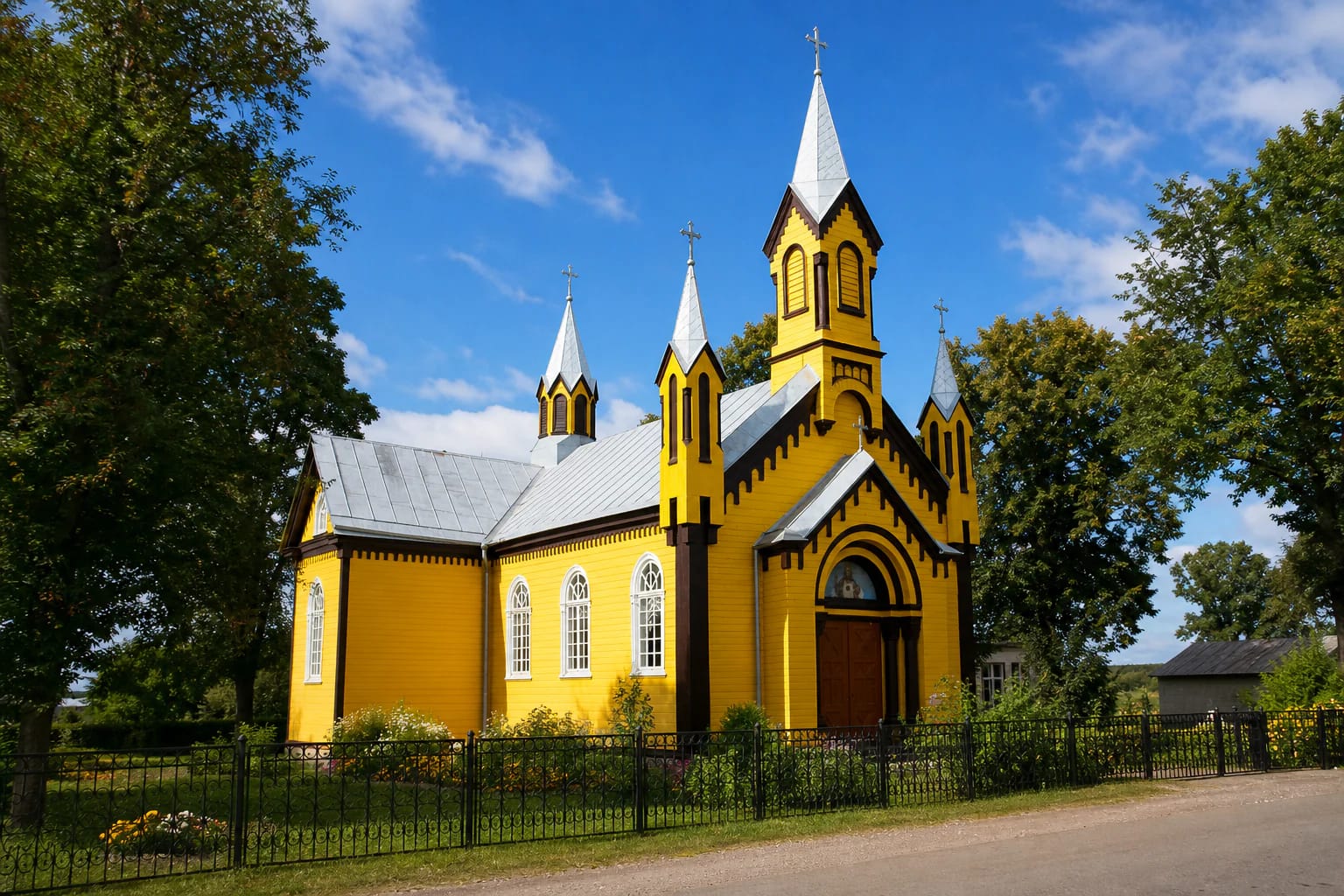
Gudžiūnai Church of the Sacred Heart of Jesus stands on Tujų Street in Gudžiūnai, Kėdainiai District. It is recognizable from a distance by its yellow-painted timber walls, dark vertical trim, and white spire tips. Some map data still shows 58 Tujų Street, while the current parish address is 62 Tujų Street.
The building is an active parish church, not an all-day museum. The exterior can be viewed publicly, but the churchyard and interior should be approached with respect for services, the community, and religious privacy.
From the 1812 chapel to the present church
A chapel stood in Gudžiūnai from 1812. The present wooden church was built in 1910-1911 on the initiative of priest Antanas Masiulis, with Count A. Chrapovickis and other supporters contributing to the project. Local sacred history therefore begins before today's building.
At first the church was a filial church of Vosyliškis Parish; Gudžiūnai Parish was established in 1927. This change shows how a chapel and outlying religious centre became the anchor of an independent village community.
Historicist and Gothic features on the facade
The church has a cruciform plan, while the historicist composition carries Gothic features. The main body is accompanied by a tall central tower and smaller turrets; their white pointed roofs rise above the village trees. Pointed-arch windows, semicircular door and window openings, and dark trim give the building its distinctive but restrained silhouette.
Look for the rhythm of the vertical boards, the side volumes of the cross plan, and the scale of the timber construction. This is not a masonry cathedral or Baroque city basilica: its value lies in the surviving whole of village wooden sacred architecture.
Memory layers in the churchyard and interior
The church's treasures include a nineteenth-century oil painting of the Holy Trinity. A traditional wayside shrine (koplytstulpis) stands in the churchyard, and people connected with Gudžiūnai history add to the local memory. These elements belong to the active parish setting.
Interior visits depend on parish arrangements. If you wish to photograph or quietly view the altar, contact the parish and do not enter during services without an invitation. A Sunday period may be useful for planning, but arrange interior access in advance.
Visiting Gudžiūnai Church and respecting the parish
Sunday access is currently given as 10:30 to 12:00, with Mass at 11:00 and confession from 10:45 to 11:00. Schedules can change, so check parish information before travelling. No separate visitor ticket is indicated, but this is an active parish rather than an all-day museum.
Allow 30-60 minutes for the exterior and churchyard. Rural roads and the church grounds may not have tourist infrastructure, universal access, or a marked car park. Do not block the gate, follow local signs, and fit the visit around the community's life.