- Place
- Kėdainiai District Municipality
- Region
- Kaunas Region
- Type
- Uprising memory museum, manor homestead, and sacred Paberžė ensemble
- Address
- Paberžė, Gudžiūnai Eldership, Kėdainiai district
- Coordinates
- 55.50385, 23.96477
1863 Uprising Museum, Paberžė Museum
Paberžė as a Memory Place
Paberžė is not only a museum in one building. It is a combination of village, manor, church, cemetery, uprising memory, and the legacy of Tėvas Stanislovas. For that reason it is worth coming not for a quick stop but for a slower visit.
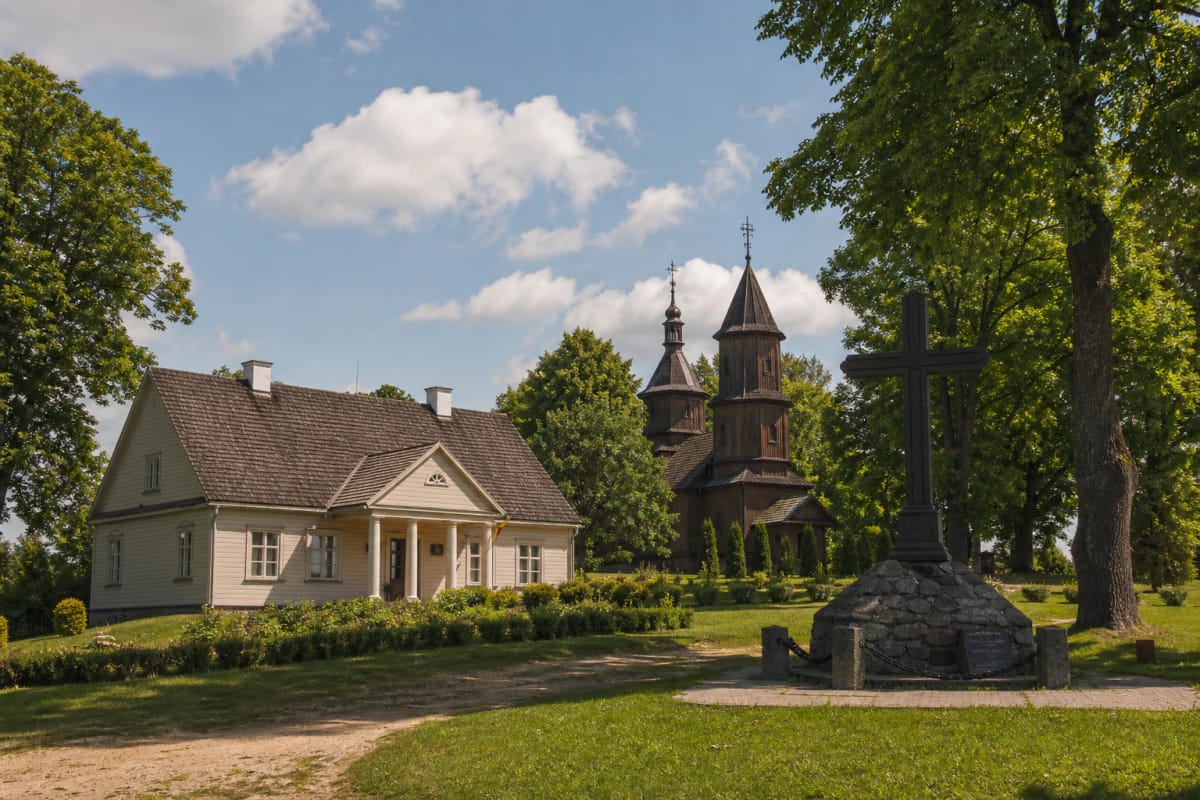
The 1863 Uprising Museum operates in the manor house of Paberžė Manor. Kėdainiai Regional Museum states that the manor building itself was built in 1793 and that the museum has operated here since 1993. That date matters: after Lithuania restored independence, Paberžė reinterpreted the theme of uprising and freedom.
Antanas Mackevičius and the 1863 Uprising in Paberžė
The most important historical name in Paberžė is priest Antanas Mackevičius (1828-1863). According to VLE, he served in the Paberžė filial church in 1855-1863, taught peasants to read, spread anti-tsarist ideas, and in 1863 began the uprising here first in Kaunas Governorate: in the church he read the insurgent manifesto and went with several hundred people to the Krekenava forests. Kėdainiai Regional Museum gives the date as March 20, 1863.
In Paberžė the 1863 uprising is therefore not an abstract date. It is tied to a specific church, rectory, parish people, and a priest's decision to assume political and military responsibility. Mackevičius became one of the uprising leaders, was appointed voivode of the Kaunas Governorate insurgents, was arrested in December 1863, and was hanged in Kaunas by sentence of a field court.
Tėvas Stanislovas' Paberžė
The memory of Paberžė is strongly shaped by Tėvas Stanislovas, the Capuchin Algirdas Mykolas Dobrovolskis (1918-2005). VLE states that he was transferred to Paberžė in 1966 and became a long-lasting figure of spiritual attraction here: he collected church art and ethnological material, distributed banned literature, and received many people, especially youth and dissidents.
This layer explains why Paberžė often leaves an impression that is more personal than a historical museum alone. Tėvas Stanislovas is buried in Paberžė, so the uprising theme merges here with Soviet-era resistance and the spiritual culture of the independence period.
What to See in the Museum and Paberžė Ensemble
The museum exhibition presents the causes, course, participants, and memory of the 1863 uprising. Kėdainiai Regional Museum also mentions a lantern collection, which fits the world of objects and symbols gathered by Tėvas Stanislovas in Paberžė.
After the museum, walk around the wooden Church of the Visitation of the Blessed Virgin Mary, the cemetery, the manor surroundings, memorial signs, and Tėvas Stanislovas' former almshouse. In Paberžė the main value is not only individual exhibits but the atmosphere of the whole place.
Opening Hours, Tickets, and Practical Notes
On 29 July 2026, Kėdainiai Regional Museum stated that outside the summer season the 1863 Uprising Museum opens daily from 9:00 to 17:00. From 6 July 2026 until autumn, it is closed on Mondays and Tuesdays and opens Wednesday-Sunday from 9:00 to 17:00. Last admission is 30 minutes before closing; the museum closes on public holidays and one hour earlier on their eve.
The official branch page listed general admission at EUR 2 per person, with discounts or free entry for eligible visitors. Opening hours, the start of the autumn schedule, concessions, education prices, and payment methods can change, so verify them on the official page or by telephone before travelling.
Allow at least 1 hour for Paberžė, and 2 hours or more if you want to walk the ensemble calmly and spend time at the Tėvas Stanislovas sites. Groups and educational activities should be registered in advance through Kėdainiai Regional Museum.