- Place
- Šalčininkai District Municipality
- Region
- Dzūkija
- Type
- protected common oak
- Address
- Nemkamedžio Forest, Poškonys eldership, Šalčininkai District
- Coordinates
- 54.24860, 25.64022
- Visit duration
- 30-60 minutes for the tree and its setting
- Best time
- late spring, summer, or early autumn, when the forest path is usually drier
Grybiškiai Elder Oak
Grybiškiai Oak in Nemkamedžio Forest
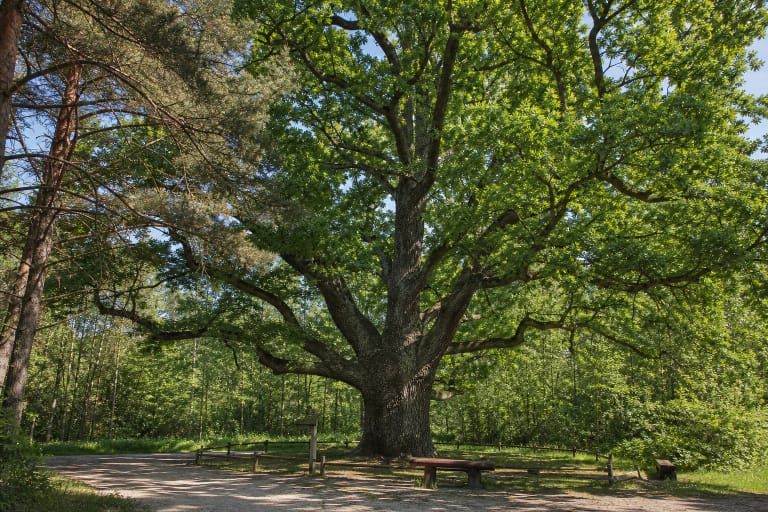
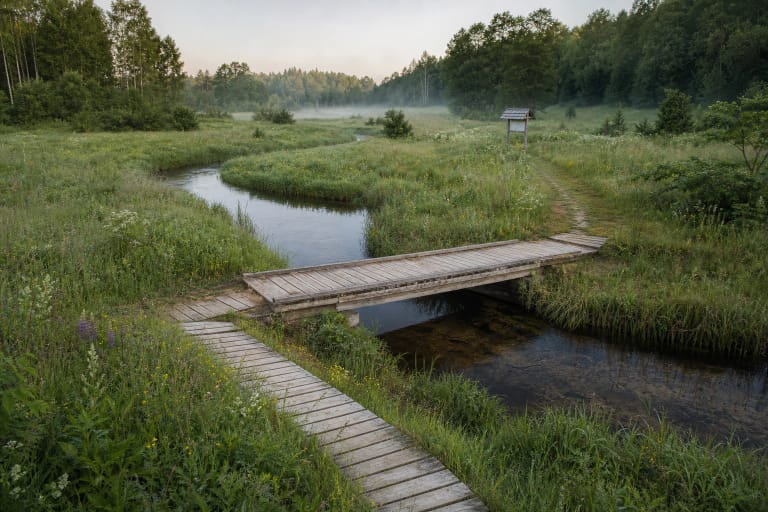
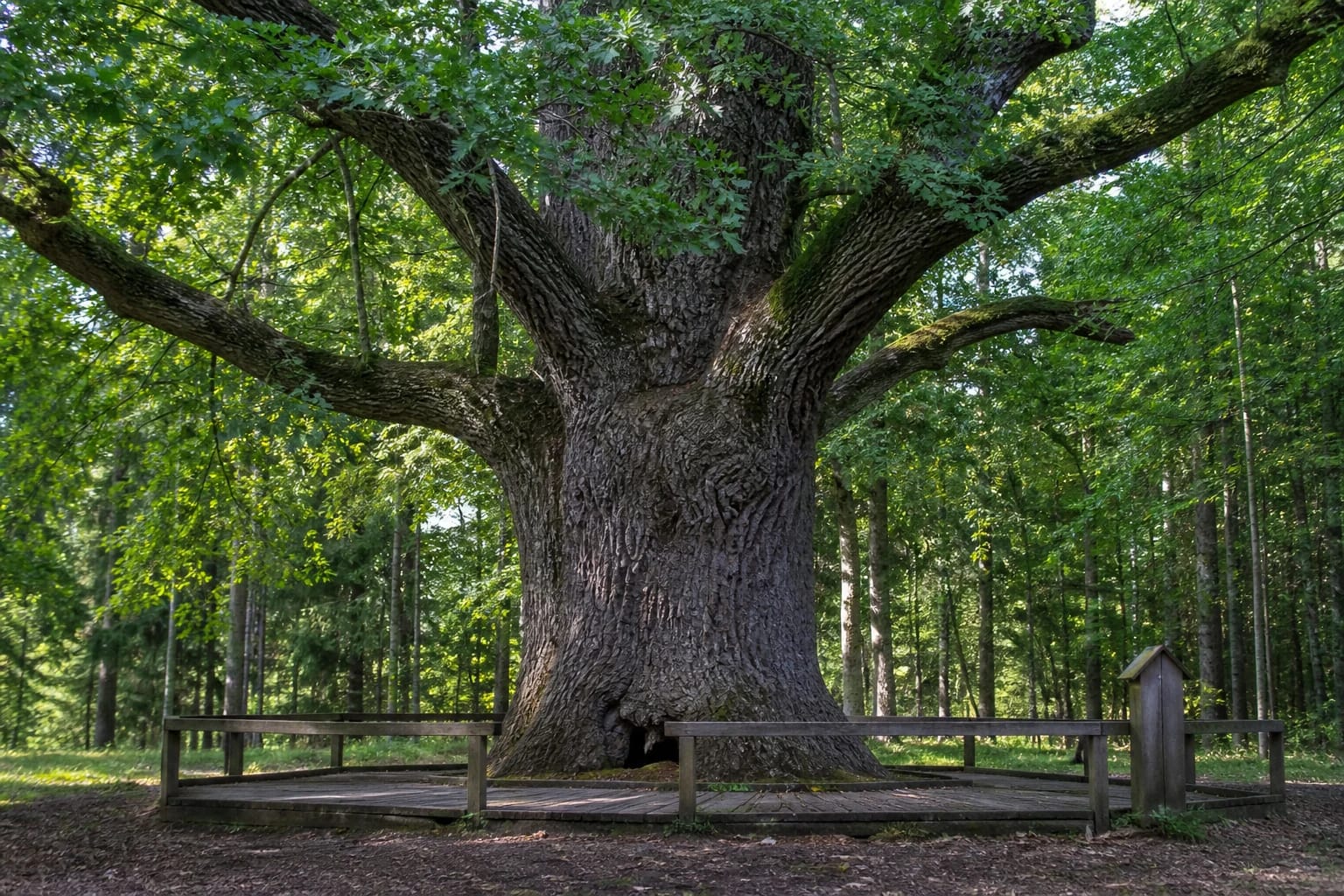
Grybiškiai Oak stands in Nemkamedžio Forest, about 2 km southeast of Poškonys, within Dieveniškės Historical Regional Park. A forest path leads to the tree, and an information stand marks the site, so this is more than an old tree glimpsed accidentally from a road.
The common oak is a protected natural monument and one of the park's most expressive natural sites. It rewards a slower visit: walk around the trunk, take in the scale of the branches, and remember that the woodland quiet and undisturbed roots are part of what is being visited.
The thousand-year-old Grybiškiai Oak and its measurements
VLE identifies Grybiškiai Oak as a common oak about 1,000 years old. VLE gives a height of 26 m, a trunk diameter of about 1.6 m, and a circumference of 4.93 m at 1.3 m, while the current Saugoma.lt record gives 4.98 m. The published circumference values differ, so both are reported explicitly.
The figures become easier to understand when you stand beside the trunk. Its broad, deeply furrowed bark and low-spreading branches reveal a long growth history, but the age should not be treated as a year-by-year measurement from a core sample. The age is approximate and should be understood that way.
Grybiškiai Oak protection and visitor footprint
The oak has been protected since 1999. In 2016 the park directorate placed a wooden root-protection platform and information stand beside it, allowing visitors to approach without compacting the soil around the old trunk. These structures are conservation measures, not an invitation to climb on roots, rails, or the tree itself.
Stay on the existing path and wooden platform, do not touch the bark or hang objects from branches, and avoid driving a car right up to the tree where the track is not designed for it. The forest floor can be slippery after rain, so choose footwear for real woodland conditions rather than for a paved attraction.
Natural markers near Grybiškiai Oak
About 60 m south of Grybiškiai Oak grows Grybiškiai Pine. This nearby pair is a reason not to stop at the largest trunk alone: look at the forest's species mix, ground cover, and smaller landscape details that appear between the park's named highlights.
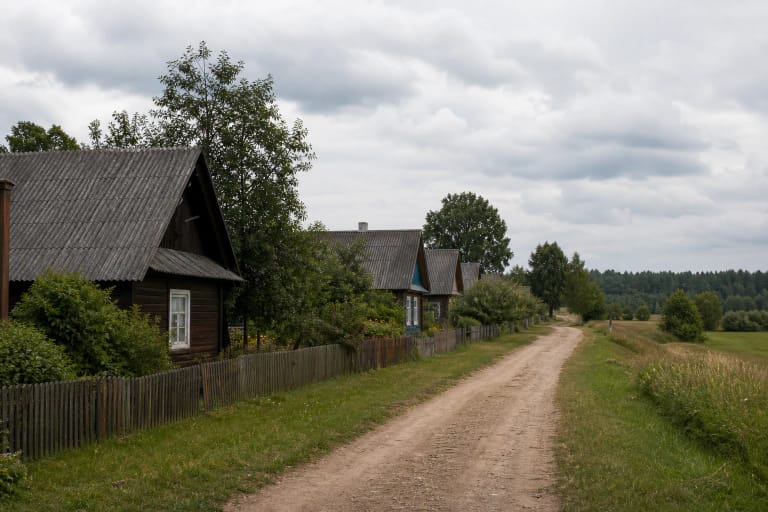
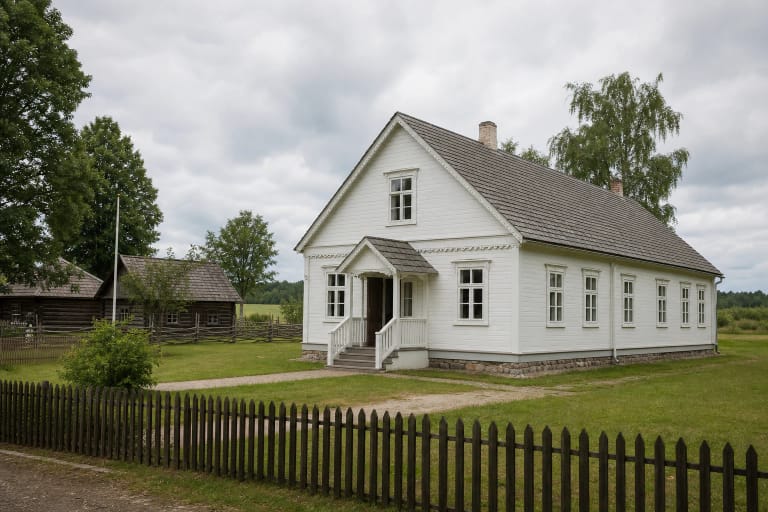
Grybiškiai Oak also belongs to the wider natural story of Dieveniškės Historical Regional Park. The park protects not only woodland but also a distinctive southeastern Lithuanian cultural landscape, so the visit works well with Poškonys village, the visitor centre, and other nearby sites instead of ending as soon as the photograph is taken.
The mushroom story behind Grybiškiai
The oak's name sounds like a reference to mushrooms, and an exceptional find really was recorded nearby. The encyclopaedia says that in 1971 a 3.05 kg boletus was found by Grybiškiai, with a cap 49 cm across and a 28 cm stem. It is a memorable local detail, not a reason to search the forest for record specimens.
Plan the trip as a visit to a natural monument, with care for the tree and its surroundings. Its measurements, approximate age, wooden protection, and relationship with the forests of Dieveniškės offer useful context without invented legends.