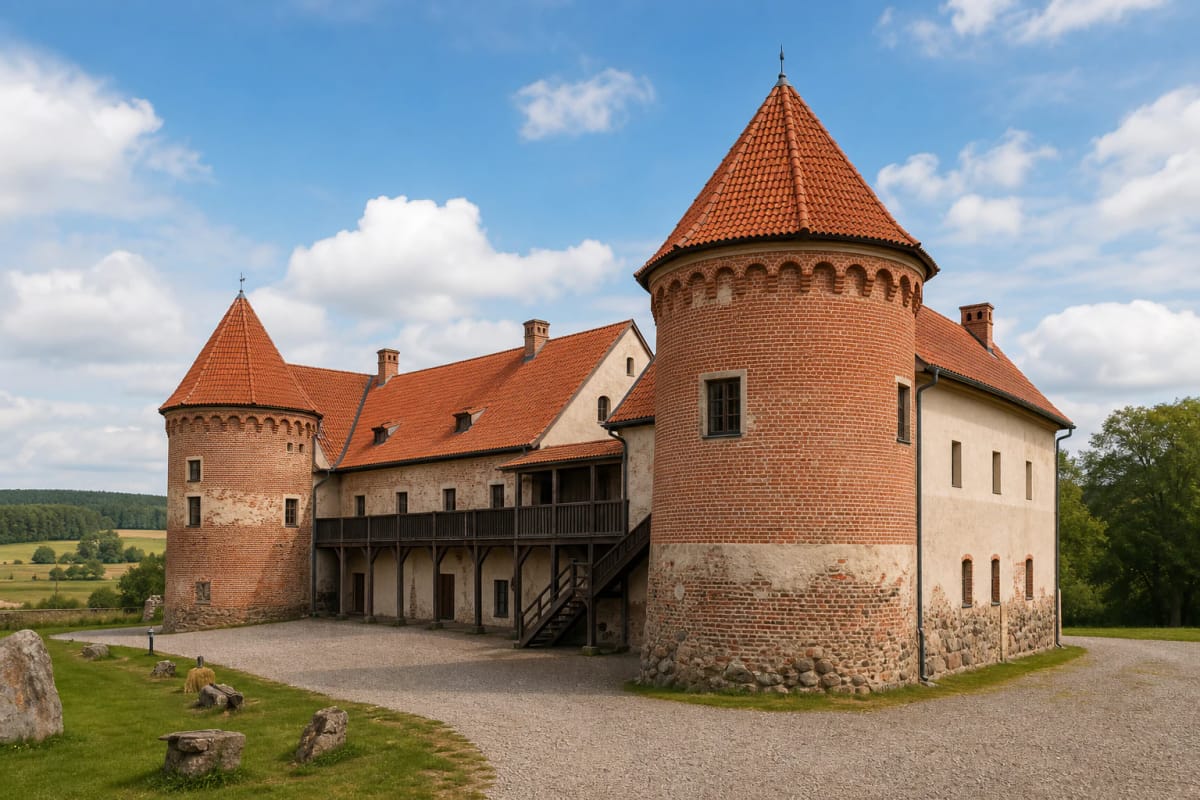
- Place
- Norviliškės, Šalčininkai District Municipality
- Region
- Vilnius Region
- Type
- Renaissance-heritage folwark and former monastery complex
- Address
- Norviliškės village, Dieveniškės eldership, Šalčininkai district
- Coordinates
- 54.23630, 25.78160
Norviliškės folwark estate, Norviliškės castle-monastery
Castle, Folwark, and Monastery
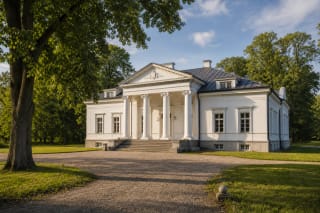
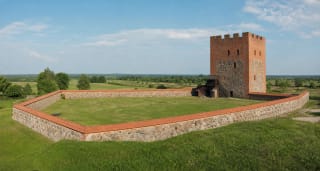
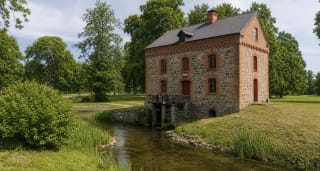
Norviliškės Castle is a convenient popular name, but the Cultural Heritage Register describes the site more precisely as the Norviliškės folwark estate building complex. It began as a folwark of Surviliškis manor and, in the seventeenth century, belonged to the Szorc family.
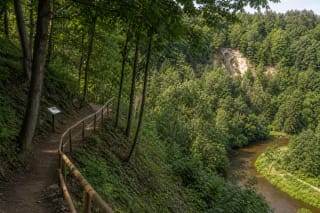
The site stands near Dieveniškės, close to the Lithuanian border, within the Norviliškės Landscape Reserve and Dieveniškės Historic Regional Park. Its borderland setting gives it a different feeling from city manors: the road, landscape, and remoteness are part of the experience.
The Szorc Family and the Franciscans
Norviliškės history reaches the late sixteenth century. After the death of her husband Vaitiekus Szorc in 1608, Darata, or Dorota, Szorcienė played the key role; by a 1617 foundation she transferred Norviliškės with Peckūnai village to the Vilnius Franciscans.
The monks first built a wooden church. The monastery had five cells and housed eight monks. A fire in the early nineteenth century destroyed documents, including the foundation charter, so some early details remain unclear. A new church was built in 1745.
Closure and Changing Functions
After the 1831 uprising, the imperial Russian authorities closed many monasteries. Norviliškės monastery was closed in 1832, the monks were moved to Navahrudak, the church was dismantled, and its logs were taken to Halshany for an Orthodox church. Bricks meant for a new church were used for barracks.
In 1904 the former monastery and barracks were given to a girls' agricultural school, which operated until the First World War. In 1919-1928 the buildings temporarily served the parish and rectory, and in 1928 a new wooden church was built farther away.
Renaissance Architecture and Restoration
The Cultural Heritage Register identifies the palace as Renaissance in style: a composite volume with two irregular-plan towers and a basement level, with rectangular firing openings in the facades and towers that create the fortified 'castle' silhouette. The surviving gate tower is believed to have first been an entrance gate and only became a bell tower in 1745.
The west and east facade arcades with cross vaults were destroyed in 1655 during the war with Muscovy and restored during the 1999 reconstruction. A restoration project was prepared in 1999, and in 2004-2007 the palace was reconstructed and adapted for tourism. The protected complex covers about 23,376 sq. m and is of national significance.
Visiting and Practicalities
Norviliškės is not a standard museum with clearly published daily exhibitions. Today it is a private heritage and event venue, so current information and access should be checked in advance; during research, no reliable permanent opening-hours and ticket page could be established.
Even if the interior is closed, the site can still be worth a stop for the exterior, historical name, and Dieveniškės landscape. Combine it with Dieveniškės Historic Regional Park routes and the visitor centre in Poškonys.