- Place
- Vilnius City Municipality
- Region
- Vilnius
- Type
- exhibition on the history and memory of the Holocaust in Lithuania
- Address
- Pamėnkalnio g. 12, Vilnius
- Coordinates
- 54.68505, 25.27460
- Visit duration
- 60-90 minutes; the guided tour lasts about 60 minutes
- Best time
- on a weekday morning or with a pre-booked tour, leaving time for quiet reflection
Holocaust Exhibition, Green House Vilnius, Žaliasis namas
The first Holocaust exhibition in the Baltic states
The exhibition opened at Pamėnkalnio g. 12 in 1991, the first of its kind in Lithuania and the Baltic states. Survivors of the Nazi occupation participated in its creation, preserving the character of an early memory institution in restored independent Lithuania.
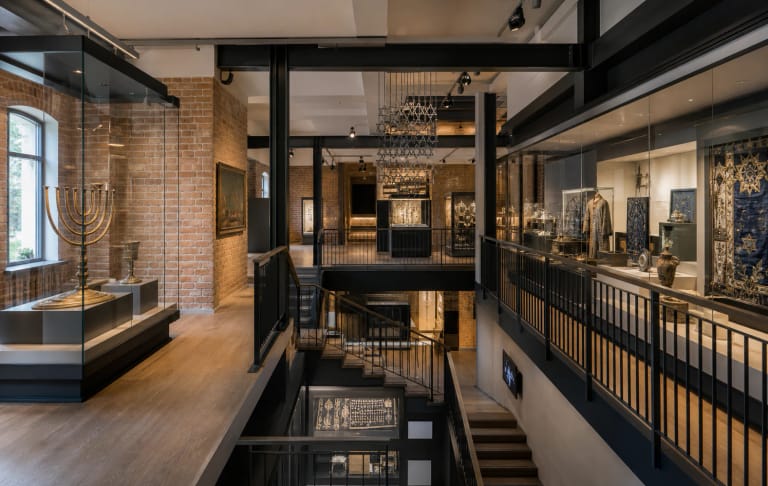
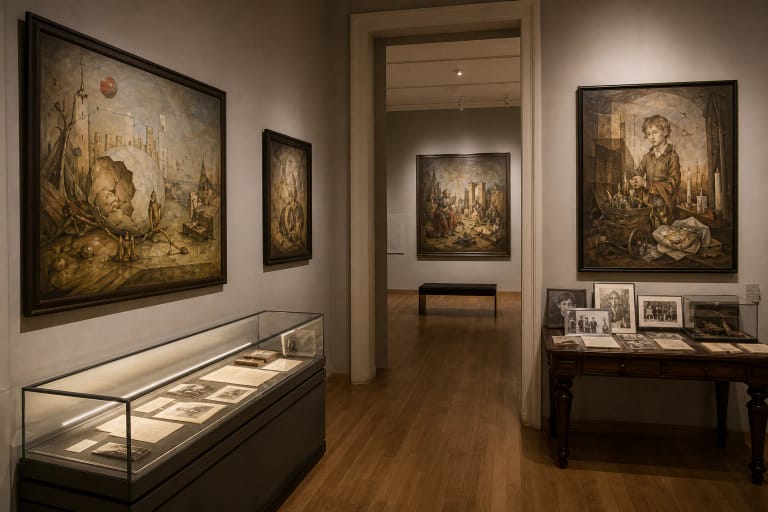
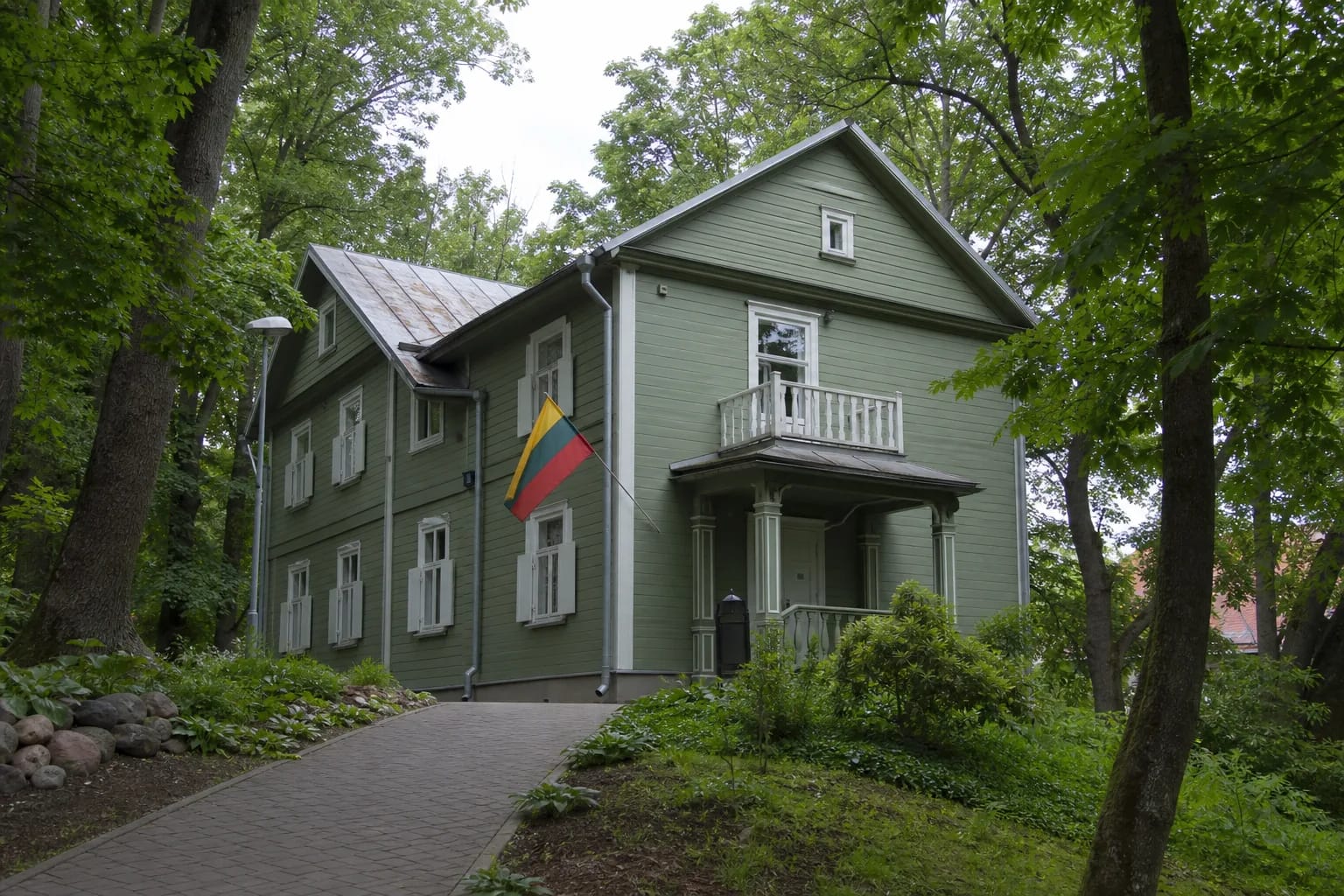
The informal Green House name comes from its small, green-painted wooden building. Its domestic scale differs sharply from monumental memorials: photographs, documents, personal objects, and testimony bring history physically close.
A chronological account of the Holocaust in Lithuania
The exhibition briefly introduces prewar Jewish life before moving through restrictions of rights, ghettoisation, mass murder, and Nazi policy. Separate sections address the Vilnius, Kaunas, and Šiauliai ghettos, spiritual and armed resistance, liquidation, and rescuers.
VLE records that more than 40,000 people were forced into the two Vilna ghettos on 6 September 1941, and liquidation began on 23 September 1943. The exhibition gives individual faces to such numbers and demands emotional as well as factual attention.
The malina and Yitskhok Rudashevski's diary
The second floor contains an interpretation of a ghetto hiding place known as a malina, opened in 2013 for the seventieth anniversary of the ghetto's liquidation. It does not literally reproduce one exact refuge but seeks to convey the emotional experience of a confined, unsafe space.
Excerpts from Yitskhok Rudashevski's diary play in Lithuanian and English. The teenager wrote in the Vilna Ghetto; his family was discovered in hiding and murdered at Paneriai in 1943. His surviving cousin Sara Voloshin found the diary in the ghetto ruins after the war.
Hours, tickets, and sensitive visiting
On 2026-07-21, the Green House opened Tuesday-Friday 10:00-18:00 and weekends 11:00-18:00, with Monday closed and last entry 30 minutes before closing. Permanent-exhibition admission cost EUR 6, concession EUR 3, and the last Sunday of the month was free.
The official 60-minute tour takes up to 25 people and requires advance booking; in 2026 it cost EUR 20 per Lithuanian-language group or EUR 30 in a foreign language, plus admission. The house is small and on a slope, so confirm access, group size, and prices. Treat photography, conversation, and other visitors with respect for the subject.