- Place
- Vilnius City Municipality
- Region
- Vilnius
- Type
- Litvak culture, languages, art, and identity museum
- Address
- Pylimo g. 4A, Vilnius
- Coordinates
- 54.68370, 25.27740
Litvak Museum
A new Litvak museum on Pylimo Street
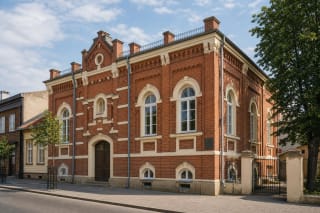
The Museum of Lithuanian Jewish Culture and Identity opened on January 18, 2024 at Pylimo g. 4A, in the former Tarbut Jewish Gymnasium building. The official Vilna Gaon Museum presents it as its newest and largest branch.
The museum is informally called the Litvak Museum, but its institutional setting matters: it is a branch of the Vilna Gaon Museum of Jewish History, not a separate institution. The name points to a broad story of Litvak culture and identity.
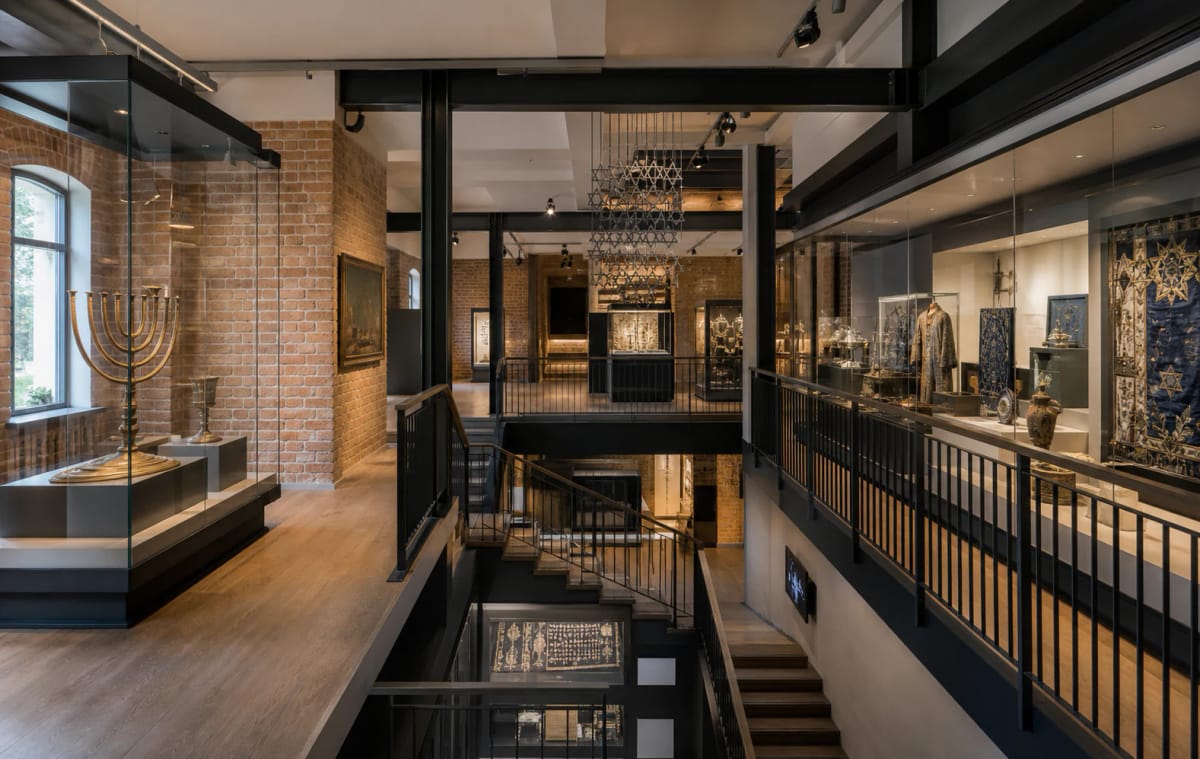
Four floors and 17 halls
The exhibition is arranged across four floors and 17 contemporary halls. The ground floor contains reception, souvenir, and education spaces, while the exhibitions occupy the three upper floors. That scale allows the museum to speak not only about tragedy, but also about everyday life, religion, languages, literature, music, theatre, visual art, and choices of identity.
The floors are organised thematically: one presents the formation of Litvak identity, historical context, and shtetl life; another focuses on secular Jewish creativity and culture, including literature, music, theatre, and art; the upper exhibition floor houses the Rafael Chwoles Museum. The exhibition also introduces internationally known Litvaks, including Nobel Prize laureates Aaron Klug and Bernard Lown, making the museum especially strong as a first broad encounter with Lithuanian Jewish culture.
The Tarbut Gymnasium building
The building's history is part of the museum's content. The masonry house at Pylimo g. 4A was built in 1915 as a Hebrew-language school; it was designed by architect Tadeusz Maria Rostworowski and founded by physician Josifas Epšteinas. After Epstein died of typhus, the school was named after him, and in the 1920s it passed to the Tarbut network. The former Tarbut Jewish Gymnasium recalls interwar Jewish education, language choices, and a modern community's effort to build its own cultural infrastructure.
The contemporary exhibition architecture was designed by Processoffice and architect Vytautas Biekša. The building therefore brings together a historic education layer and a contemporary museum language, meant not only to preserve but also to explain a complex identity.
The Rafael Chwoles Museum
The Rafael Chwoles Museum is located on the upper, third exhibition floor. This detail matters because the broader Litvak culture exhibition is joined here with the work and biography of a specific artist.
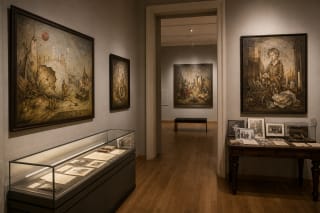
The Chwoles space helps the museum avoid becoming an abstract list of cultural fields. Through art, visitors can see how the experiences of Vilnius, the Jewish community, and twentieth-century history move into individual creative work.
Opening hours and tickets
At the time of research, the official Vilna Gaon Museum listed these opening hours: closed on Mondays; Tuesday-Friday 10:00-18:00; Saturday-Sunday 11:00-18:00; last admission 30 minutes before closing.
At the time of research, ticket policy was shared across VGM branches: adult ticket 6 EUR, reduced ticket 3 EUR, family ticket 10 EUR, with a multi-branch ticket also offered. Check current prices and free-admission days on the official page before visiting.