- Place
- Telšiai, Telšiai District Municipality
- Region
- Telšiai District
- Type
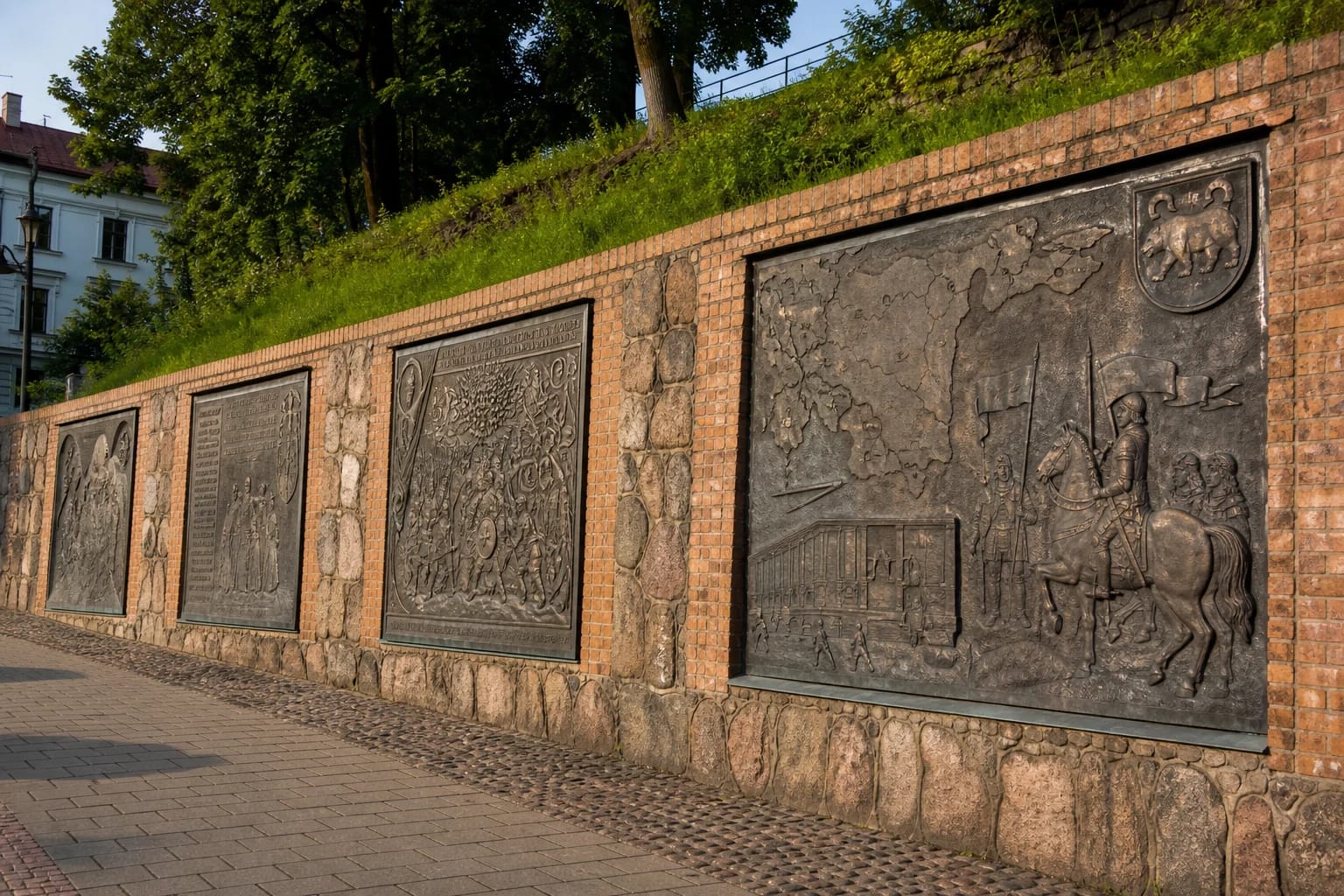
- open-air sequence of reliefs and inscriptions integrated into an urban retaining wall
- Address
- Respublikos g., Insulos kalvos atraminė siena, Telšiai
- Coordinates
- 55.98200, 22.24685
- Visit duration
- 20-45 minutes, or about 1.5 hours with the old town
- Best time
- daylight, when deep shadows do not obscure reliefs and carved signs
Didžioji žemaičių siena, Samogitian Wall in Telšiai
A modern history narrative, not an ancient fortification
Despite its name, this is not a surviving medieval defensive wall. It is a contemporary open-air display in the retaining wall of Insula Hill. Architect Algirdas Žebrauskas conceived the structure, with art panels by Petras Gintalas and Romualdas Inčirauskas.
The first panel was unveiled on September 30, 2010. The project has grown in stages and remains an open chronology. Its selected dates form an identity narrative rather than a complete history textbook.
From the 1219 mention to victory at Durbe
The first panel recalls a 1219 document mentioning Samogitia. The second addresses the Battle of Durbe in 1260, when a Samogitian victory over the Livonian Order altered power in the eastern Baltic and encouraged revolts among conquered Baltic peoples.
Other panels compress nearly two centuries of conflict with the Teutonic and Livonian orders into artistic signs. Encyclopedic sources are best for checking dates; the relief itself should be read as commemoration.
Constance, baptism and political distinctiveness
One panel concerns the Council of Constance of 1414-1418 and the Samogitian delegation's complaint in 1415. Another marks the baptism of Samogitia and its late integration into Latin Christian structures.
The duchy and royal privileges of the fifteenth to seventeenth centuries explain why regional identity rests not only on speech and custom but also a long administrative and legal distinctiveness.
Samogitian words and visiting
A panel with Samogitian words chosen by Professor Juozas Pabrėža was unveiled on July 13, 2022, the day commemorating the Battle of Durbe and Samogitian unity. It moves the sequence from war and privilege to living language.
The wall is free and always outdoors. Allow 20-45 minutes, or combine it with the old town. Do not scratch the panels or climb the retaining wall; view them from the pedestrian route.