- Place
- Šakiai District Municipality
- Region
- Suvalkija
- Type
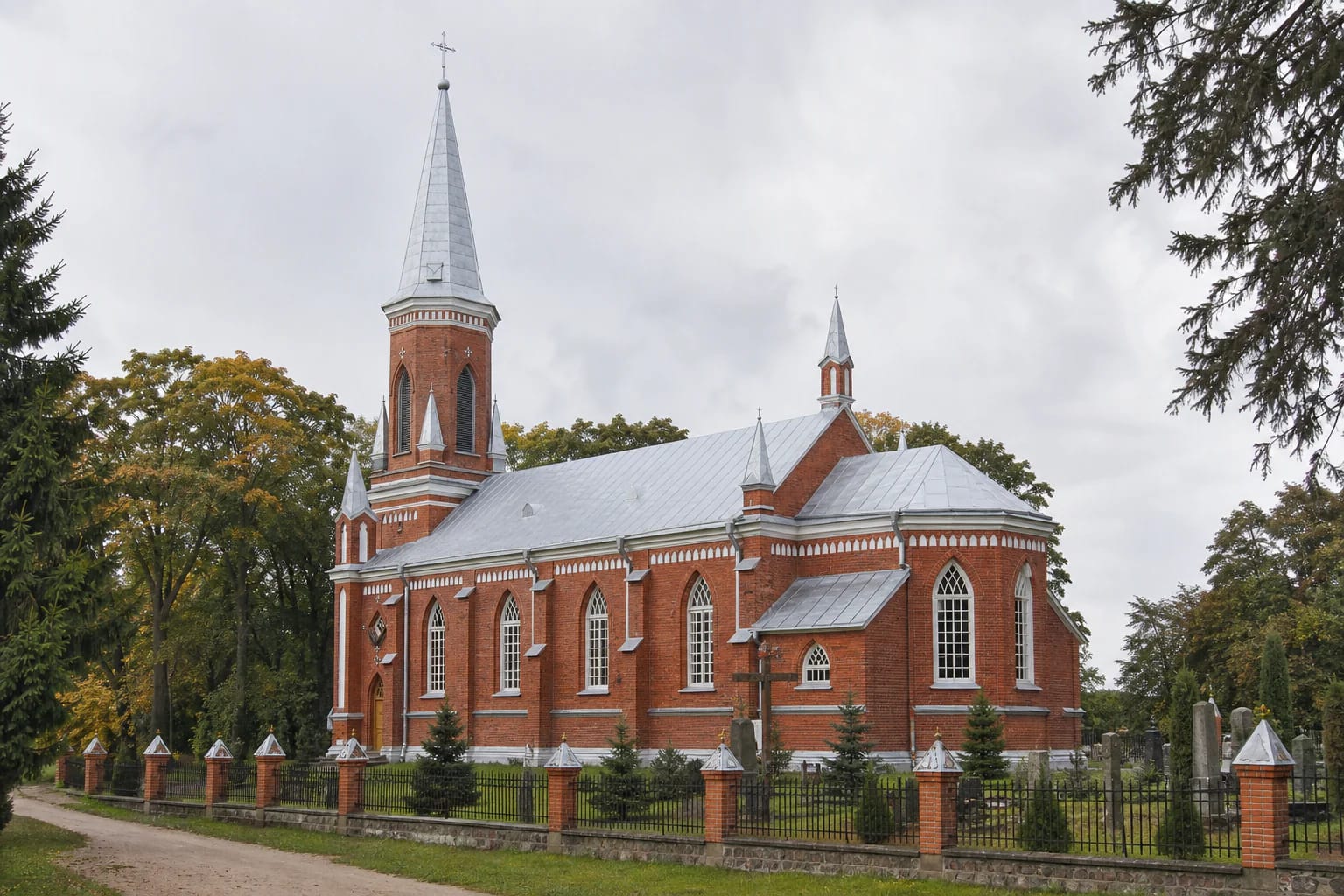
- 19th-century masonry Neo-Gothic single-nave church with one main tower, three turrets, an apse and sacristies
- Address
- 1 Taikos Street, Gelgaudiškis, 71422, Šakiai District
- Coordinates
- 55.08234, 22.97636
- Visit duration
- 30-60 minutes; longer if you arrange access to the interior
- Best time
- on Sunday before or after the 10:00 Mass, or in daylight after checking the parish schedule
Gelgaudiškis Church, Gelgaudiškis Parish of the Exaltation of the Holy Cross, Gelgaudiškis Church of the Exaltation of the Holy Cross
A Neo-Gothic landmark south of the Nemunas
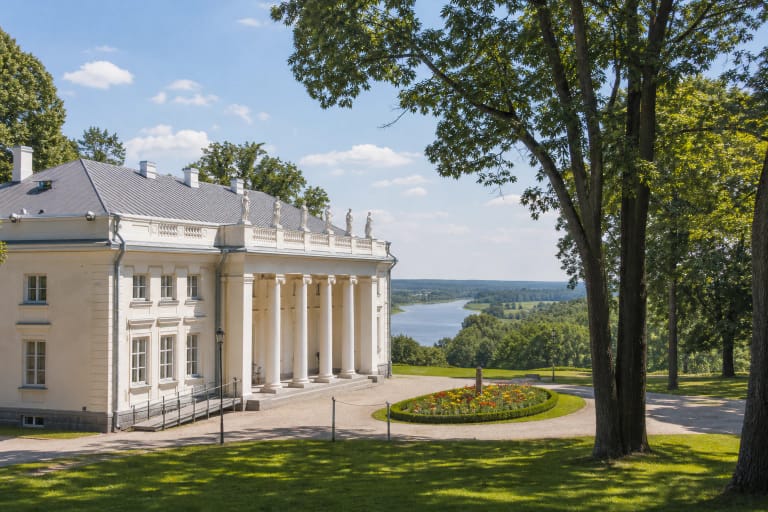
Gelgaudiškis Church of the Exaltation of the Holy Cross stands at 1 Taikos Street, about 800 metres south of the Nemunas. Its red and brown brick volume is clearly different from the pale Gelgaudiškis Manor nearby, so the two should be treated as separate stops.
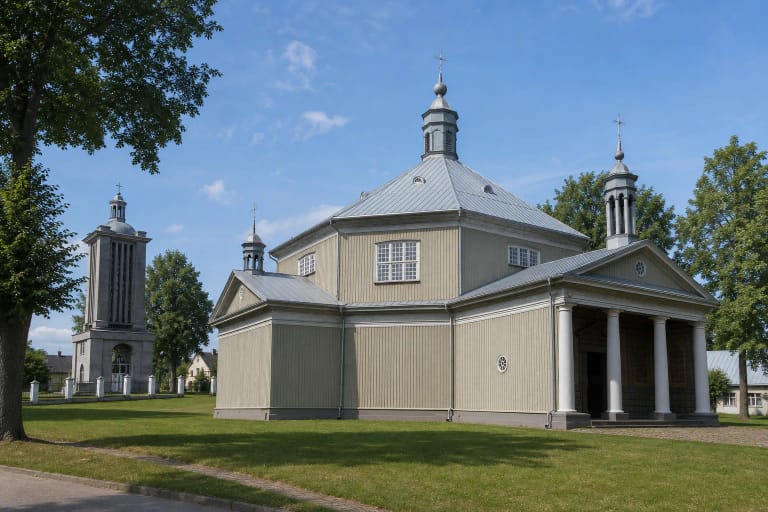
One tall main tower and three smaller turrets are the first details to catch the eye. The rectangular single-nave body, apse, sacristies and green churchyard create a recognisable town silhouette. This is an active parish, not a museum with guaranteed daily opening.
The coordinate 55.0823376, 22.9763598 marks the church site rather than the whole town centre or manor grounds. On arrival, use 1 Taikos Street and the actual permitted approach to the churchyard.
Three wooden churches before the present masonry building
Gelgaudiškis Parish began in 1578, when Povilas Sapiega built the first wooden church. After it decayed, Kazimieras Oziemblovskis built a second in 1691. Elena Czartoryska built a third wooden church in 1789, but it burned in 1864.
The present fourth church rose in 1866-1868. The manor owner Franc Koidel supplied building material, while parish priest M. Dydynskas and parishioners contributed funds. The building therefore reflects community work as well as the support of the estate.
On 24 August 1884, the sanctuary was consecrated under the dedication of the Exaltation of the Holy Cross by Seinai suffragan Juozapas Oleka. The present church was built in 1866-1868; 1868 is often used as a shortened date summary rather than a single exact day.
Neo-Gothic form, an old organ and two bells
The church is Neo-Gothic, rectangular, single-nave and single-tower. Three turrets, the apse and sacristies add vertical emphasis to what remains a modest town church.
The church is not gilded. Yellow details on the altars and chandelier are bronze, and the interior remained restrained after 20th-century repairs. The exterior's Gothic profile should not be taken as proof of a lavish museum interior.
An older organ brought to the church was restored in Warsaw by Antonio Szymański in 1894. Two historic protected bells are also part of the church: one was cast by J. K. Dorling in Königsberg in 1741 and the other by J. J. and C. F. Dornman in 1755.
Parish memory includes a 1911 chapter
The church is both a 19th-century building and a living community memory site. Its interior was repaired in 1955, 1978 and 1994, while later priests worked on the roof, tower, fence, gates, paths and liturgical furnishings.
On 14 July 1911, a short chapter involving Jurgis Matulaitis, Pranciškus Būčys and Jonas Totoraitis took place in the small sacristy. A memorial plaque was consecrated in 2012. The sacristy is part of the active parish, so ask about access before entering.
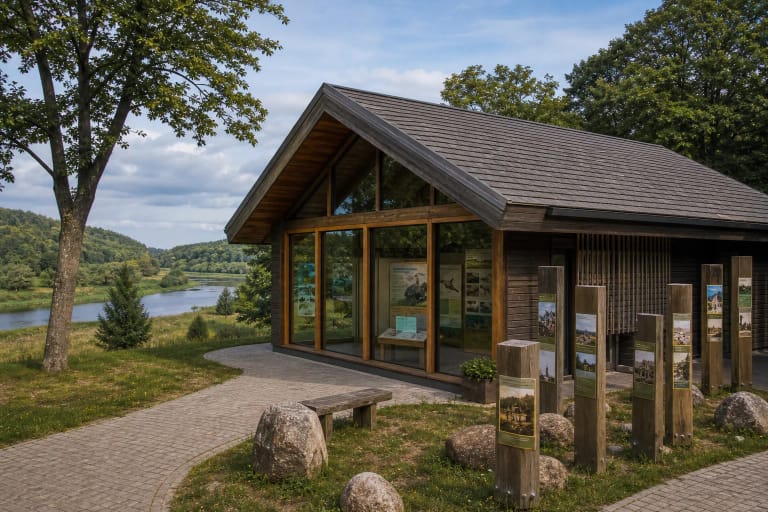
Gelgaudiškis lies on the left bank of the Nemunas and works well in a Panemuniai day route. The manor, educational trail and regional-park visitor centre nevertheless have their own conditions and are not one combined church complex.
Planning a visit to Gelgaudiškis Church
Sunday Mass is at 10:00, weekday Mass at 17:00 in winter and 18:00 in summer, and Saturdays are arranged as needed. The schedule may change, so check it before travelling or contact the parish.
Do not expect separate daily tourist hours, a ticketed tour or guaranteed interior access. Enter the churchyard and church only when access is clearly permitted, never interrupt worship, and ask before photographing or visiting the sacristy.
Allow 30-60 minutes for the exterior, churchyard and historical context. If you arrange entry inside or to the sacristy, the visit may take longer.