- Place
- Alytus City Municipality
- Region
- Alytus
- Type
- active nineteenth-century wooden Catholic church and memorial churchyard
- Address
- Savanorių g. 14, Alytus
- Coordinates
- 54.39884, 24.05085
- Visit duration
- 25-50 minutes for the church and memorial grounds
- Best time
- in daylight outside Mass or while attending worship; view the graves during daylight
Alytus Guardian Angels Church, Church of the Holy Guardian Angels in Alytus
From St Anne's chapel to the church of 1830
The Diocese of Vilkaviškis records a St Anne's chapel at this Alytus site in the eighteenth century. A bell tower was erected in 1825-1830, followed by a new rectangular wooden church with a shingle roof and octagonal turret in 1830. It then received the dedication to the Guardian Angels.
Two side chapels added in 1878 gave the building a Latin-cross plan. A 1905 reconstruction lengthened it, clad the exterior in boards, and enclosed the churchyard. Plans for a new masonry church between the wars were never realised, preserving this uncommon wooden sanctuary in central Alytus.
A blend of vernacular and Classical forms
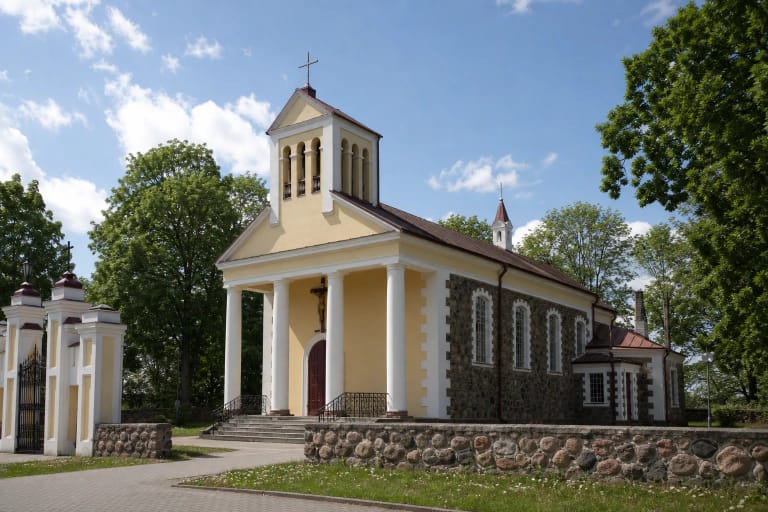
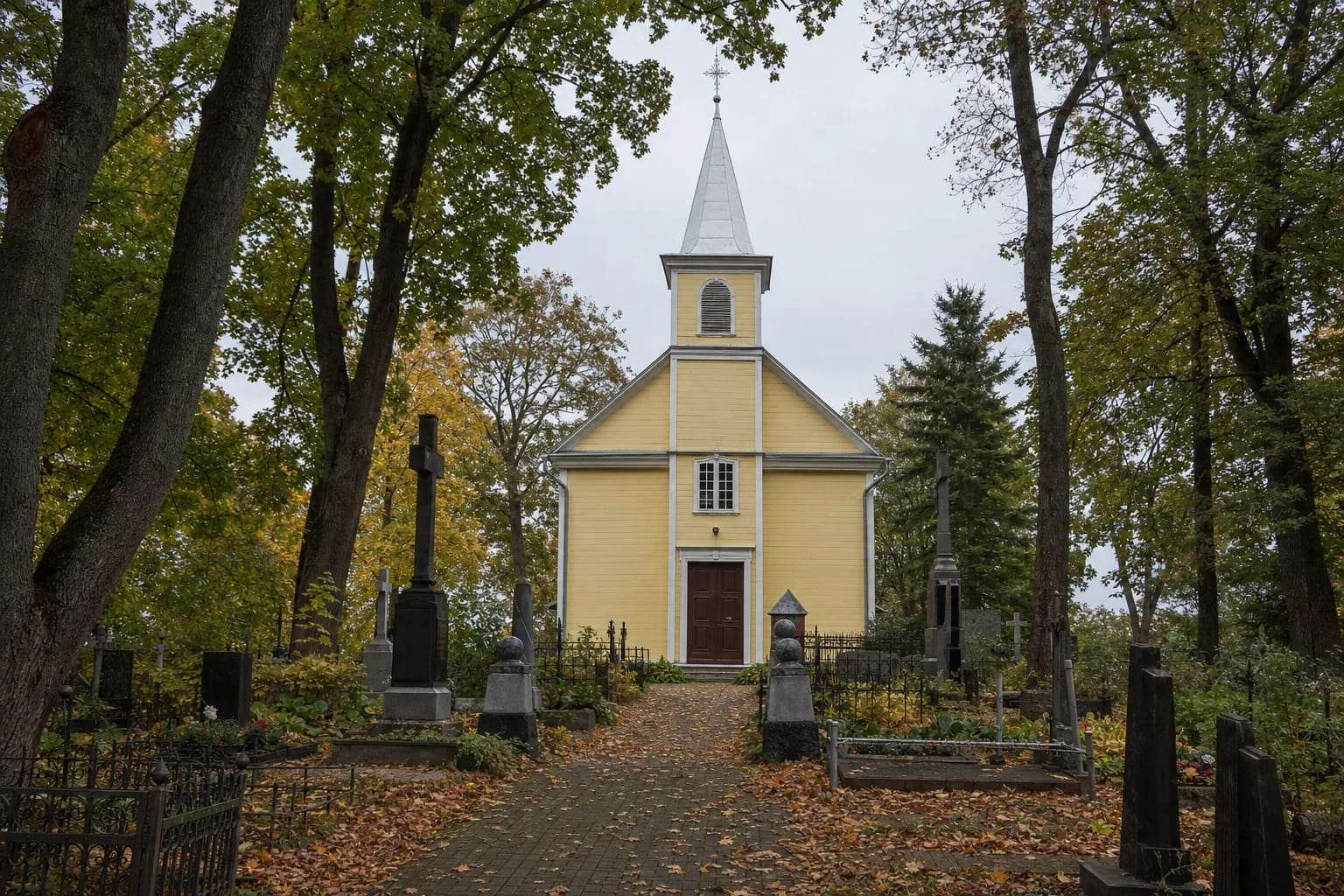
The church has a stone-masonry base, timber walls, and a sheet-metal roof. Vernacular and Classical forms meet in its restrained monumental exterior. Double doors, a segmental-arched window, a round opening in the pediment, and an openwork octagonal turret with a cross emphasise the symmetrical northern front.
Two further turrets rise over the transept ends. Because the church occupies high ground, its pale yellow timber volume appears above greenery and cemetery monuments. Paths around the edge of the churchyard reveal the composition better than the front steps alone.
Five Neo-Baroque altars
Four columns on tall bases divide the interior into three naves, while the edges of the timber ceiling curve and carry ornamental painting. Five altars form the principal ensemble. The richly dynamic high altar of the Sacred Heart of Jesus is the most important.
The side altars of the Virgin Mary and St Anthony and the transept altars of St George and St Casimir are newer but use Neo-Baroque forms to harmonise with the high altar. The organ case and two confessionals continue the same language. Explore the interior without interrupting prayer.
A churchyard of Lithuanian freedom memory
The stone-walled churchyard gradually becomes a cemetery. Volunteers from Lithuania's independence struggles and prominent local figures are buried here. Among the best known are officer Antanas Juozapavičius, killed on the Alytus bridge in 1919, and volunteer Artūras Sakalauskas, a defender of the Supreme Council in 1991.
This is an active parish, not a museum. On 2026-07-21, the diocese listed Sunday Mass at 08:00, 09:00, 10:30, 12:00, and 18:00, and weekday Mass at 08:00 and 18:00, with several morning services and 18:00 on Saturdays. No tourist ticket is stated; verify the schedule, speak quietly in the cemetery, and never step on graves.