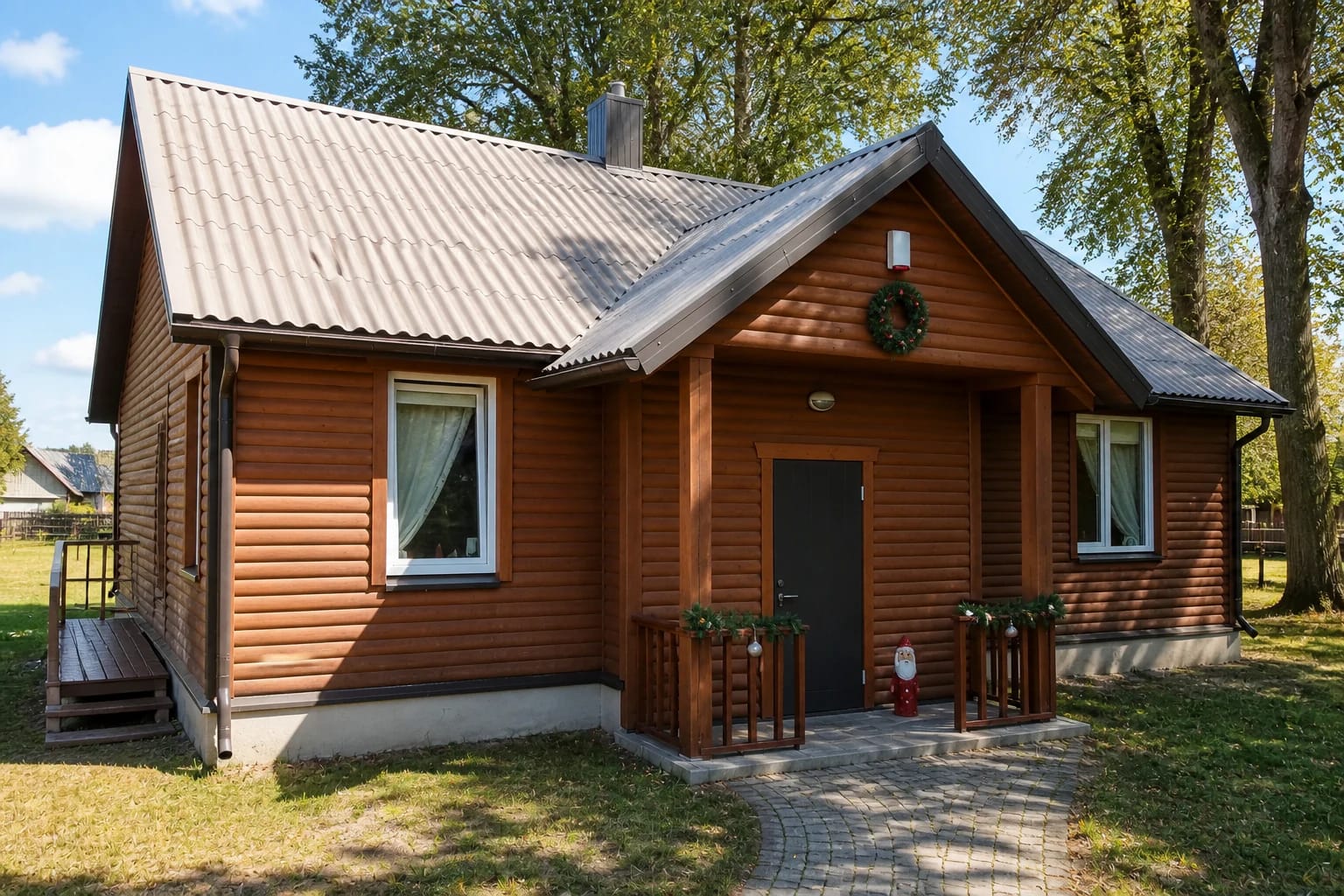
- Place
- Miežiškiai, Panevėžys District Municipality
- Region
- Aukštaitija
- Type
- a community museum devoted to old Christmas-tree ornaments and seasonal decorations
- Address
- 26A Nevėžio Street, Miežiškiai, Panevėžys District
- Coordinates
- 55.67688, 24.53888
- Visit duration
- 30–60 minutes; longer if you book an educational programme
- Best time
- a visit arranged in advance; ask about seasonal programming before Christmas
Miežiškiai Christmas Tree Ornaments Museum, Old Christmas Tree Ornaments Museum, Christmas Ornaments Museum in Miežiškiai
A Miežiškiai community museum that requires an appointment
The Christmas Tree Ornaments Museum is at 26A Nevėžio Street in Miežiškiai, Panevėžys District. It is a small community museum rather than a large city building with a predictable daily schedule, so call +370 682 26113 to agree a date and time before travelling. Official tourism material lists it as a separate themed attraction, not as a room that automatically follows the general Miežiškiai cultural-centre programme.
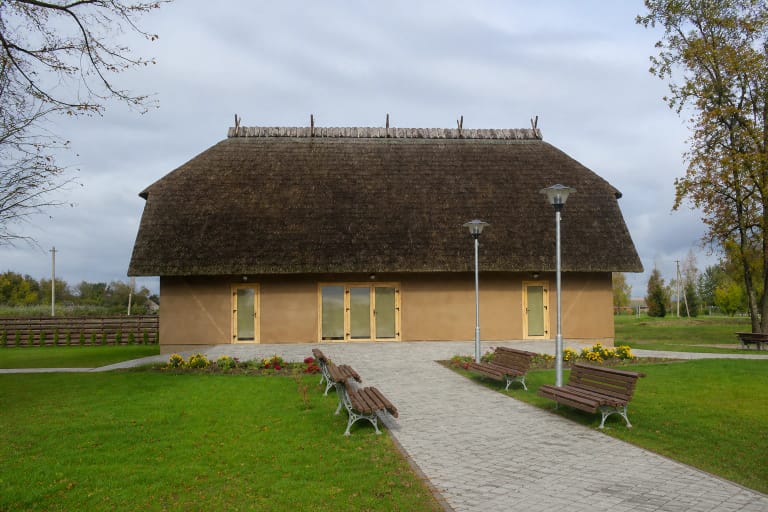
The building sets a modest museum atmosphere: a small wooden community house with a simple entrance and a window onto the garden. The museum does not publish one permanent weekly opening schedule, so plan around a confirmed meeting instead of an old timetable that may still appear online.
From Violeta Karklytė's exhibition to a shared collection
The museum dates its beginning to 2010, when Violeta Karklytė mounted the exhibition Prisiminus vaikystės eglutę, or Remembering the Christmas Tree of Childhood. During the first two months, people gave the museum about 200 ornaments. That starting point matters: the collection grew from local families sharing Christmas objects, not from a single private buyer's catalogue.
After five years the collection held about 3,000 ornaments and other seasonal objects. This was a stage in its growth, so the exact number may be different today. Look beyond the total when visiting: each ornament entered the museum with a different household, period, and memory of the holiday.
What glass, cotton, paper, and straw can tell you
Several decades of Christmas decoration meet in the collection. The oldest described cotton ornaments date roughly from 1930–1950, while other objects reach around 1980. Glass decorations stand alongside paper and foil details, straw stars, and small figures. Material matters as much as shape: it shows what people could make, buy, or preserve in different periods.
One distinctive object is a star made from a glass medical vial. It shows how seasonal decoration could grow out of an everyday object and a maker's ingenuity rather than a uniform shop-bought series. Look for more than shiny baubles: fragile handmade pieces, their surfaces, and their fastenings often reveal their age and use.
The collection includes ornaments from Lithuania, Germany, Ukraine, and Russia. These are groups describing the collection as a whole, not an assumed origin for every individual object. Comparing them can suggest differences in colours, figures, and materials, but ask the museum about a particular ornament's story.
The building came back to life with local initiative
The museum operates in a community-owned building. It was reconstructed in 2013 through a LEADER small-museums project. The exhibition's history is therefore also a building story: as the collection grew, the space was adapted so that donated objects could be shown to visitors instead of remaining in boxes.
This is not a large neutral storage hall. Timber walls, a window, and the intimate scale of the rooms make the museum's community basis visible. Allow time for slow looking and ask about a particular object's story rather than trying to complete the collection in one quick circuit.
Three Pasakiškos Kalėdos programmes for groups
The museum offers three Pasakiškos Kalėdos, or Fairytale Christmas, educational programmes for groups of at least five people; each lasts about 30–60 minutes. Choose a programme when you want more than a look at display cases and would like a themed story or activities connected with the Christmas tradition.
Education is not automatically part of every visit. When registering a group at +370 682 26113, give the group size, preferred date, and whether you want a programme. The festive name does not mean that every activity runs on every December day; the museum will confirm which programme and time are available for your visit.
Thirty to sixty minutes is usually enough for the collection itself, while an educational session calls for at least an hour. Before travelling, confirm the date, time, group size, and whether you want an educational programme.