- Place
- Upytė, Panevėžys District Municipality
- Region
- Aukštaitija
- Type
- traditional crafts centre and educational cultural space in the grounds of the former Upytė manor
- Address
- 16B Ėriškių Street, Upytė, Panevėžys District
- Coordinates
- 55.64697, 24.22657
- Visit duration
- 1–2 hours; longer with an educational programme or on an event day
- Best time
- a pre-arranged workshop, crafts market, or community event
Upytė Crafts Centre, Traditional Crafts Centre in Upytė, Ėriškiai Traditional Crafts Centre
Where the centre is, and how it differs from Upytė Hillfort
Upytė Traditional Crafts Centre stands in Upytė village, in the grounds of the former manor, rather than on the nearby Upytė Hillfort. The address is given as 16B Ėriškių Street, although 20 Ėriškių Street also appears in some listings. When booking, confirm which entrance to use and where to meet.
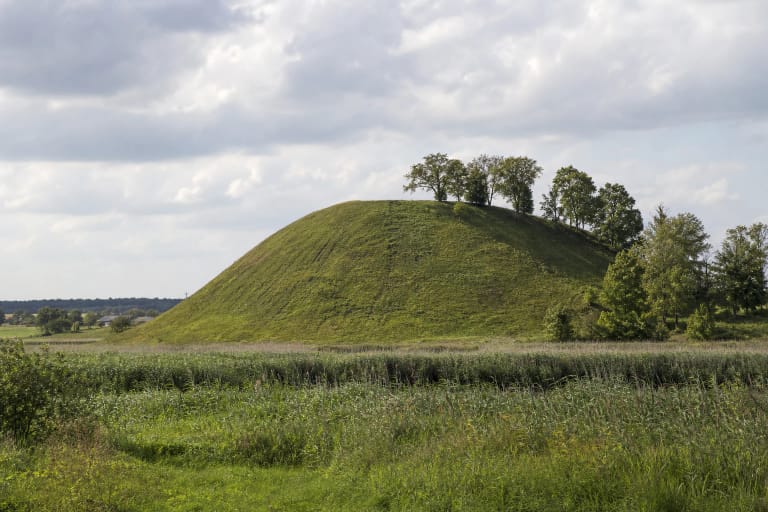
The distinction matters when planning a day: the hillfort is an archaeological and landscape site, while the crafts centre is a living cultural space visited for a meeting, workshop, or event. They make good companions on an Upytė itinerary, but one is not a substitute for the other.
A long straw-and-clay house in a former manor setting
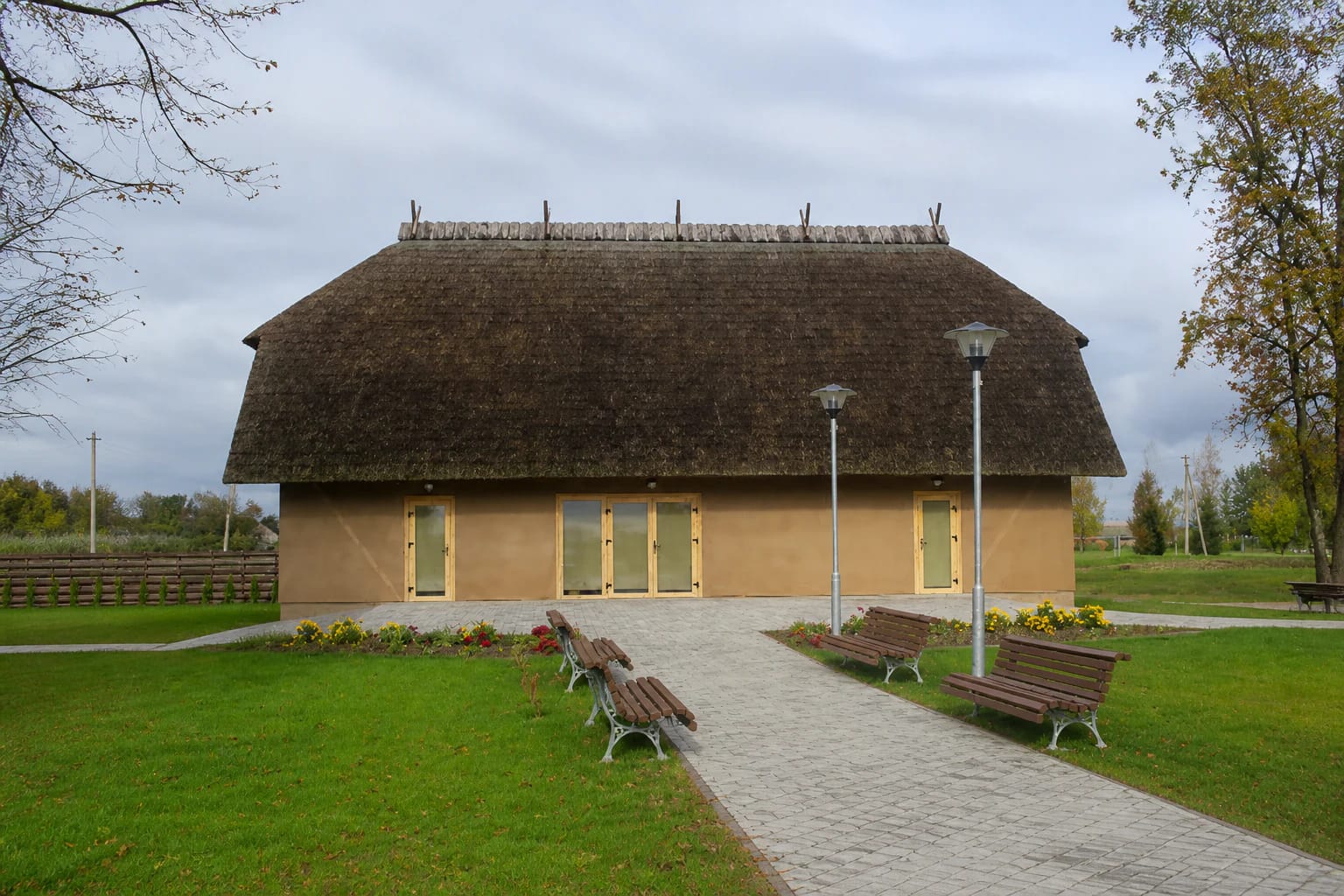
The building is defined by its proportions rather than a large sign: a long, low structure with a very large steep hipped thatched roof, clay-coloured walls, and several narrow doors and windows along one facade. A straight pale path, benches, lamps, and lawn create a tidy approach, and the house recalls a traditional Aukštaitija farmhouse.
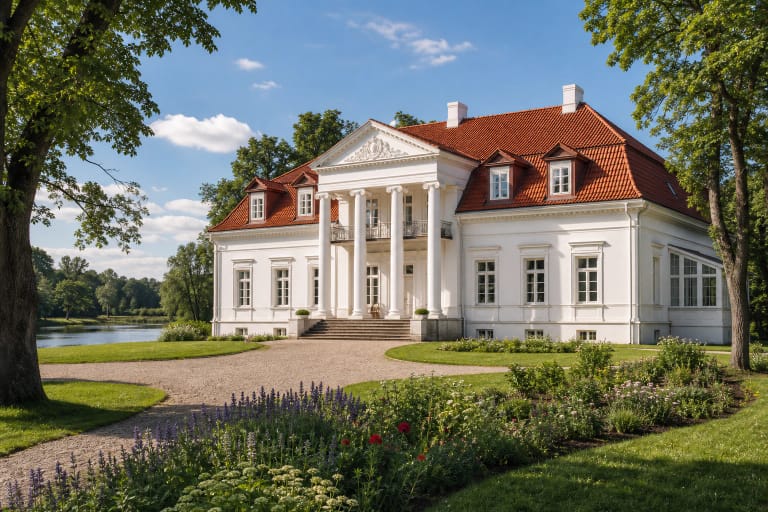
The setting belongs to the former Upytė manor grounds, but the crafts centre is modern community cultural infrastructure. The nearby former manor granary is a different building, so visitors can distinguish the estate's historic elements from the centre's activities.
Linen work, black pottery, and raugo pottery
The centre's story is about materials and actions, not only finished souvenirs. Visitors can learn about linen processing, black pottery, raugo pottery, and other old crafts. Ask which process will be demonstrated on your date: the programme depends on the booking and on which craftspeople are taking part.
Linen is especially revealing as a long chain of work, from preparing the plant to fibre, thread, and cloth. The pottery terms also describe different firing and surface traditions rather than merely decorative labels. Meeting a craftsperson in practice makes clear why an old farm needed not just raw material, but specialised tools, patience, and skill.
Markets, demonstrations, and community events
Traditional crafts markets here are broader cultural events. Artisans sell their work and culinary-heritage products, demonstrate crafts, teach, and play traditional music. On a market day the centre is therefore a meeting place where visitors can see a process and talk with its makers, rather than a silent display room.
The event calendar is not a permanent daily timetable. On an ordinary weekday the building may be closed or occupied only by a pre-booked activity, while a community celebration brings a different programme and visitor flow. Tell the centre what kind of visit you want when making a reservation so expectations are clear.
Visiting Upytė Traditional Crafts Centre
Arrange educational programmes by phone at +370 626 57415 or by email at amataiupyte@gmail.com. No single dependable permanent weekly timetable is published, so the map point does not confirm that the building will be open. Confirm the date, duration, group size, and language before travelling.
Allow about one to two hours for a first visit, and more for a practical session or market programme. The path and yard are outdoors, so non-slip footwear helps after rain. Accessibility depends on the programme and site conditions; discuss mobility or other needs by phone.