- Place
- Šalčininkai District Municipality
- Region
- Vilnius Region
- Type
- active wooden Catholic parish church
- Address
- 11 Bažnyčios St., Butrimonys, 17157 Šalčininkai District
- Coordinates
- 54.24794, 25.17025
- Visit duration
- 30-60 minutes for the exterior, churchyard, and a quiet visit if entry is allowed
- Best time
- in daylight and outside Mass, after checking the parish schedule
Butrimonių Church of St Michael, Butrimonių Church in Šalčininkai District
Which Butrimonys has this church?
Butrimonių Church of St Michael the Archangel is at 11 Bažnyčios St., Butrimonys, 17157 Šalčininkai District. Coordinates 54.2479449, 25.1702503 identify the church itself rather than the centre of the settlement. Keep Šalčininkai District in the address because Lithuania also has Butrimonys in Alytus District.
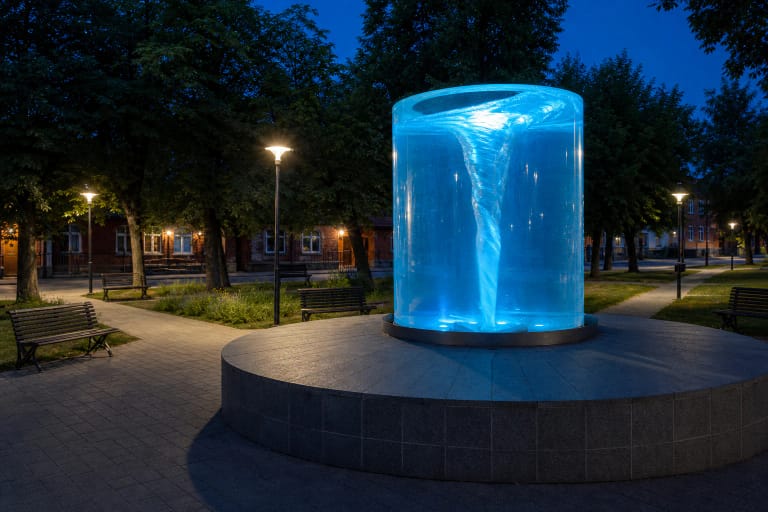
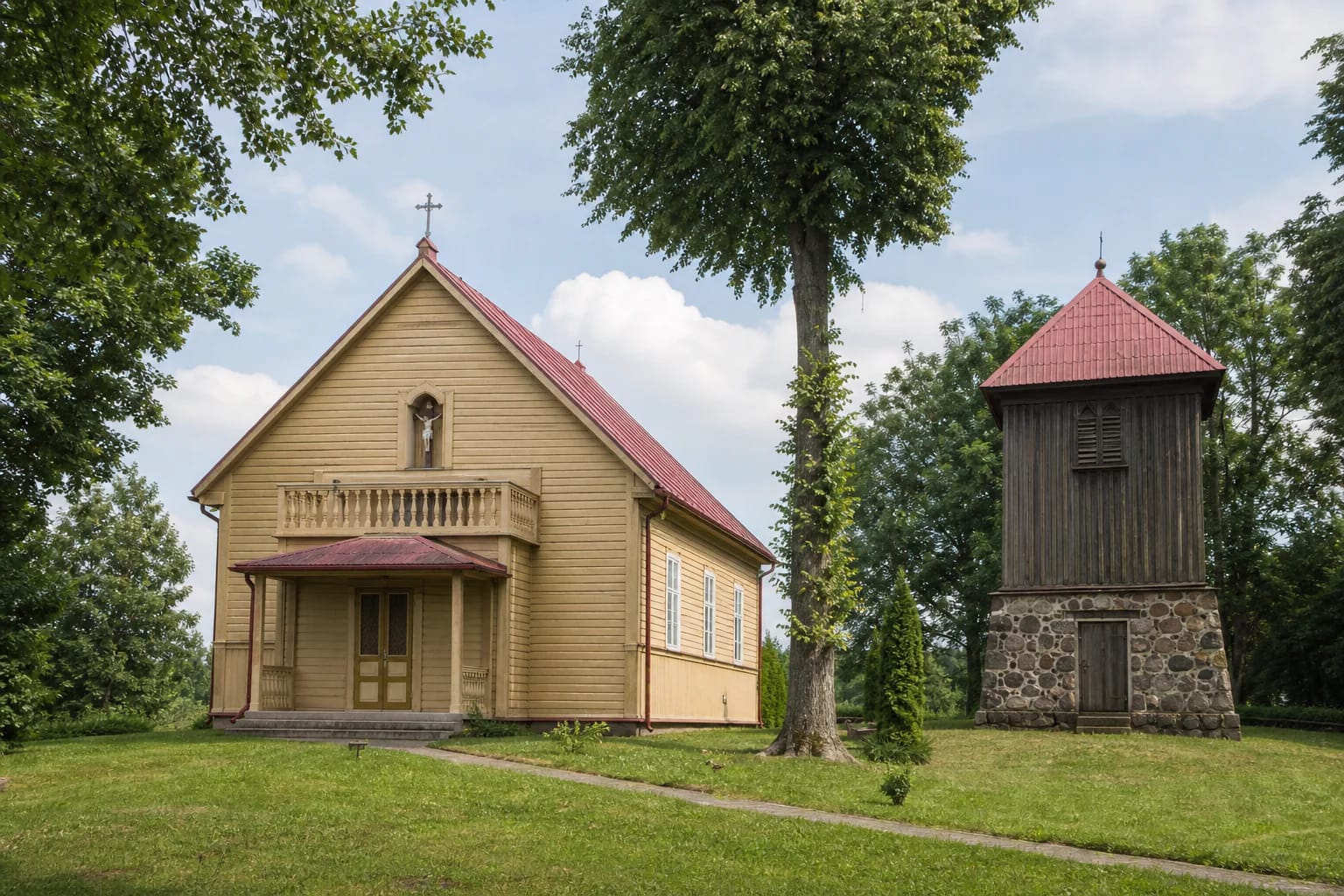
This Šalčininkai church is recognisable by its single-nave wooden volume, pale boards, red roof, and separate belfry. It is a small village sanctuary with a green churchyard, not a large masonry cathedral or the Butrimonių Fountain in Alytus District.
First view the ensemble from the churchyard: church and belfry stand together but are separate building elements. Graves, crosses, and mature trees show the scale of the parish grounds; treat additional memorials as churchyard context rather than automatically as separate attractions.
The 1799 construction date and differing records
The church is associated with construction in 1799 and renewal in 1890, with Karolis Podčašinskis named in connection with its construction. That chronology fits the wooden character of the building and its architectural and artistic features.
Another chronology dates the church to 1906-1926. This differs from the 1799 construction and 1890 renewal dates. Visitors should know both versions, since the surviving wooden sanctuary is not described by one date that appears everywhere.
The surviving wooden sanctuary belongs to a longer local history, best read through its materials, churchyard layers, and continuing parish use.
The wooden nave and sacred art
The church is a single-nave wooden sanctuary whose timber walls, ceiling, and floor treatment create a restrained interior character. Outside, notice the balcony with its balustrade and the Christ figure set into the facade.
The church's artistic layer includes three altars and seven eighteenth-century candlesticks. These are specific heritage details, but their visibility and access can depend on worship, liturgical arrangement, and permission from the parish.
The interior is an active sanctuary rather than a permanent museum display. If the doors are locked, do not try to enter independently: arrange interior viewing, photography, or group access with the parish.
The 1901 belfry and Houvalt memory
The separate belfry in the churchyard was built in 1901; Paulina Houvaltienė is associated with its initiative. It is an important part of the ensemble, but it is not a second church.
The churchyard story also includes the graves associated with the Houvalt family. Mature trees, crosses, graves, and the belfry form a parish memory space rather than a decorative park. Photograph graves and people respectfully.
The green setting shows the wooden church's colour particularly well in late spring and summer, but a visit should not be planned around photography alone. Check whether worship or another parish activity is taking place.
Mass and the limits of visitor access
Polish Masses are scheduled at 17:00 on weekdays, 09:00 and 10:00 on Saturday, and 09:00 and 13:30 on Sunday. Times can change, so check the latest schedule before travelling and plan any interior visit before or after Mass.
No ticket price is published, and interior or group visits should be arranged with the parish. During worship, stand quietly, do not photograph without permission, and do not disturb prayer.
Allow 30-60 minutes for the church, belfry, and churchyard. Photograph respectfully, and during Mass find a quiet place without interrupting worship.