- Place
- Vilnius City Municipality
- Region
- Vilnius
- Type
- hill and historic hillfort landscape in Kalnų Park
- Address
- Krivių Street, Kalnų Park, Vilnius
- Coordinates
- 54.68580, 25.29791
- Visit duration
- 45-90 minutes
- Best time
- late afternoon or autumn, when the city panorama is easier to read through the trees
Bekešo kalva, Bekešas
Bekešo Hill in eastern Kalnų Park
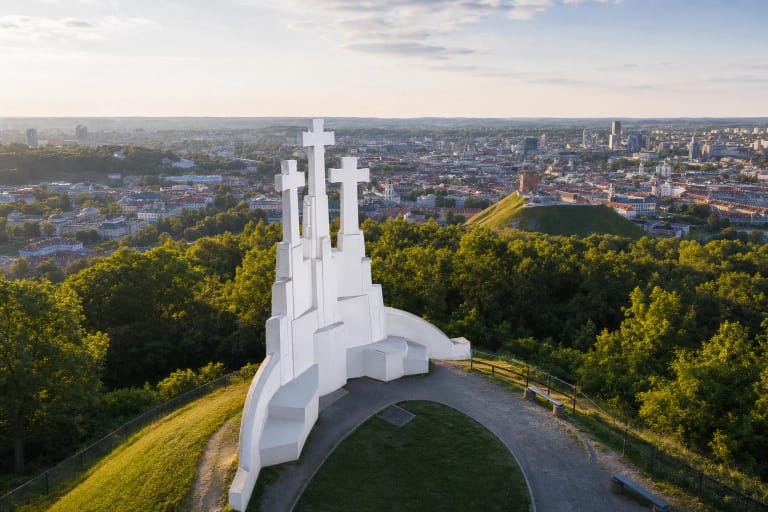
Bekešo Hill is one of Kalnų Park's historic uplands, reached from the Krivių Street side. It is not Three Crosses Hill or Table Hill, so check the exact map point if you are planning several stops in the same green area.
The current map name conceals a more complicated historical landscape. The old Bekešo hill partly slid towards the Vilnelė, while the neighbouring higher ground is Altana Hill, even though the Bekešo name is now often used for it.
This distinction is useful on the ground: a short walk may pass through several named heights, and a view or path described as Bekešo in a modern listing does not automatically reproduce the sixteenth- to nineteenth-century hill exactly.
Kasparas Bekešas and a lost monument
The hill's name is linked with Kasparas Bekešas, who was buried on the slope in 1579. An approximately 20-metre, eight-sided monument was erected over his grave, becoming a conspicuous marker that helped keep the hill in the city's memory.
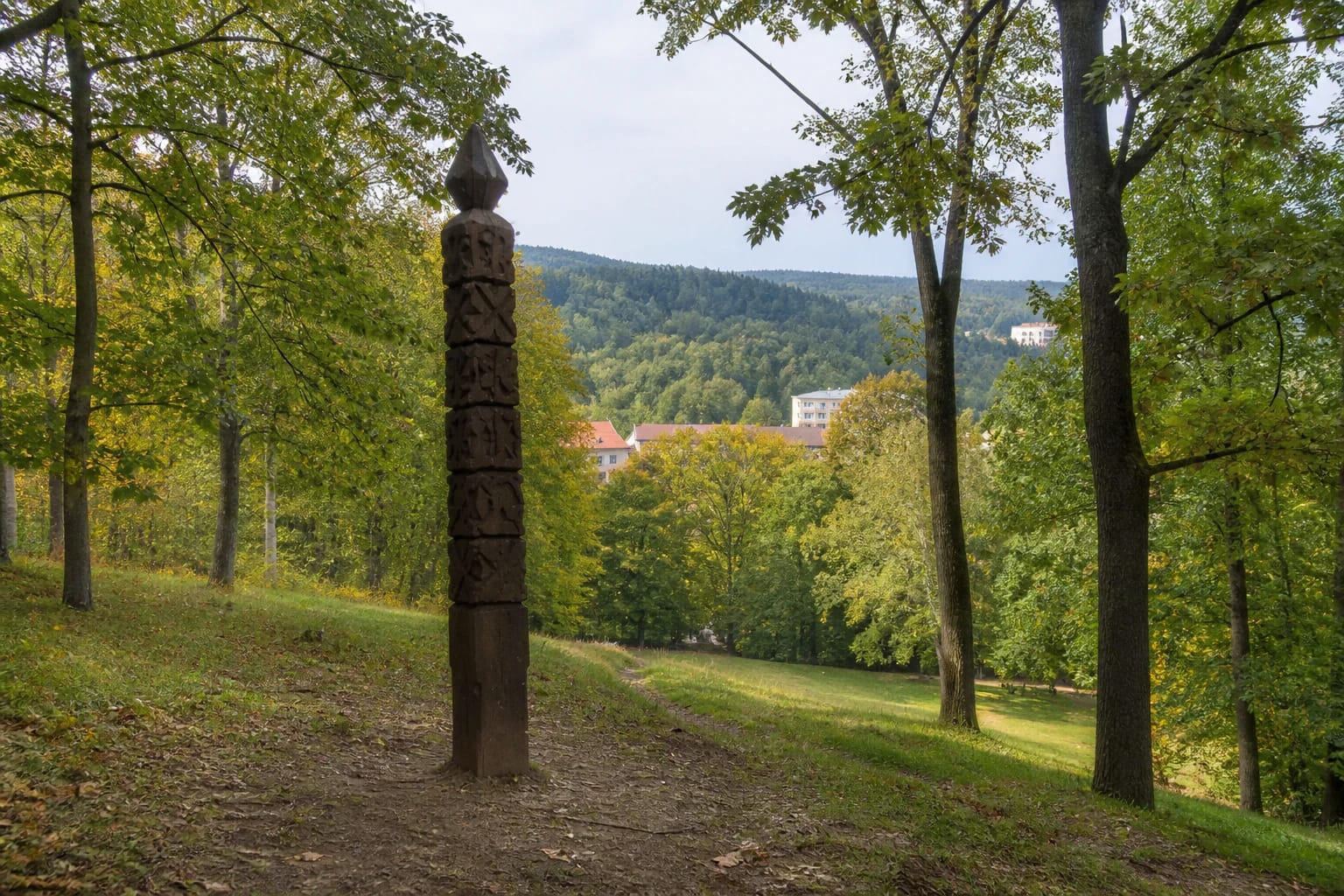
In the nineteenth century part of the hill and the monument slid into the Vilnelė. In 2009 the old Bekešo hill was marked by a carved wooden obelisk made by folk artist Rimantas Zinkevičius at the initiative of Lithuanian and Hungarian friendship organisations.
The present woodland is therefore not a preserved sixteenth-century memorial setting. It is a later landscape with a memory marker, paths, and changing vegetation, and the obelisk should be read as a modern sign of remembrance rather than the lost original monument.
Why Bekešo and Altana names overlap
The old Bekešo hill stood beside the Vilnelė and lost part of its form through slope movement. The Bekešo name later travelled to the adjacent higher ground, which topographically and historically is better called Altana Hill.
This distinction matters when planning a route: a current map may show Bekešo Hill while heritage material refers to Altana. Both names are useful for orientation because they can refer to different parts of the terrain.
The current map label helps locate the visitor point, while the older distinction explains why a heritage route, a park sign, and a map pin may use different names for neighbouring slopes.
The Crooked Castle landscape
Bekešo Hill belongs to the wider landscape of the Crooked Castle. The Kalnų Park heights are associated with Vilnius's third castle, while settlement and defensive-history traces have been found around Table, Bekešo, and other hills.
Investigations in 1933, 1939, 1956, 1989, 1995, and 1997 in the neighbouring settlement found remains of fourteenth-century wooden buildings and later archaeological traces. The hill is consequently best understood as one part of a castle, settlement, river-valley, and urban-relief system rather than as an isolated lookout.
No standing Crooked Castle building survives on Bekešo Hill. What visitors read today is the relationship between wooded heights, archaeological memory, the Vilnelė valley, and the more visible Three Crosses area.
Panorama, access, and respect for the slope
From the higher ground associated with Altana, which current maps often call Bekešo Hill, views open towards Vilnius churches and the Old Town. Six churches - Bernardine, St Anne's, St Michael's, St John's, the Holy Spirit, and St Catherine's - can align in the distance; walk slowly from the Krivių side to see how the view changes.
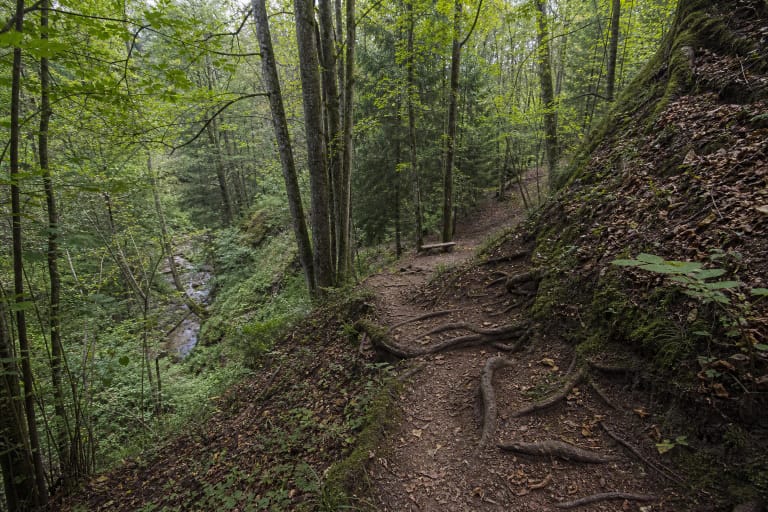
Kalnų Park's slopes are steep and uneven in places, so wear shoes with good grip and avoid slippery edges after rain or frost. Choose an established path and assess the surface as you go.
There is no separate ticket for this open hill landscape, but visitors should stay on established paths where possible, avoid damaging exposed ground or vegetation, and leave any memorial marker or archaeological context undisturbed.