- Place
- Anykščiai, Anykščiai District Municipality
- Region
- Aukštaitija
- Type
- regional park visitor centre with an interactive nature and culture exhibition
- Address
- 55 J. Biliūno Street, LT-29110 Anykščiai
- Coordinates
- 55.52936, 25.12001
- Visit duration
- 45-75 minutes for the exhibition and route planning; longer with a pre-booked educational activity or guided walk
- Best time
- at the start of a trip through Anykščiai Regional Park, during current centre hours; reserve group programmes in advance
Anykščiai RP Visitor Centre, Anykščiai Regional Park Group Visitor Centre, Anykščiai Regional Park Visitor Center
The centre at 55 J. Biliūno Street is not the Tree Canopy Walk information centre
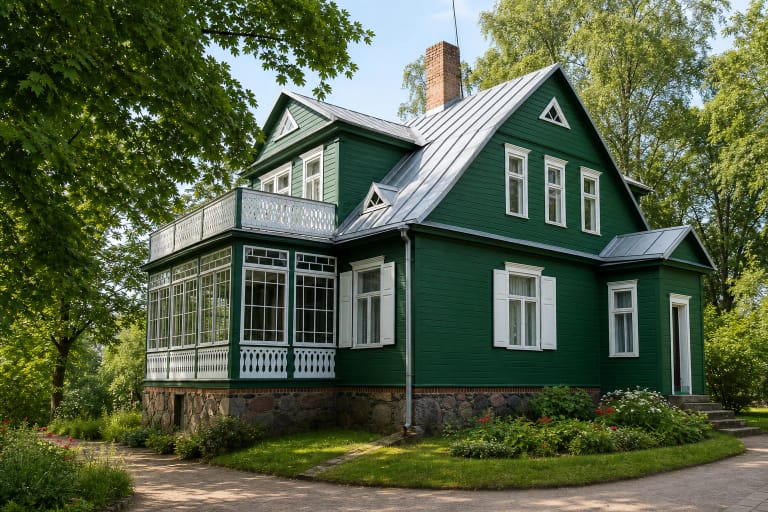
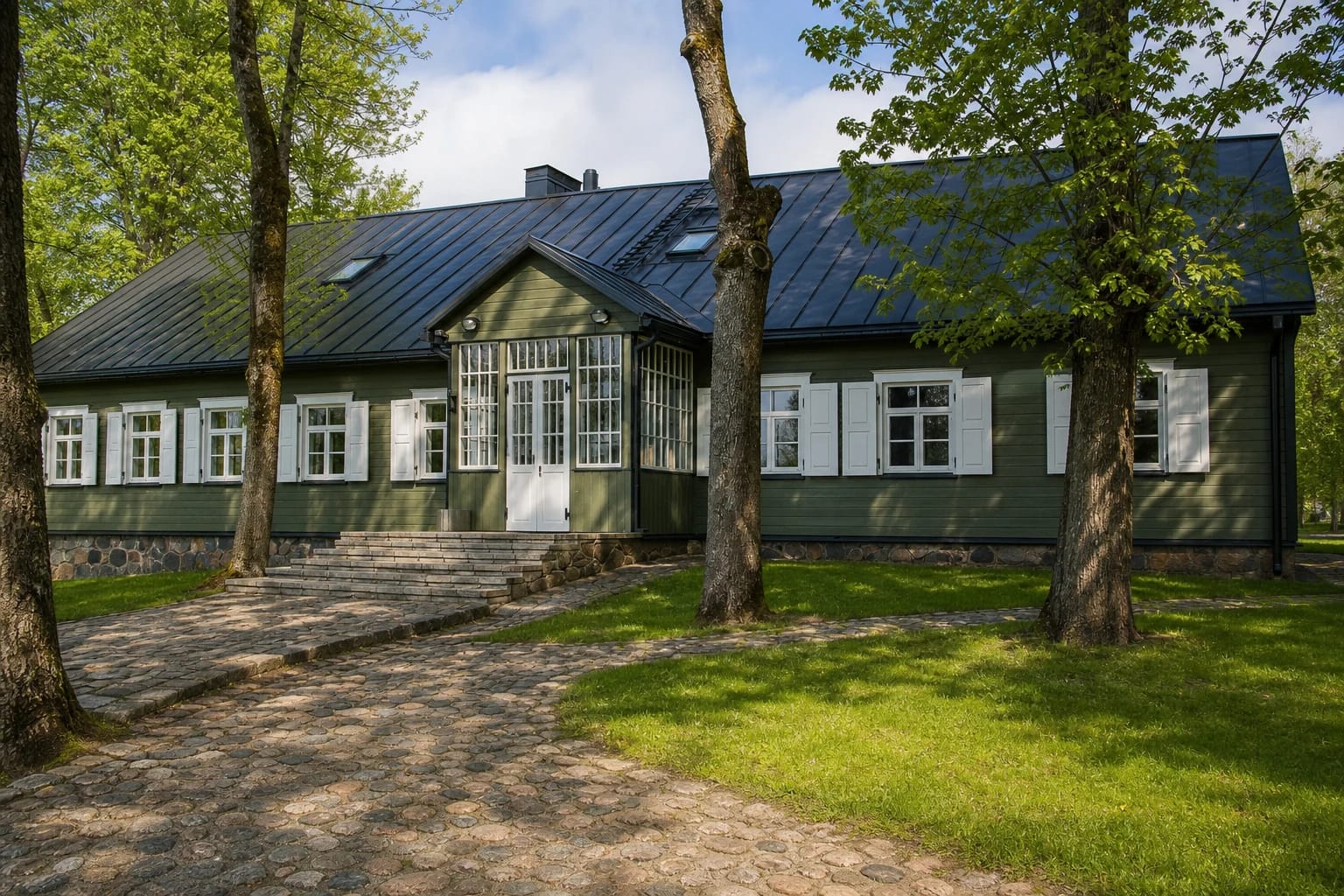
Anykščiai Regional Park Visitor Centre operates at 55 J. Biliūno Street in Anykščiai town. The directions link in the official Saugoma record supplies the point 55.529365, 25.120009. It marks the centre building, hence pinType site, but it is not a claim about a particular doorway, a parking bay, or the geographical centre of the 15,486-hectare regional park.
Official pages also refer to it as the Anykščiai Regional Park Group Visitor Centre, administered by the Aukštaitija Protected Areas Directorate. It combines visitor advice, the permanent exhibition, and starting points for programmes. Staff can help with protected reserves, the strict nature reserve, walking and cycling routes, and routes on the water.
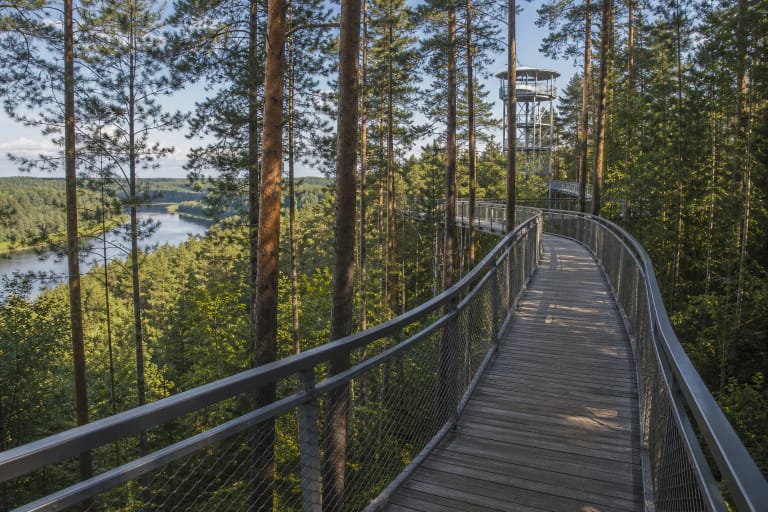
The Tree Canopy Walk is a different attraction at a different address in Dvaronys. It has its own information centre and an exhibition named Neatrastas Anykščių šilelis, or Undiscovered Anykščių šilelis. The EUR 2 exhibition ticket at J. Biliūno Street is not the EUR 5 canopy-walk ticket, so do not plan them as one ticket desk or one exhibition.
The exhibition reads the park through literature, sound, and real objects
The permanent exhibition's title, Apdainuotas gamtos ir kultūros paveldas, can be understood as nature and cultural heritage celebrated in literature. It is more than decorative wording. Stories about Anykščių šilelis, the Šventoji, Lake Rubikiai, boulders, outcrops, and cultural heritage are paired with writers associated with the area. Content is presented in Lithuanian and English, while letters and words shape the interior design itself.
Visitors can explore interactive maps with the locations of park sites, photographs, and video, and learn what is protected in its reserves and in Būdragaidis Strict Nature Reserve. Geological curiosities, objects found in woodland, and archaeological material from the Anykščiai area sit beside the digital interpretation. This makes the centre more than an ordinary tourist information point.
Recordings present legends and folk narratives about trees, boulders, and mysterious places, alongside passages by writers who made Anykščiai famous. Soft seats shaped like stones face animated and documentary films. The exhibition is not meant to replace a day outdoors. It gives visitors the context to understand why a site is protected and what to notice when they reach it.
The centre occupies a former school, not surviving manor rooms
The centre stands on the former Anykščiai manor site, which the official description dates to the sixteenth and seventeenth centuries. The dark-green timber building itself is not a surviving manor house, however. It was built as a school in 1883 and renovated in 2010. Keeping those two histories separate prevents the age of the site from being wrongly assigned to the present building.
Jonas Biliūnas and Antanas Žukauskas-Vienuolis studied in this school. The exhibition's literary approach therefore has a direct connection to the building's biography, not only to the broader image of Anykščiai as a town of writers. Nearby memorial sites allow that story to continue on foot through the town.
Today's interior is a modern interpretation space rather than a reconstructed nineteenth-century classroom. Travellers interested in the writers' homes, belongings, and manuscripts will find those subjects explored more directly at the Antanas Baranauskas and Antanas Vienuolis-Žukauskas Memorial Museum. Here the central subject is the meeting point between regional-park landscapes and literature.
Some programmes stay indoors; others continue into the forest, bog, or cycle network
The directorate's programme page, updated in June 2026, lists activities with very different formats. Keliaukime po Anykščių regioninį parką grindų žaidimu is a one-hour floor game for Years 1-5. Super protas begins in the exhibition and then sends Years 3-8 outdoors for team tasks. These are bookable activities, not automatic additions to ordinary admission.
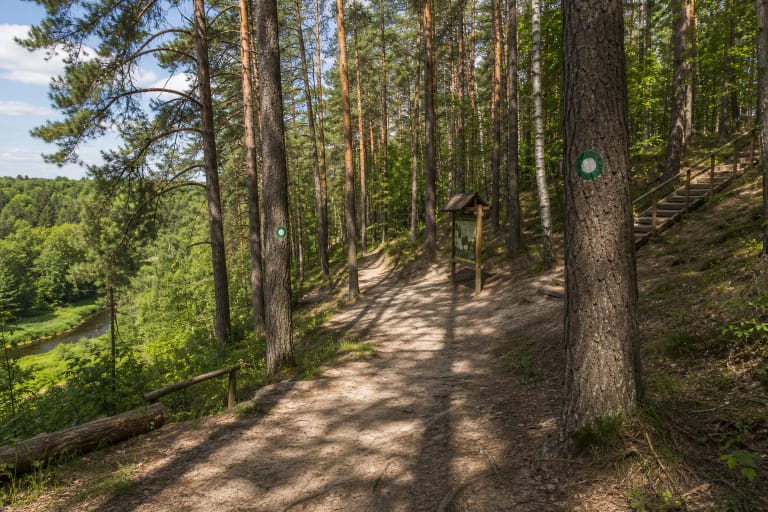
Baltųjų smėlynų kraštas: kvarcinio smėlio slėpiniai, or Land of White Sands: Secrets of Quartz Sand, can remain at the centre for sieving, weighing, microscope work, and making a sand timer, or continue to outcrops and a quartz-sand quarry. The longer version needs transport. Ką šnabžda Šventoji follows the 4.7 km Šventoji Nature Trail for about three hours, while Kasagorais is listed as a 13 km route lasting three to four hours.
Other activities lead to Pakalniai Bog, the Varius stream, or the Kavarskas dam, so their meeting point, clothing, duration, and transport requirements differ. Call +370 658 30 472 to arrange an exhibition tour, educational activity, or guided walk. Before paying, confirm participant ages and numbers, language, actual starting point, and whether equipment is included.
The 2026 tariff separates centre admission, the canopy walk, and the support ticket
The directorate tariff updated in April 2026 lists ordinary visitor-centre exhibition admission at EUR 2 per person. A one-hour guided visit inside a regional park visitor centre is listed at EUR 4 per person in Lithuanian or EUR 6 in a foreign language. A ten-person minimum charge applies: a smaller party is served only if it agrees to pay the rate for ten participants.
A thematic educational session is listed at EUR 4 per person, EUR 5 with directorate materials, or EUR 8 in a foreign language, again with the minimum ten-person charge. An individual programme description may impose further conditions, so the general tariff does not mean that a chosen activity runs without booking or suits every age group.
The EUR 5 Tree Canopy Walk ticket appears in the tariff as a separate paid attraction. The protected-area visitor ticket is different again: it is a voluntary contribution to park infrastructure, not payment for the exhibition, a guided visit, or an educational session. Prices can change, so check the current official tariff and any concessions at the desk before travelling.
The current timetable has a temporary exception, and accessibility stops at the building
The Saugoma record checked on 19 July 2026 listed 1 October to 31 March hours as Tuesday-Friday 08:00-17:00 with lunch from 12:00 to 12:30, and Saturday 10:00-15:00 without a lunch closure. For 1 April to 30 September it listed Tuesday-Friday 09:00-18:00 with lunch from 13:00 to 13:45.
The summer Saturday line gives 08:45-16:30 but is currently marked temporarily closed. No regular visitor hours are published for Monday or Sunday. The centre works one hour less on the day before a public holiday and closes on public holidays. Because the Saturday exception is explicitly temporary, call or recheck the official record before making a special journey.
A hard-surfaced car park is provided, and a hard-surfaced path reaches the rear of the building. The visitor-centre doors are widened with a low threshold, the interior allows wheelchair movement, and an adapted toilet is installed. Information can be supplied in easy-to-understand language, and a visitor with hearing loss may attend with a sign-language interpreter. This does not mean that an interpreter is always stationed here, nor does it establish access on the 4.7 or 13 km outdoor routes.