- Place
- Alizava, Kupiškis District Municipality
- Region
- Aukštaitija
- Type
- historic Catholic church
- Address
- Kalno g. 15, Alizava, Kupiškis District
- Coordinates
- 55.97083, 25.00192
- Visit duration
- 20-40 minutes for the exterior; longer if your visit coincides with Mass and entry is appropriate
- Best time
- in daylight, when you want to see the wooden sanctuary and Alizava townscape
Alizava Church of St John the Baptist, Alizava Church
A church in the Alizava townscape
Alizava Church of St John the Baptist stands at Kalno g. 15 in Alizava, near the Vabalninkas-Pandėlys road. Coordinates 55.9708267, 25.0019218 mark the entrance area, rather than the general town centre or another parish address with a similar name.
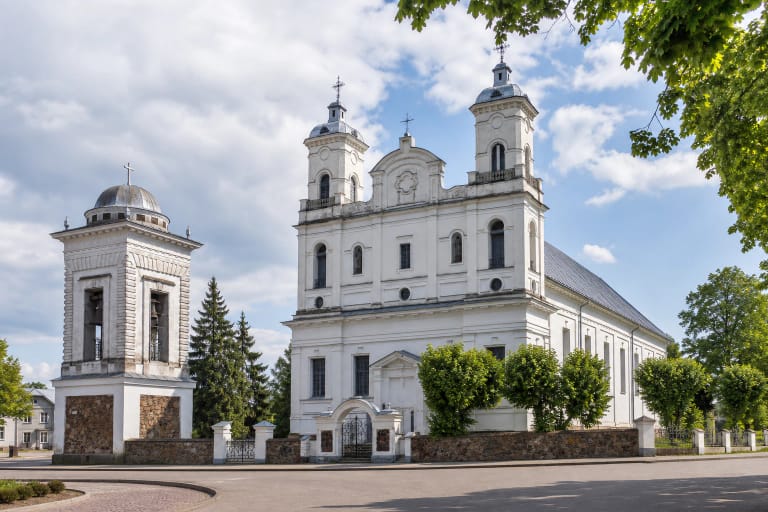
The parish lies on the right bank of the Pyvesa. From public space, visitors can see not only the wooden sanctuary but also its stone-masonry wall, bell-tower volume, and relationship to the road and trees.
The church stands beside a road, so move clear of traffic when stopping and leave a car only where parking is permitted.
The 1794 predecessor and the present wooden church
Panevėžys Diocese traces the present church to the middle of the nineteenth century: the wooden building was constructed in 1853-1856. The year 1856 therefore marks the completed stage of this sanctuary, not the beginning of the parish.
A church had stood here since 1794. The nineteenth-century story also includes the circumstances of a fire in 1894, which helps explain why the building and parish infrastructure needed more than one phase of care.
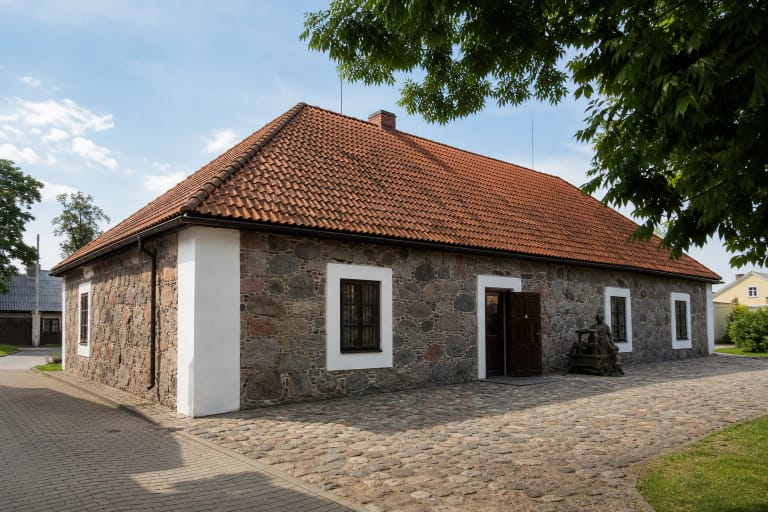
In 1872, priest Ferdinandas Ūselis built a new rectory, rebuilt utility buildings, and planted an orchard. These details help read the whole churchyard complex, although not every historic building is necessarily open to visitors.
Historicist, Baroque, and Neo-Gothic features
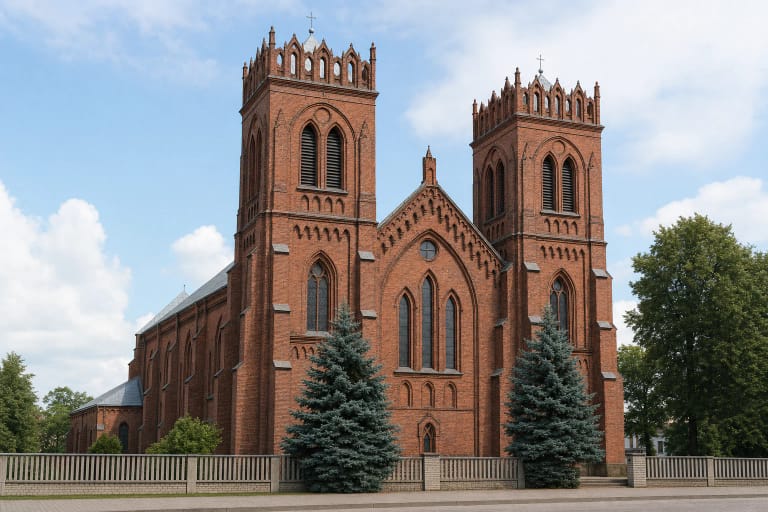
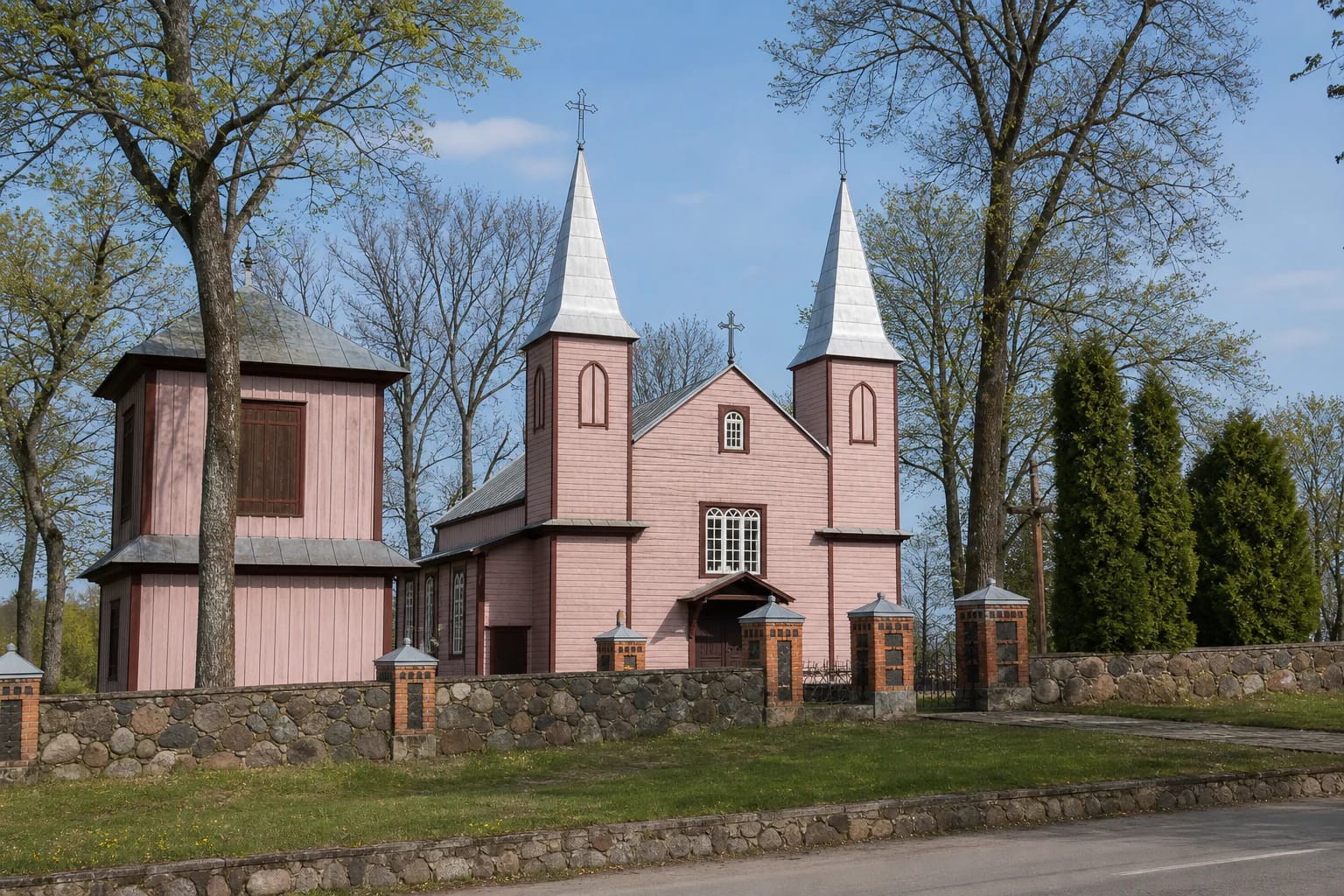
The church is described as Historicist, with Baroque and Neo-Gothic features. Its rectangular plan contains three naves, while two towers on the main facade give the wooden building a strong vertical accent in the townscape.
A reconstruction project was approved in 1900, and the facade towers were built under that project. From the front, look at their proportion to the central entrance and windows: this twin-towered silhouette is the most important way to recognise Alizava Church.
A stone-masonry wall encloses the churchyard, and a separate bell-tower volume complements the main building. These are structural parts of the sacred landscape, not just photographic decoration, so do not cross the boundary without permission.
Parish life and the St John feast
This is an active Catholic parish church. Panevėžys Diocese lists Sunday Mass at 09:00, while the parish's titular feast is associated with St John the Baptist and 24 June. Check the liturgical time before travelling because it can change.
A Mass time is a reliable opportunity to see the building in its intended use, but it is not a tourist tour. If you arrive during services, choose a place that does not disturb the community and postpone photography until it is appropriate.
Inside, visitors may expect the three-nave structure and historic sacred interior, but no permanent visitor timetable is published. Arrange an interior visit or interpretation for a group with the parish rather than assuming a museum-style opening.
A short and respectful visit
Allow 20-40 minutes for the exterior. From public space, take in the pink wooden facade, twin towers, stone wall, and separate bell-tower volume. If the gate is closed, stay outside and do not try to enter the churchyard by a side route.
There is no separate ticket or ticket desk, and a permanent guide, toilet or dedicated car park beside the church should not be expected. Stop without obstructing local traffic or residents, and leave the vehicle only where parking is permitted.
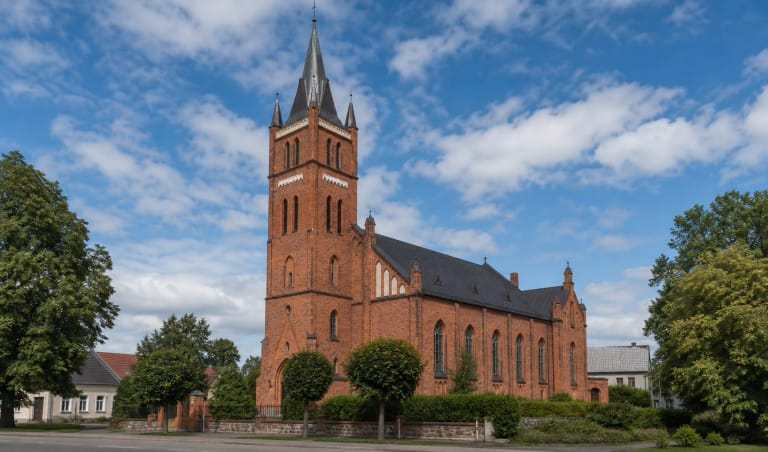
Alizava can be combined with sacral-heritage sites in Vabalninkas, Kupiškis, or Biržai, but this is not one walkable complex. Allow driving time between stops and do not assume that different parishes share opening or Mass schedules.