
Lithuanian traditional foods
Košės
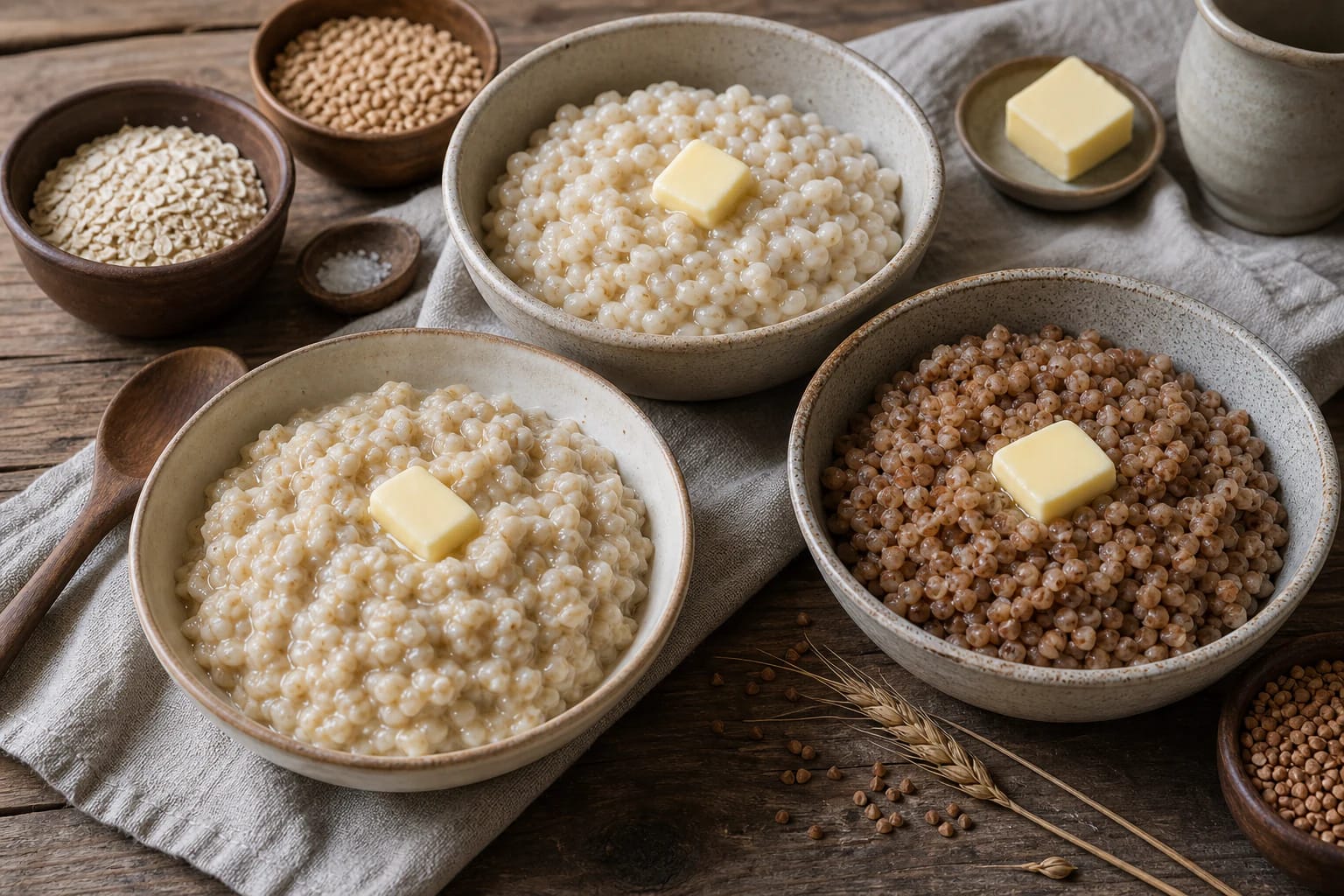
Košės, porridges, are one of the oldest and simplest forms of Lithuanian cooking: groats, flour, potatoes, or vegetables are boiled in water or milk, seasoned with butter, cracklings, or sour cream, or eaten more plainly during fasting.
Food and heritage context
- Category
- Grain and groat dishes
- Type
- group of cooked groat, flour, or vegetable dishes
- Heritage status
- old everyday food
- Context
- Groats, oats, barley, buckwheat, millet, potatoes, milk, butter, cracklings, peasant table
Names and variants
Groat porridge, Barley porridge, Buckwheat porridge
Porridge as everyday food
Porridges are old and economical food. They can be made from what the farm has: barley, oats, buckwheat, millet, peas, potatoes, or flour.
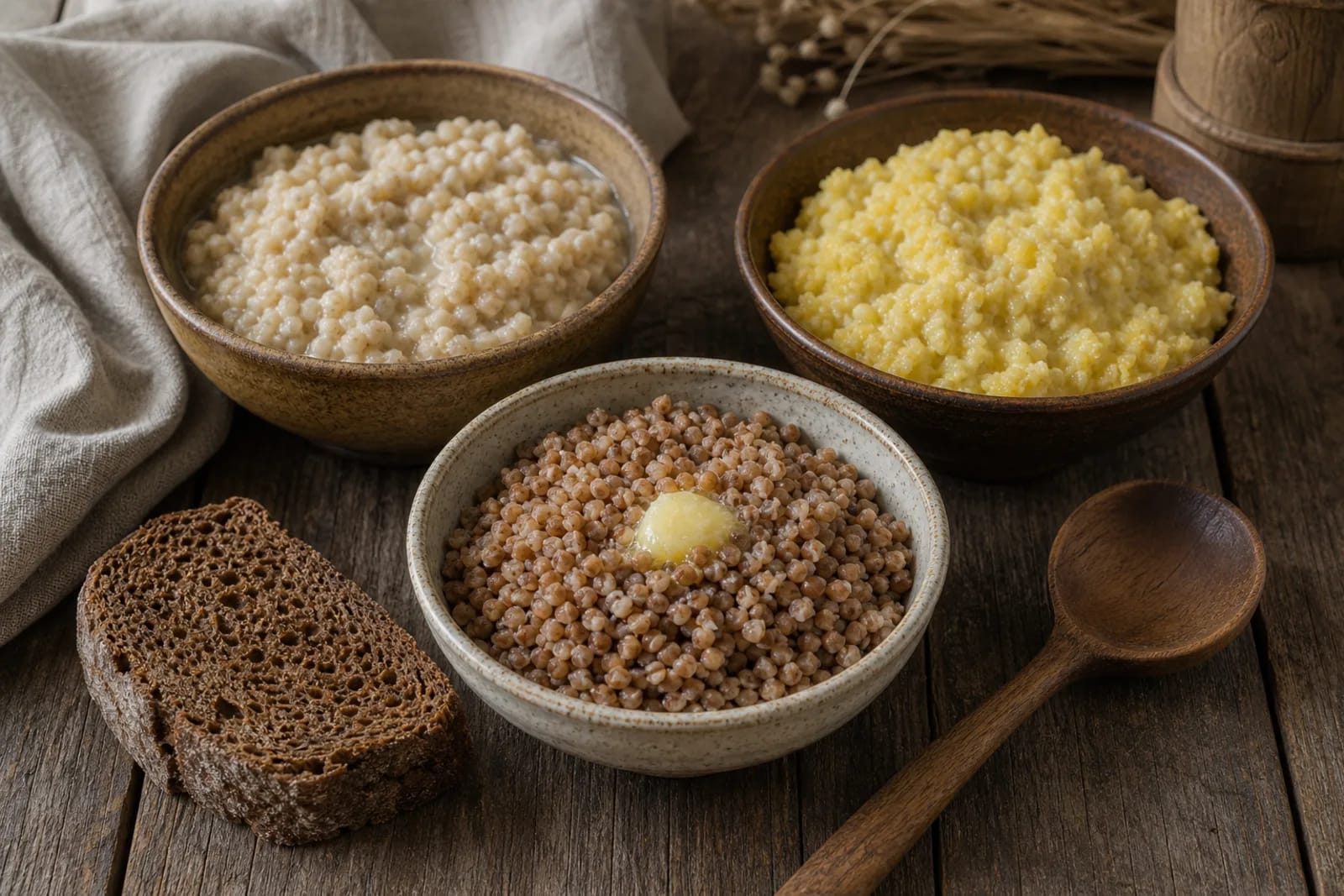
Because of its simplicity, porridge suits breakfast, lunch, or a fasting day. It can be very modest or hearty if seasoned with butter, sour cream, or cracklings.
Groats and regions
Different groats gave porridge different character. Buckwheat is especially prominent in Dzūkija, barley and oats were widely used in everyday farm cooking, and potato porridge took hold later with potato cuisine. A porridge made from a mixture of flour and potatoes was once called pusinė or pusmarškonė, and in Žemaitija it was eaten with mirkalas or papilas made from cracklings, fat, and wheat flour.
Porridge was not always only a side dish. In many cases it was the main dish, supplemented by milk, fermented vegetables, or a richer topping.
Sweet, savory, and fasting porridges
Milk porridges are milder and suited to children or breakfast. Savory porridges with cracklings or mushrooms become serious lunch food.
During fasting, porridge could be cooked in water and seasoned with oil, mushrooms, or poppy seeds, without dairy or meat.
Porridge today
Modern cooking often brings porridges back as healthier, seasonal, and inexpensive dishes. Their traditional value, however, is not trendiness but groats, substance, and the ability to use simple products.
Good porridge does not have to be bland: toasting groats, using enough salt, adding butter, mushrooms, or fermented vegetables can make it a complete dish.
Recipe
How to cook traditional groat porridge
Grain porridge
The basic logic of Lithuanian porridge is simple: rinse the groats clean, cook slowly, and season according to the eating occasion: with butter, milk, cracklings, or in a fasting style.
Ingredients
Method
- Rinse the groats until the water is clearer.
- Cover with water, add salt, and cook over low heat until the groats soften.
- If the porridge is too thick, add milk or hot water and cook for a few more minutes.
- Stir in the butter. Serve with sour cream, cracklings, or eat simply.
Notes
Buckwheat cooks faster, while barley groats need more time.
Porridge can stand briefly covered after cooking so the groats swell evenly.
Košės: frequently asked questions
Which porridges are considered Lithuanian?
Barley, oat, buckwheat, potato, pea, flour, and milk porridges. More important than the name are local groats and a simple method.
Was porridge only a breakfast dish?
No. Porridge could be the main lunch or supper food, especially if seasoned with cracklings, sour cream, milk, or mushrooms.
How is groat porridge different from šiupinys?
Porridge is usually a dish of one or several groats, while šiupinys is thicker and often includes legumes, meat, or other additions.
Why does porridge burn?
The heat is too high, there is too little liquid, or the thickening mass is not stirred. Groats need low heat and a heavy pot.
Can porridge be cooked in milk?
Yes. Milk porridges are mild, but it is better to add milk later or mix it with water so it does not scorch.
How can fasting porridge be seasoned?
With mushrooms, onions, oil, poppy seeds, fermented vegetables, or simply salt.
How can leftover porridge be used?
It can be fried in a pan, added to a bake, shaped into dumplings, or served the next day with sauce.