- Category
- Frightening beings
- Domain
- Fear, frightening children, night, unknown being
- Source status
- folklore
Babaužis, Maumas, Bubis, Bubas
Who are Baubas, Babaužis, and Maumas?
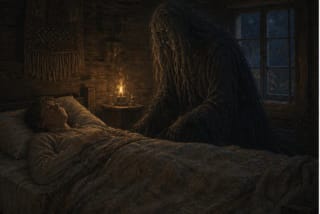
Baubas, Babaužis, and Maumas are names for frightening folklore beings. They often appear in children's folklore, prohibitions, and stories about darkness, corners, night, or unclear danger.
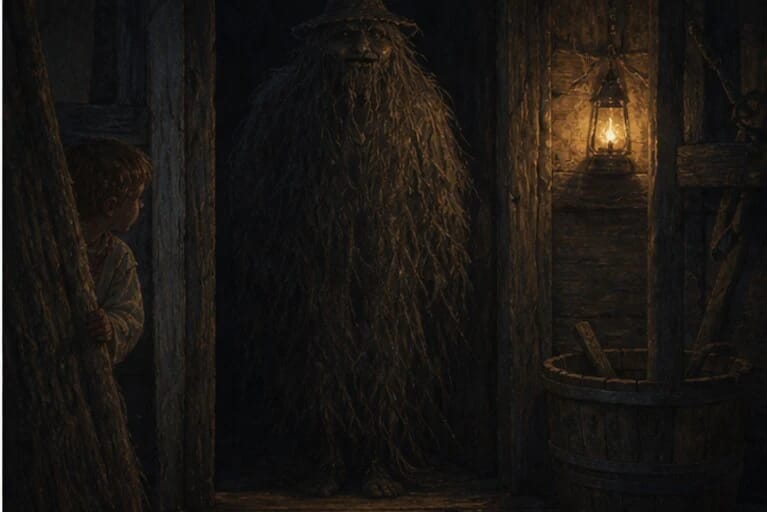
These beings do not have one stable form. Their power comes precisely from vagueness: Baubas can be 'something' that will come if a child disobeys, goes into a dangerous place, or breaks a rule.
Sources and function of Baubas
Baubas-type beings belong to the folkloric layer of frightening and regulating behavior. In the context of Norbertas Vėlius' studies of legends, such figures matter not because they are gods, but because they personify fear and danger.
Child-frightening beings are not simply 'made-up stories'. They guard boundaries: do not go into the dark, do not go near water, do not wander, listen to household order. A mythical figure makes the prohibition memorable.
Why does Baubas have no clear shape?
Baubas' lack of definition is part of his function. If a being has no clear face, it can adapt to any fear: a dark corner, forest, water, night, or unfamiliar sound.
That makes Baubas a universal form of fear. He may be told differently in different homes or regions, but he keeps the same function: to warn and frighten.
Babaužis, Maumas, and other names
Babaužis, Maumas, Bubis, Bubas, and similar names show that the field of frightening beings was varied. The names often sound either frightening or childlike, which makes them easy to remember.
They are discussed together because their function is similar: to name unclear danger, strengthen a prohibition, and turn a risk that is hard for a child to understand into a memorable name. A very common concrete example is a baubas said to crouch in rye or grain fields: children were frightened with him so they would not trample or break the crops, and also so they would not approach a well, water, or a dark barn.
Baubas and children's folklore
The figure of Baubas clearly shows how folklore works inside the family. A child is not always given an abstract explanation of danger; danger receives a name and becomes a character.
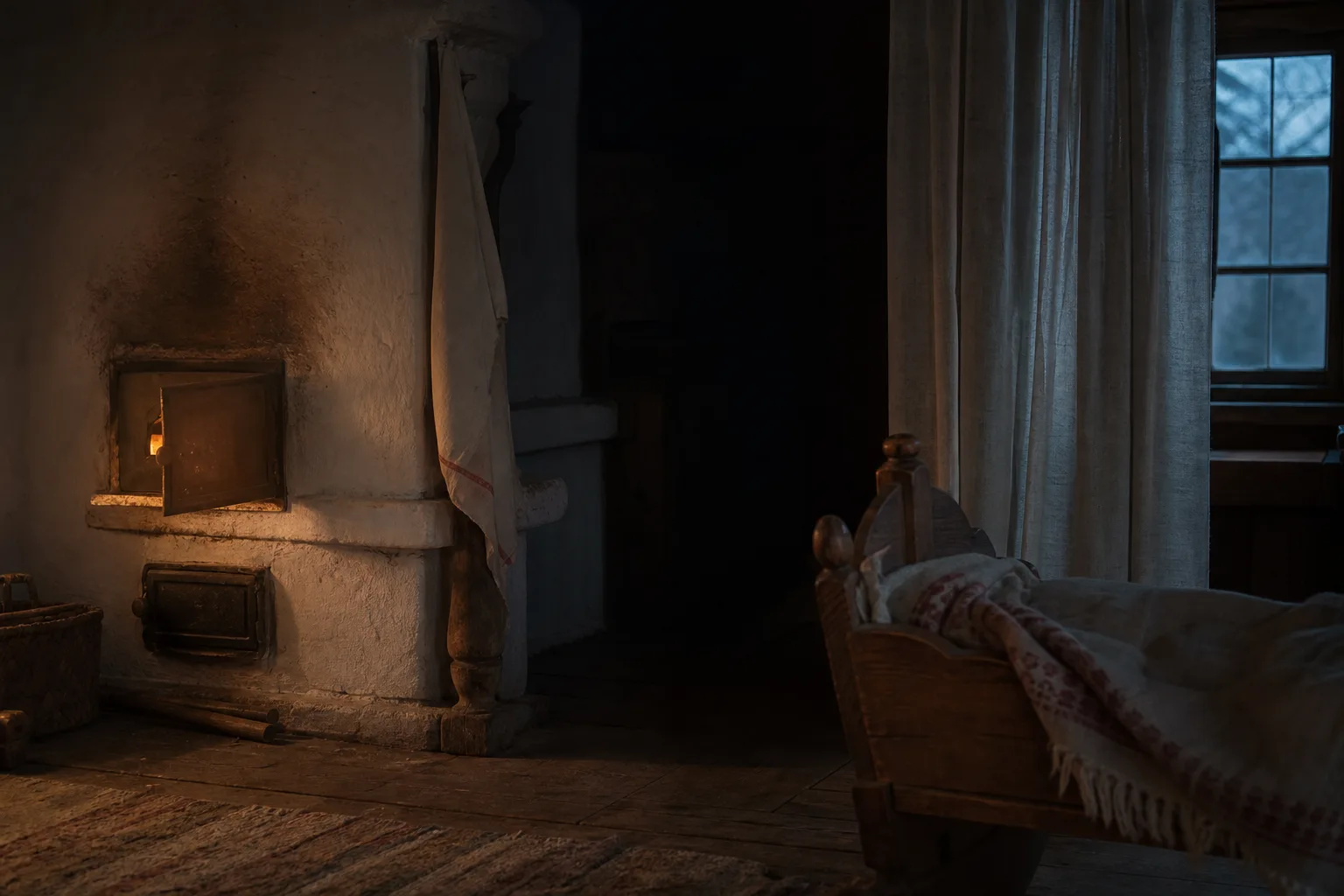
That may seem simple, but culturally it is very important: through such beings, a child learns rules of space, time, boundaries, darkness, and obedience.
Baubas today
Today the word baubas is still alive as a metaphor for fear, imagined danger, or exaggerated scaremongering. This shows that the folkloric figure survived in language even after older beliefs weakened.
Baubas matters as a representative of everyday fear and children's folklore: he shows how folklore turns a simple warning into an active figure of imagination.