- Field
- Traditional clothing and footwear
- Type
- traditional craft
- Heritage status
- well attested
- Context
- fulled wool, cut, reconstruction
Cloth and garment
Fulled woollen cloth is a woven fabric finished by fulling. Sermėga names a family of outer garments rather than one universal silhouette. Both women and men wore forms of this garment.
Begin an examination by separating fabric from cut: a woollen surface does not reveal how the back or skirts were assembled. Record these observations separately.
A documented example: TK 318
The Lithuanian National Museum records TK 318 as a garment made by Alina Žemienė in 2016, using factory-made woollen cloth and machine embroidery. Its modern production is explicitly documented.
The historical model is the early nineteenth-century garment EMO 4741 from Lepelionys village. The 2016 date belongs to the reconstruction; the earlier date belongs to its source. Keep both identities visible.
Comparing two garments
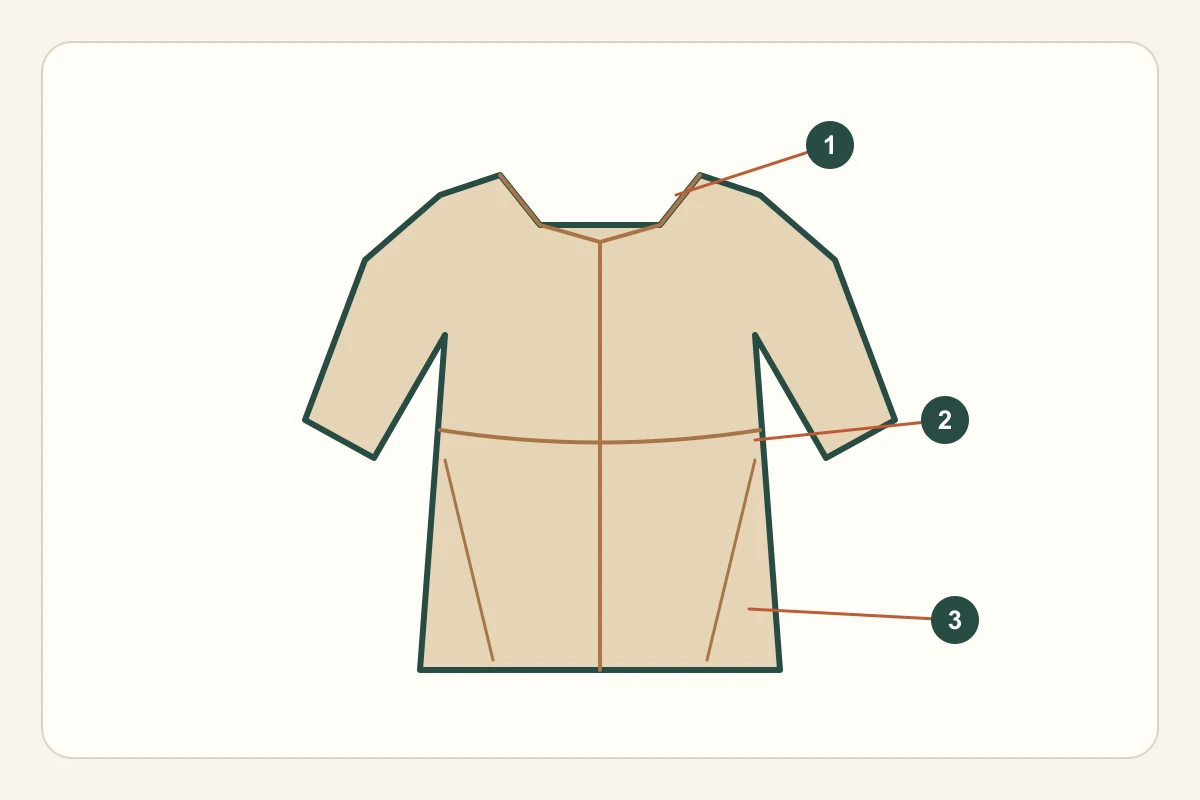
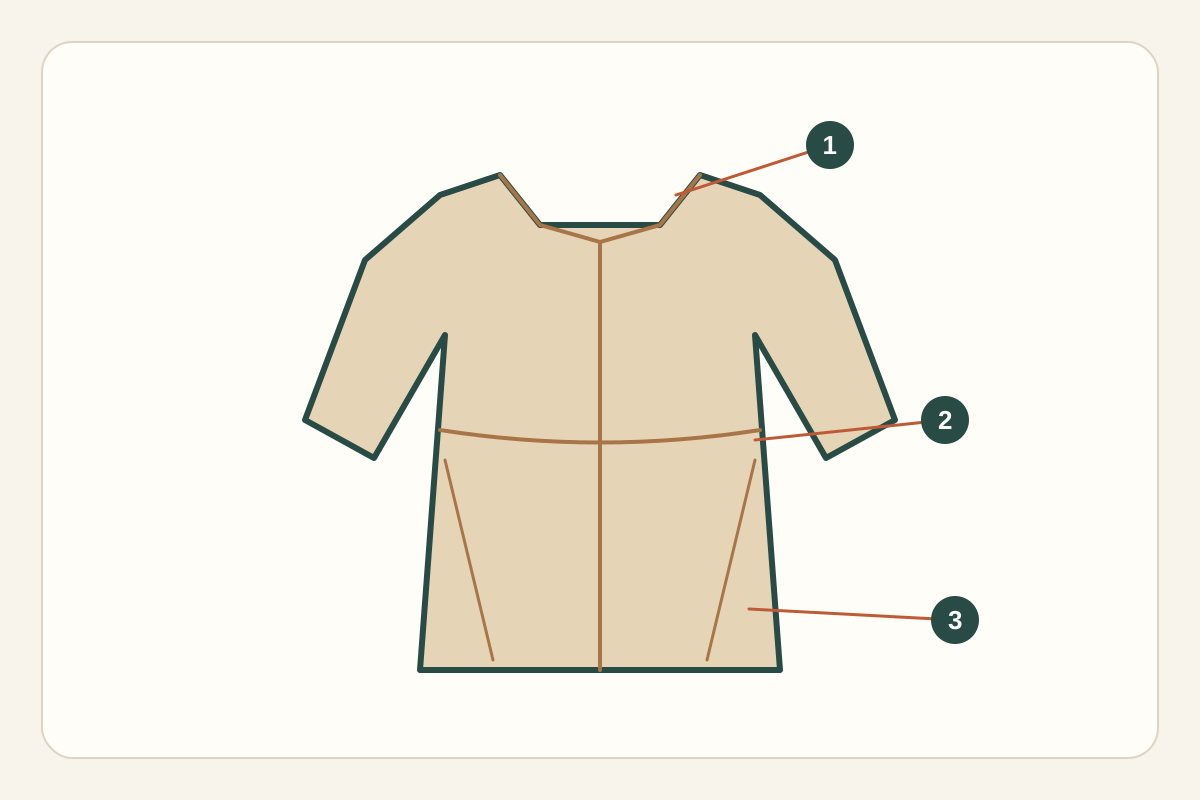
Compare collar, fastening, waist shaping and skirt seams. Mark what you can actually see and what you know only from the catalogue. A colour or lapel alone cannot establish a region.
The surdutas introduces the influence of urban tailoring, while trinyčiai provide a useful comparison of material and wearing practice. Treat these as related terms rather than interchangeable names.
Reading the diagram
The numbers identify observation areas: 1 – collar, 2 – waist, 3 – skirts. This original educational illustration is neither a drawing of TK 318 nor a sewing pattern.
When commissioning a reconstruction, ask which historical object informed it and which materials or details were changed. A specific source is more informative than a general claim of authenticity.