- Field
- Traditional clothing and footwear
- Type
- traditional craft
- Heritage status
- well attested
- Context
- lapels, fastening, waist
Features to look for
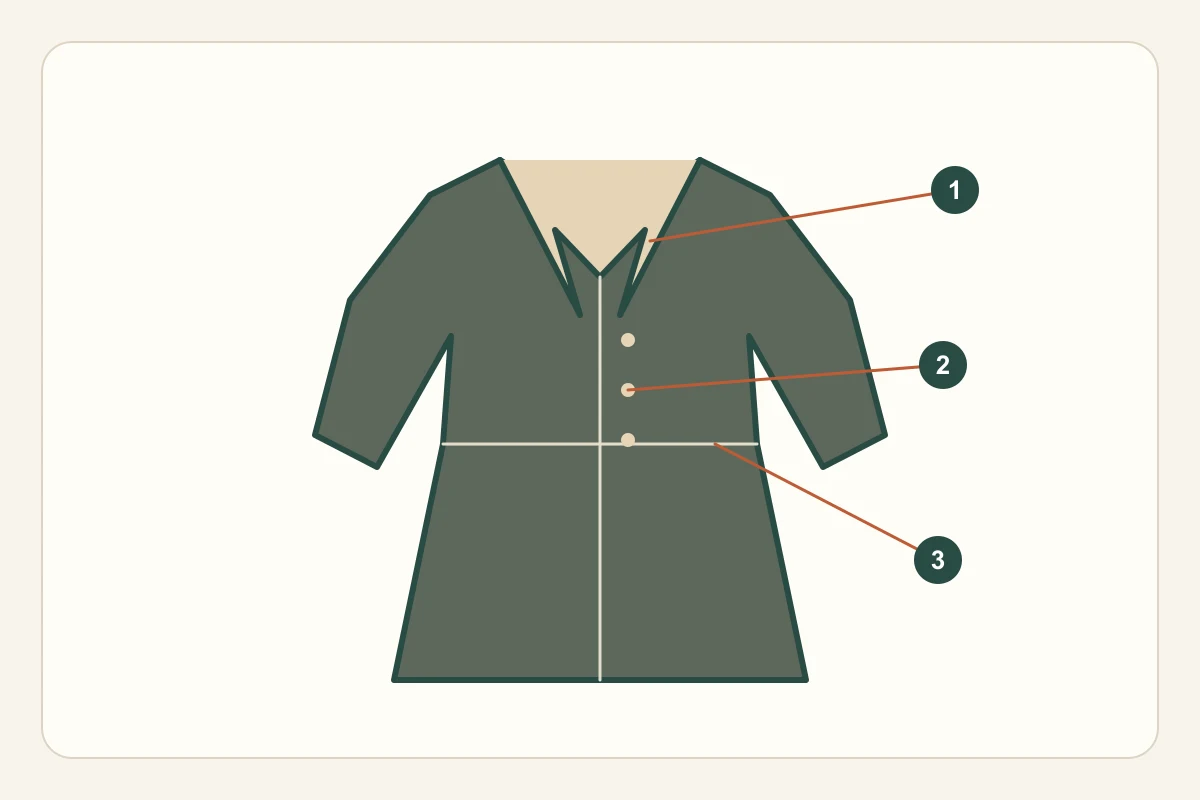
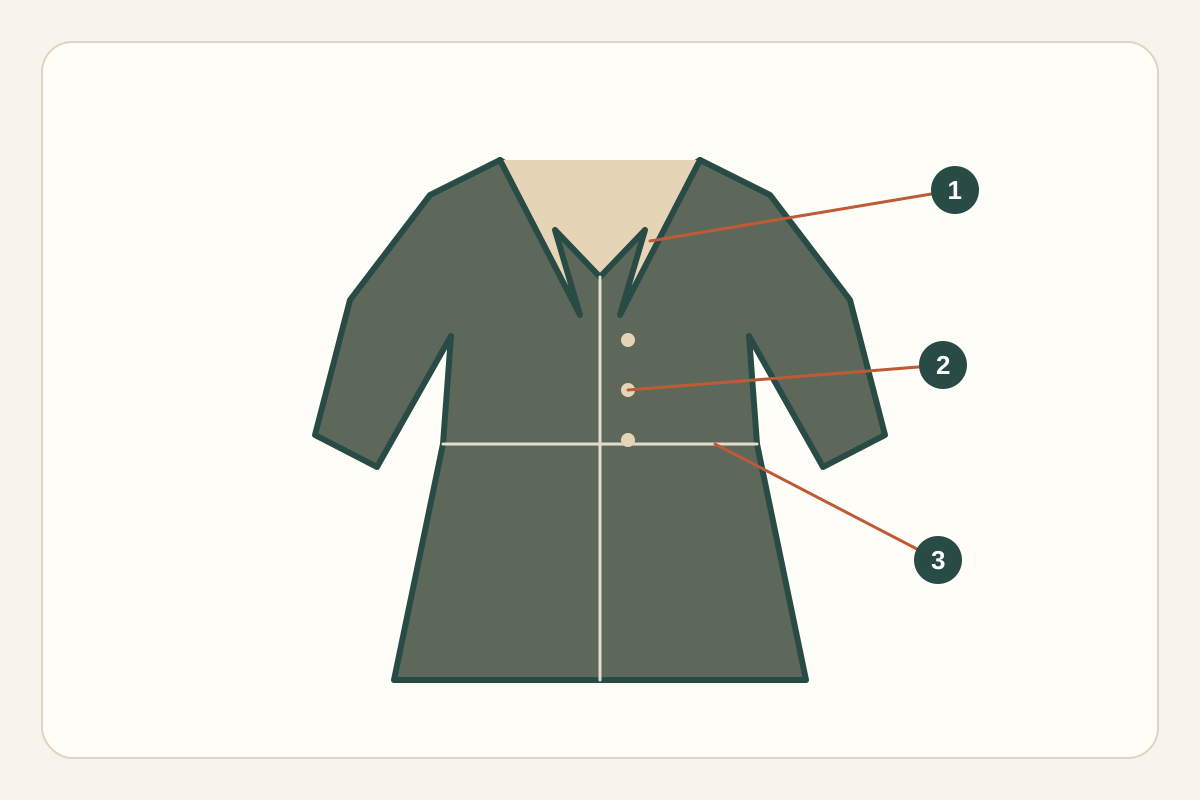
The surdutas is associated with a fitted cut, lapels and a button fastening. Length and single- or double-breasted arrangements vary. A long dark garment in a photograph is not sufficient identification.
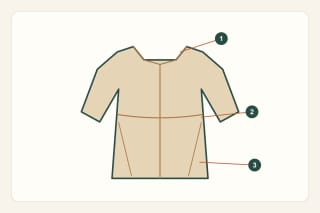
Look for the waist seam, the widening lower part and visible lapels. Comparing front and back is more useful than relying on a portrait that shows only the face and shoulders.
Rural dress and urban fashion
The Lithuanian National Culture Centre places the surdutas among later garments that replaced the sermėga. This challenges the idea that traditional rural clothing was static or isolated from city fashion.
A photograph dates an image, not necessarily the making of the clothing. A festive garment might remain in use for years, so its wearer’s age cannot establish its production date.
Layers in an outfit
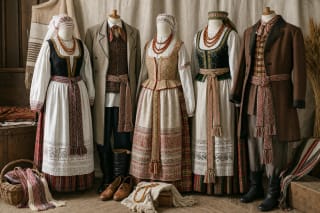
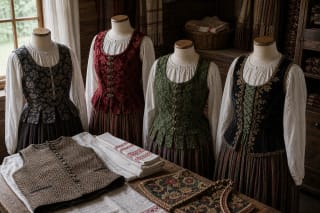
A complete outfit lets you distinguish shirt, waistcoat and outer garment. An open front reveals those layers; displaying the pieces separately can obscure their relationship.
Record what the particular example actually shows. If the reverse of the fabric or the lining cannot be seen, do not identify its material from colour alone.
Educational diagram
Here 1 indicates lapels, 2 the fastening and 3 the waist area. The drawing directs observation without reconstructing a particular region or museum object.
An accurate sewn reconstruction requires measurements from a chosen historical example. This identification guide is not a cutting pattern: the depicted buttons and seams are not universal specifications.