- Place
- Birštonas Municipality
- Region
- Nemunas Loops Regional Park
- Type
- paved forest walking and cycling route
- Address
- Žvėrinčius Forest, Birštonas
- Coordinates
- 54.61289, 24.01687
- Visit duration
- 1-2 hours for a short section; 2-4 hours for a longer walk or ride
- Best time
- a dry spring or autumn morning, or early in summer before bicycle traffic increases
Žvėrinčius pedestrian and cycling trail, Žvėrinčius Forest route, Žvėrynas Forest Trail
A forest route of adjustable length, not a single point
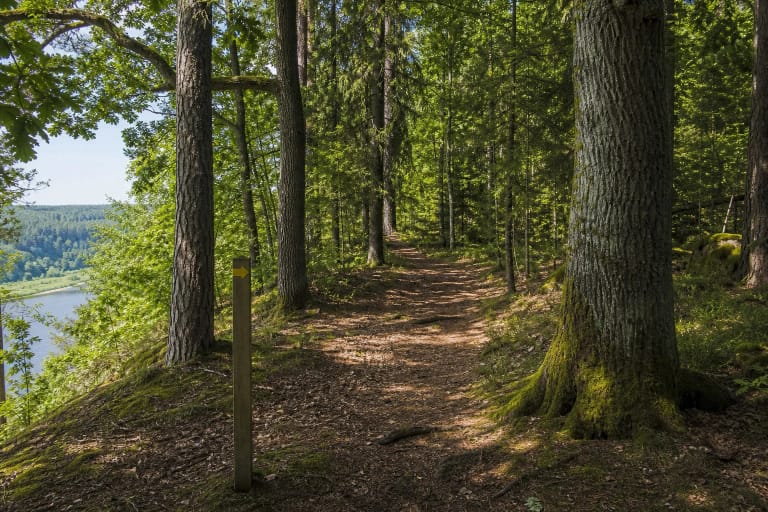
The Žvėrinčius trail crosses the forest inside the Prienai-Birštonas loop of the Nemunas and serves both walkers and cyclists. The Birštonas cycling guide gives 15 kilometres for the complete paved route, but several entrances, links and rest areas mean that covering the full distance is optional. A short out-and-back walk or a connection with paths in Birštonas and Prienai works equally well.
The map marker on this page is an OpenStreetMap point labelled for the trail on the Birštonas side, not its only official start. Before a long outing, decide where to leave a vehicle and how to return, because loops and distances proposed by different navigation apps may vary.
A pine forest where bark deserves a closer look
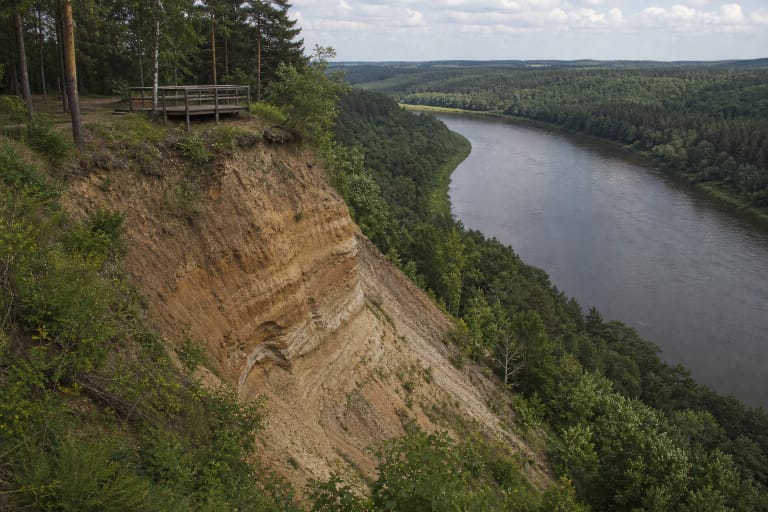
According to VLE, Žvėrinčius Forest covers 680 hectares, 625 of them wooded. Pine accounts for about 82 per cent of the stands and their average age is 79 years. The raised plain descends in terraces towards the Nemunas in the north, so even the smoother paved route is not entirely uniform.
The protected-areas authority highlights an unusual collared form of Scots pine. Plates of bark form ridges like small roofs or collars around the trunk, a feature developing in trees roughly 40-60 years old. The forest also contains four protected habitat areas and two locations of Red Data Book plants, good reasons not to push off the route into sensitive ground.
A royal-hunting name and contemporary sculpture
Žvėrinčius is not a modern marketing name. In the fifteenth century the forest served the hunting estate of the grand dukes of Lithuania, while the almost closed Nemunas loops helped hunters drive and contain game. Poet Maciej Kazimierz Sarbiewski later mentioned the forest in his cycle Forest Games.
An earlier wellness path was adapted for pedestrians and cyclists in 1999 and sections were subsequently reconstructed. Carvings by artists from Prienai and Birštonas, rest sites and exercise areas now punctuate the route. In 2021 Birštonas Municipality announced ten new works by professional woodcarvers depicting forest animals and woodland life.
Surface, shared-path etiquette and preparation
The main route is asphalt, making it suitable for city or touring bicycles, roller skates and many pushchairs. Side forest roads can be sandy, wet or muddy. Walkers should keep to one side, while cyclists should slow down near children, bends, sculptures and rest areas.
The trail is freely accessible outdoors with no tickets or set hours. Carry water, phone navigation and tick protection for a longer section; after dark, lights and reflectors are essential. Storms, snow and repairs can alter conditions, so consult current Birštonas Municipality and protected-area notices before a special journey.
A landscape of post-war resistance
Žvėrinčius history did not end with royal hunts. VLE states that from 1944 to 1952 the forest formed a boundary between the operating territories of the Geležinis Vilkas unit in the Tauras partisan district and the Dzūkai unit in the Dainava partisan district. The fact places the route within a wider landscape of post-war resistance even where no dedicated exhibition stands beside the chosen section.
Connect this historical layer with verified sources rather than treating every story heard in the woods as evidence of a particular event. If you encounter a memorial or another marked object, leave it undisturbed, read its inscription and seek fuller context in museum or archival material.