- Place
- Ukmergė District Municipality
- Region
- Ukmergė District
- Type
- Catholic church and sacred-heritage site
- Address
- S. Morkūno a. 2, Žemaitkiemis, 20368 Ukmergė District Municipality
- Coordinates
- 55.30519, 24.97620
- Visit duration
- 20–40 minutes; longer if the church is open or Mass is taking place
- Best time
- during daylight, respectfully fitting the visit around the parish liturgical schedule
Žemaitkiemis Church
Žemaitkiemis Church of St Casimir by the lake
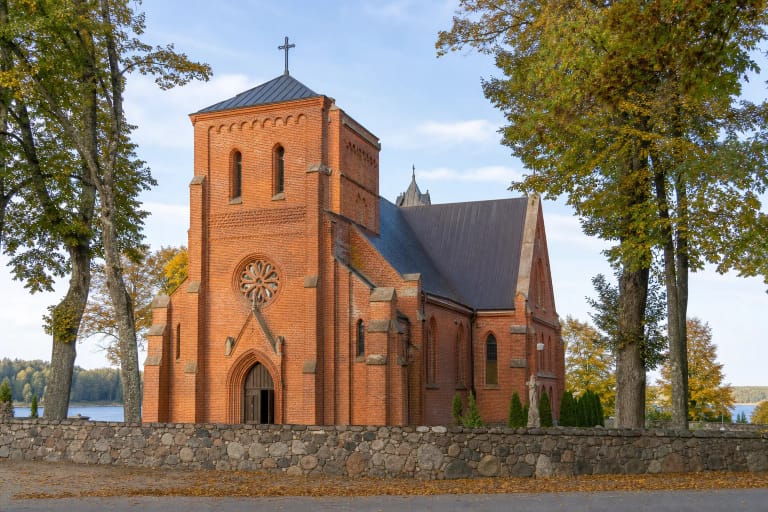
Žemaitkiemis Church of St Casimir stands in the town of Žemaitkiemis, Ukmergė District, by the south-western shore of Žemaitkiemis Lake. The practical address is S. Morkūno a. 2, and the map point leads to the church grounds rather than to the town centre.
The present sanctuary is dated to 1902 and belongs to an active parish. A visit is therefore both an architectural stop and an encounter with a sacred space where visitors should be respectful during Masses, funerals or other services.
Building history after the 1892 fire
The church was built in 1899–1902 after a fire in 1892 destroyed the earlier sanctuary. The present building is therefore dated to 1902, while older dates belong to earlier Žemaitkiemis churches.
Žemaitkiemis’ sacred history reaches further back: Jesuit churches stood here in the 17th–18th centuries. Those are earlier parish stages, not the construction date of the red-brick church visible today.
Single-tower red-brick architecture
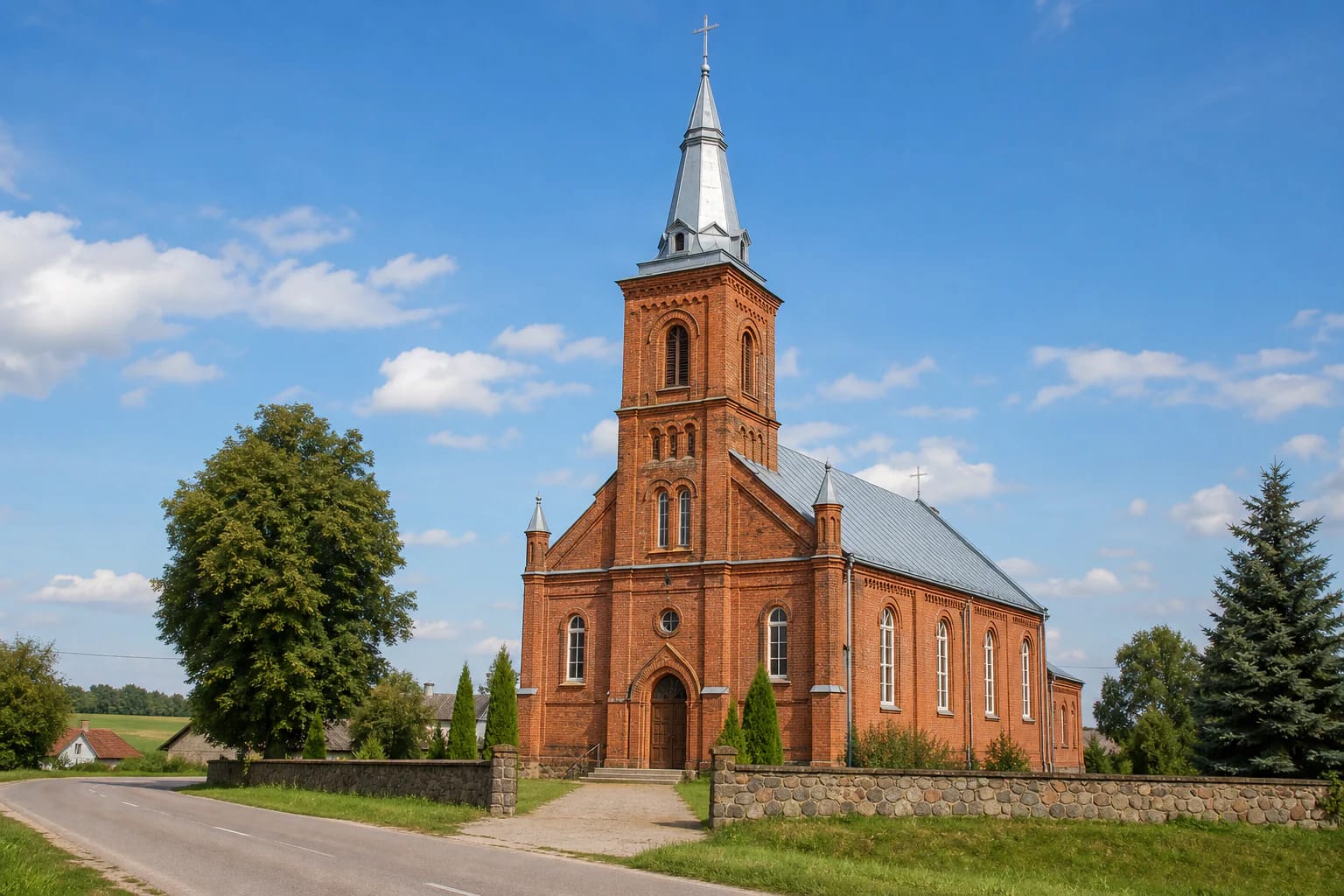
The building has a rectangular plan and three naves, built from red brick. Its silhouette is shaped by a massive central tower with a narrowing top, making the church easy to recognise from the approaches to the town.
Do not confuse this sanctuary with Lithuania’s two-tower churches or with another place of a similar name. The key visual marker here is one tall central tower and a brick-masonry volume scaled to a small town.
Interior heritage and parish tradition
Cultural-heritage descriptions mention a 19th-century painting of the Assumption of the Blessed Virgin Mary and wooden figures of Jesus. These works are documented interior heritage, but seeing them depends on the church being open at the time and on liturgical arrangements.
The Žemaitkiemis parish remains active, with traditional Žolinė celebrations and Masses. Dates and arrangements can change, so religious feasts follow their own schedule rather than serving as daily tourist opening hours.
Planning a visit
See the church façades, central tower and grounds when you arrive, and enter only through open doors or at a time acceptable to the parish. No permanent tourist timetable, admission price, toilet or parking arrangement is listed publicly.
The heritage record identifies the church site, while S. Morkūno Square helps with orientation in town. If you travel for Žolinė or another feast, check parish information and allow extra time for people for whom the church is a place of prayer, not a tour stop.