- Place
- Kaunas City Municipality
- Region
- Kaunas
- Type
- community outdoor gallery in a residential apartment courtyard
- Address
- 21A E. Ožeškienės Street, residential courtyard, Kaunas
- Coordinates
- 54.89931, 23.90486
- Visit duration
- 25-45 minutes, longer if you read the artwork stories and QR material
- Best time
- a weekday morning or early afternoon between 9:00 and 19:00, when the yard is bright and visitor numbers are lower
Kiemo galerija, E. Ožeškienės Street Yard Gallery, Yard Gallery Kaunas
The gallery door is a residential driveway, not a museum lobby
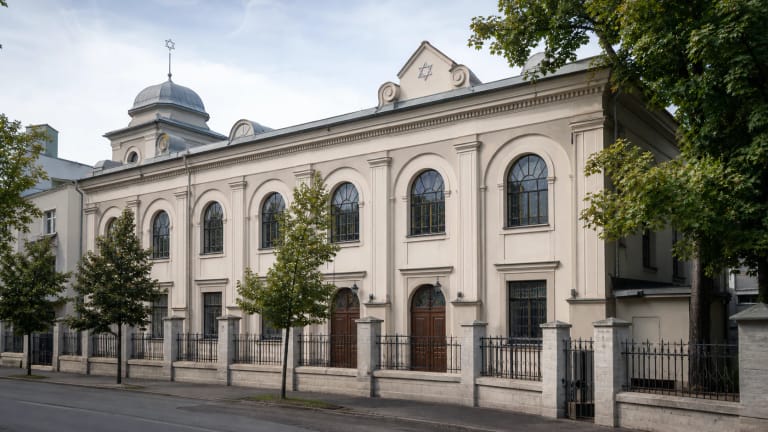
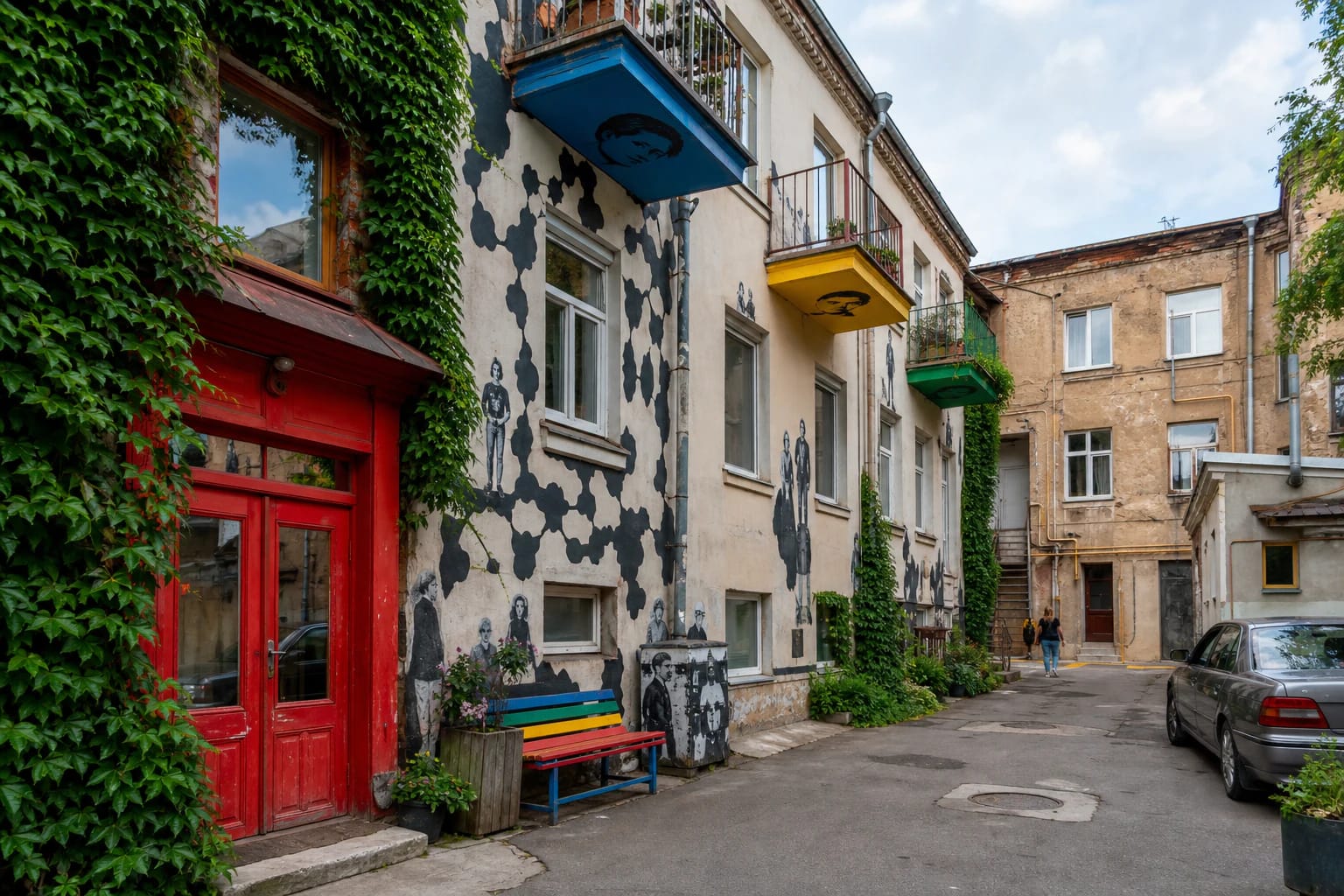
The Yard Gallery is usually addressed as the courtyard at 21A E. Ožeškienės Street, close to Kaunas Choral Synagogue and the eastern end of Laisvės Avenue. The marker at 54.8993123, 23.9048598 is a representative point among several artwork walls, not a ticket desk, verified parking space, or sole visitor entrance. Enter from E. Ožeškienės Street and look across different buildings, balconies, gates, and small objects, because the gallery has no single exhibition room.
Its essential difference from an ordinary street-art route is that people still live here. The official rules explicitly describe the 36 apartments as the residents' private space. Only the yard is opened to visitors: stairwells, flats, balconies, and personal belongings do not become exhibition rooms simply because an artwork stands nearby.
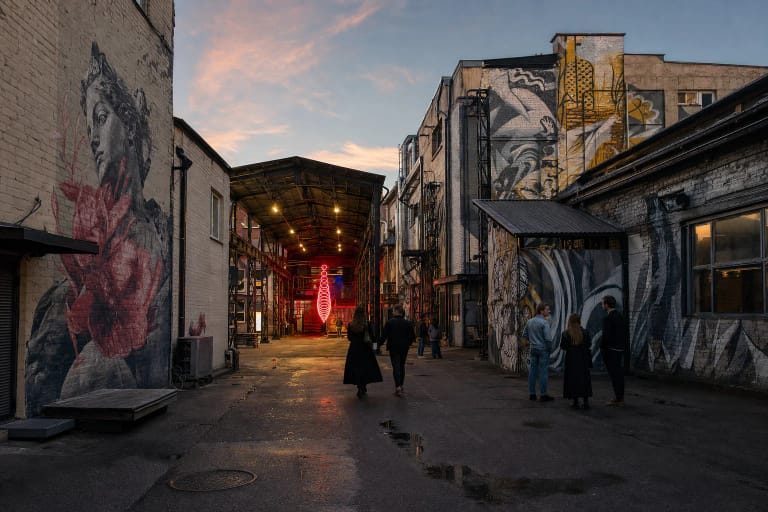
Make a slow circuit of the yard before returning to individual stories. Some pieces are large, but many details sit beneath balconies or across pipes, doorways, benches, and small wall sections. That shift in scale explains why the place feels more like an evolving courtyard scenography than a collection of separate murals.
The documented 2014 beginning grew from distance between neighbours and family albums
Vytenis Jakas's 2014 project account says that many Jewish families lived among these buildings between the world wars. Long-term neighbours remembered shared celebrations, a communal table, a fountain, and flowers grown by the Dapkevičius sisters. The fountain and trees later disappeared, cars multiplied, the yard became parking, and neighbourly ties weakened. Art was chosen not merely to decorate walls but to restart conversations about the place.
The early sequence shows how the method worked. A cat in a window with yellow shutters encouraged people not to litter. Charlie Chaplin was painted beside a residents-only message as both an irony and an invitation into the gallery. Jakas then asked neighbours for family photographs and stories, transferring the people they chose onto the inner walls.
The portraits are therefore not anonymous decoration. Some preserve relatives of current residents; others concern families driven from the courtyard or returning to seek a lost home. The 2014 account connects the image of Dita and Juda Zupavičius with photographs given by Dita herself and her story of family loss. Such pieces are best read through the project's own texts rather than by inventing symbolism for an unfamiliar face.
Neighbours and artists expanded portraits into a whole-yard scenography
The gallery is not a one-person monologue, although Vytenis Jakas remains its initiator and curator. Neighbours supplied photographs, shared memories, grew flowers, and added handwork. The 2014 account names resident Evaldas Augustinas Kančelskis, who decorated gas pipes with crochet. Other artists later reshaped larger facades.
A 2021 municipal account says that Staselė Jakunskaitė's Dream Tailor Shop encouraged a more colourful approach to the grey outbuildings, followed by the Black and Blue Houses at Jakas's initiative. The White House was developed with the Kaunas 2022 Fluxus Labas community programme, and residents and visitors assembled its mirrored life flowers during open workshops.
In 2022, Jakas unveiled the Rooms of Secrets cycle, dividing a facade into imagined rooms carrying stories of former and present residents. The official virtual gallery also identifies the portrait of Eliza Orzeszkowa, Jokūbas Grinbergas's House, portraits of Saulius and Ritma, Petriukas, Kazimiera, Bronė, Tomas and Jonas, and numerous other works. The list helps with names, but the state of an outdoor collection must still be checked on site.
Use the official virtual gallery instead of inventing meanings
It is tempting to assign a new legend to every colour or figure in the yard. Yet many works have named prototypes and a story recorded by the project. Nijolė's Cat concerns order in the courtyard, the Dream Tailor Shop has an identified artist, and the sixth Room of Secrets considers the history of Vincas Grybas's monument to Vytautas the Great. These are documented narratives, not generic street-art symbolism.
The official virtual gallery supplies photographs and individual descriptions in Lithuanian and English. QR codes in the yard open context for some pieces, but visitors should not expect identical labelling beside every object. Open the artwork list on a phone before the visit, then compare it with what remains visible in the physical courtyard.
On 21 July 2026, the search-visible Google place listing showed 4.8 out of 5 from roughly one thousand reviews. That reflects strong visitor interest, not the number or condition of works available on a particular day. Ratings and review counts change, so use the official rules and current project information when planning access.
Self-guided access is free from 9:00 to 19:00, but quiet is a condition
On 21 July 2026, the official site listed the Yard Gallery as open every day of the week from 9:00 to 19:00. It published no ticket or self-guided admission desk, while the project homepage requested voluntary support. Because this remains a privately lived-in space, check those hours again before travelling a long distance.
The rules ask visitors to speak quietly, react with restraint, avoid littering, and stay out of stairwells and apartments. Photograph the shared courtyard art respectfully, but do not film through windows, block vehicles, or turn private balconies into props for a photo session. What is a sight to a visitor is someone else's home.
Games, quizzes, orienteering events, weddings, and other organised group activities require advance agreement with curator Vytenis Jakas through the contacts on the rules page. A few friends visiting independently are not an event, but a larger tour should still avoid filling the narrow entrance.
Renovation and daily use mean that the gallery cannot stand still
At the end of June 2026, renovation was reported at 19 E. Ožeškienės Street. Its eastern wall borders the gallery and had accumulated works and local stories over more than a decade. It was not yet clear how much could be preserved or recreated, so this guide deliberately does not promise that every previously photographed piece remains in its old position.
In practice, visitors may encounter scaffolding, residents' cars, maintenance, or a temporarily covered wall. The surfaces are mixed, the approach is narrow, and some details must be viewed from corners between occupied buildings. No comprehensive official step-free route or adapted-toilet information is published, so discuss specific mobility needs with the project before visiting.
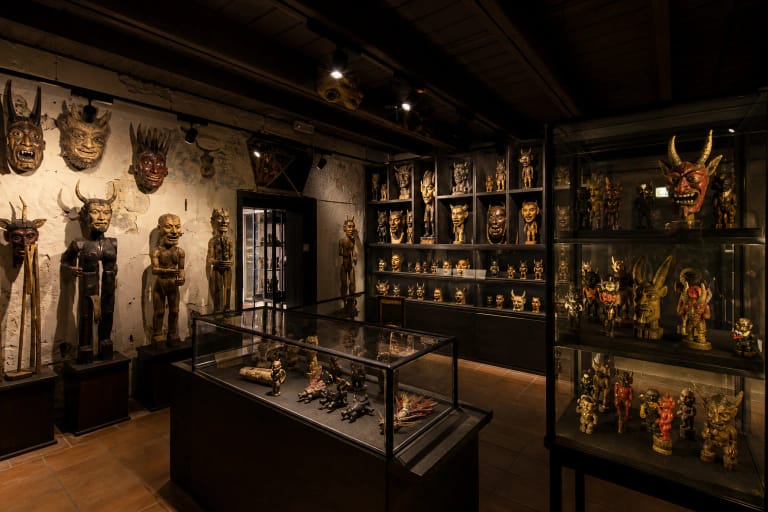
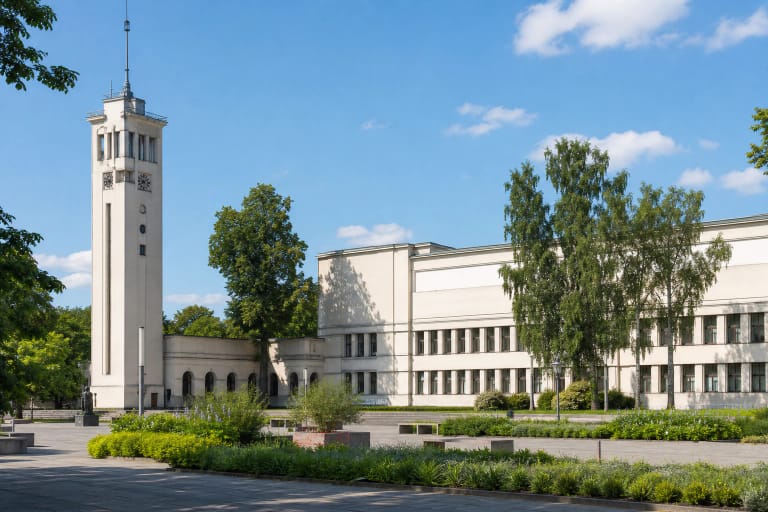
Allow 25-45 minutes for a quiet visit and arrive on foot. Do not park inside the gallery yard, where spaces and vehicle access serve residents first. Kaunas Choral Synagogue, the Devils' Museum, and the M. K. Čiurlionis National Museum of Art are natural onward stops, each with its own visiting arrangements.