- Place
- Suginčiai Eldership, Molėtai District Municipality
- Region
- Aukštaitija
- Type
- a spring in the state-protected Skudutiškis Stones and Spring Complex
- Address
- Skudutiškis, Suginčiai Eldership, Molėtai District
- Coordinates
- 55.38545, 25.44677
- Visit duration
- 30-60 minutes for the spring, stones, and woodland clearing; longer if you walk from Skudutiškis
- Best time
- daylight and dry weather; slopes, stones, and the forest path can be slippery after rain
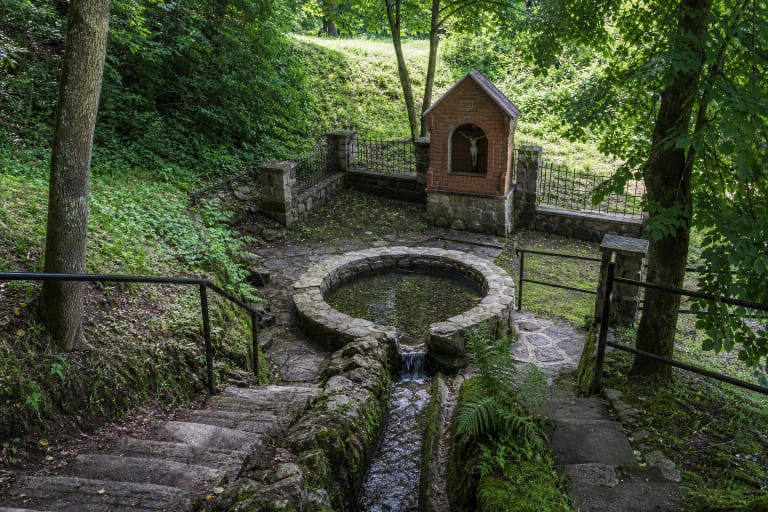
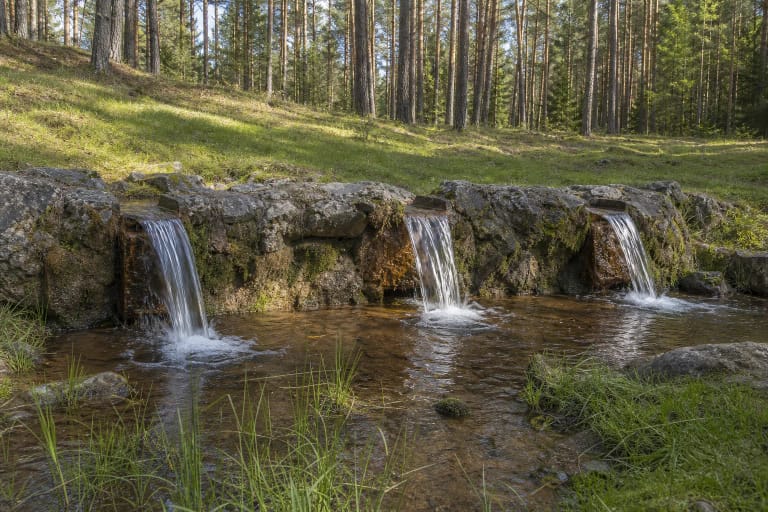
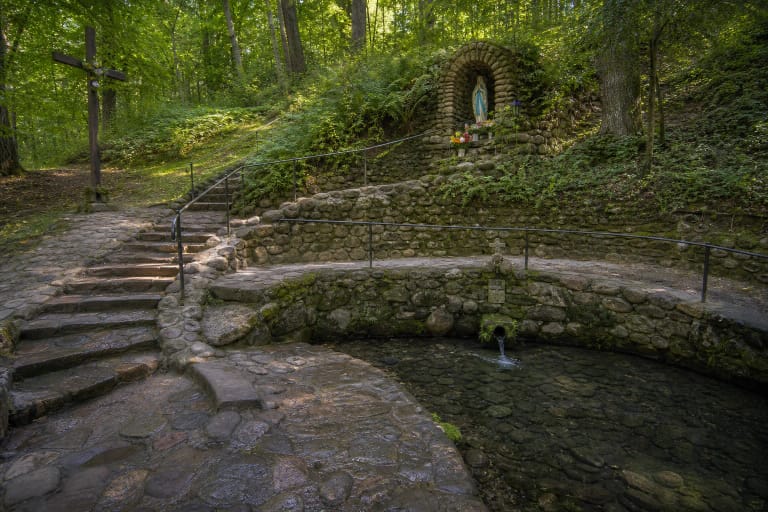
Spring of the Skudutiškis Stones and Spring Complex, Skudutiškis little spring
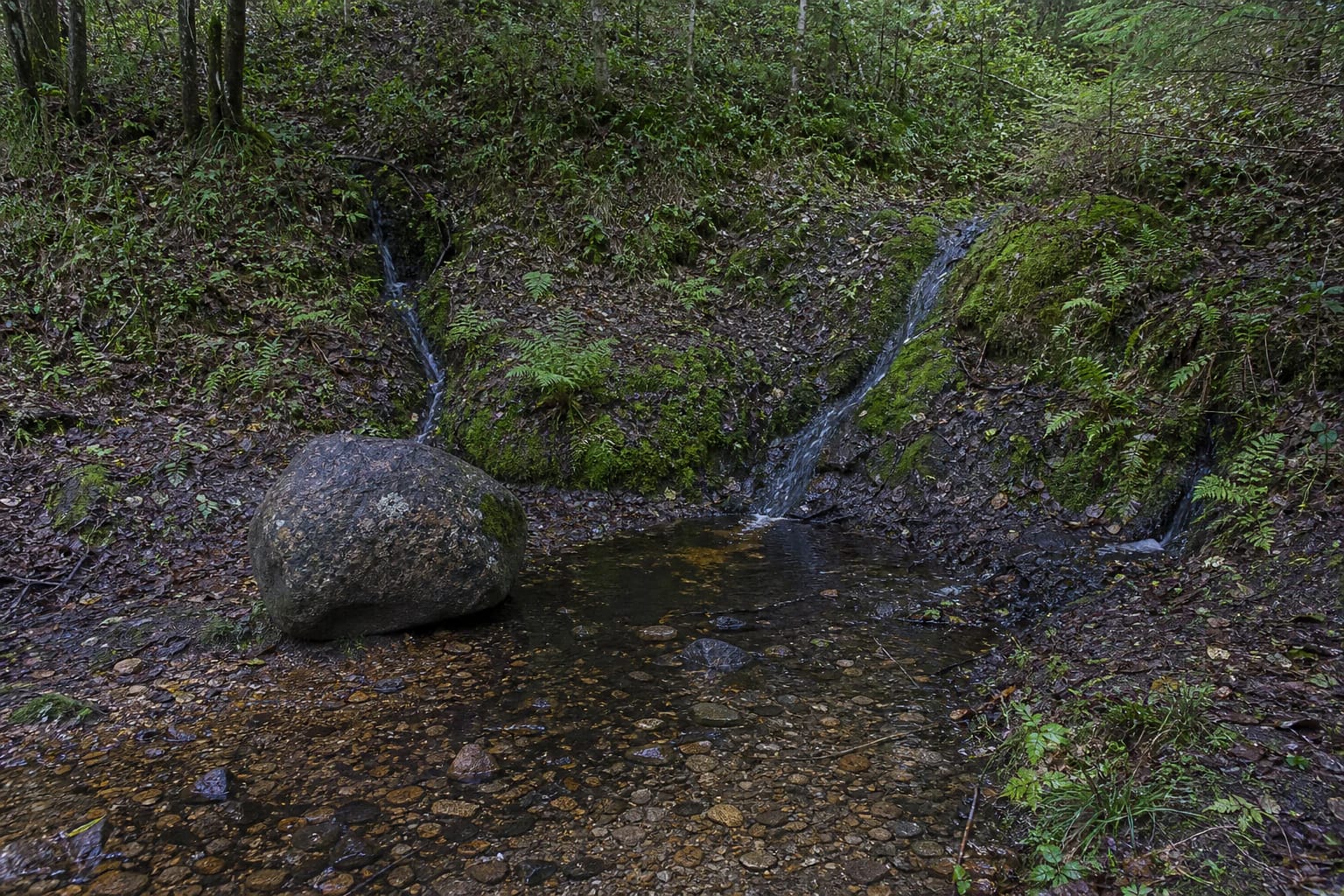
A spring in a woodland clearing near Skudutiškis
Skudutiškis Spring lies in Skudutiškis village, Suginčiai Eldership, Molėtai District, about 700 metres north-west of the Skudutiškis Holy Trinity Church. In the woodland clearing, water from two springs emerging on the slopes joins before flowing towards the Juodisa.
The visitor point for the Skudutiškis Stones and Spring Complex is 55.385453, 25.446774. It helps locate the clearing, but the final approach depends on the forest path, water level, and season.
The Geological Survey describes a well-kept path from Skudutiškis to the spring. That does not guarantee dry footing after a downpour or forestry work, so wear shoes suitable for wet woodland ground.
Water from two flows and its measured properties
The Geological Survey describes the spring water as fresh and rich in minerals. It gives total mineralisation of 569 mg/l and total hardness of 6.34 mg-equivalents per litre; the water is hard, with hardness that can be removed relatively easily by boiling.
The same description gives specific test values: nitrate at 0.51 mg/l, ammonium at 0.47 mg/l, and dissolved iron at 0.27 mg/l. These are useful hydrogeological data, but they are not a 2026 microbiological drinking-water certificate.
The Geological Survey description lists no water-capture installation. Do not fill a bottle from an unclear puddle, wash containers in the stream, or drink simply because the water looks clear. Use the water only if a new official notice at the site explicitly confirms it.
Footprint stones and a living sacred-site tradition
The spring is part of the wider Skudutiškis Stones and Spring Complex. At its centre is a dark-grey granite stone with a cross-like vein and an indentation called Mary's footprint; nearby stones carry the names God's footprint, Vytis cross, and Jesus's heart.
The Geological Survey field guide describes visitors washing, drawing water, and praying at the stones. Molėtai tourism information also calls the spring sacred in local stories. These statements describe a living tradition, not proof of healing properties.
Marks on the stones are vulnerable, so do not scratch them, deepen indentations, or take chips. Preserving the quiet and the material of the place matters more than carrying home a supposed talisman.
The spring in a state-protected complex
A Molėtai District Municipality planning document lists the spring of the Skudutiškis Stones and Spring Complex as a state-protected object with unique code 23159. Other stones in the complex have separate heritage entries as well.
The Geological Survey field guide places the site at the confluence of the Juodisa and an unnamed right tributary. The relationship between spring, stream, stones, and clearing is more important than one decorative outlet, so experience the whole complex rather than separating the water from its setting.
Maintenance should not mean making new tracks across wet leaf litter or rearranging stones. If branches, mud, or a naturally changed channel are present, walk around them rather than trying to reconstruct the sacred site yourself.
Planning a visit
On arrival in Skudutiškis, begin by the church and continue on foot towards the spring and stones. Official descriptions mention about 700 metres, but the actual walk from a lawful parking point will depend on where you begin.
No separate ticket, ticket desk, or opening hours are published for the spring. Leave a vehicle in the village or another clearly permitted place, without blocking access, and do not drive a forest lane to the water unless its surface and local signs clearly allow it.
Clear water and a container left at the spring do not prove that it is safe to drink. Without a recent official laboratory test, do not drink it untreated; stay out of the saturated channel and do not disturb the stones around the springs.
Visit without harming the spring or stones
Slopes and stones can be slippery after rain, and the water edge may freeze in winter. Do not enter the channel barefoot, lift children onto the stones, or let a dog trample the spring outlets.
Do not collect stones, strip moss, leave coins in the water, use soap or other products, or light fires. If you pray or draw water according to your tradition, do so without disturbing other visitors or changing the place.
Skudutiškis Spring is valuable through its relationship: water, stones, clearing, Juodisa tributary, and stories work as one place. A quiet, unhurried visit understands it better than driving as close as possible or measuring only the depth of the water.