- Place
- Akmenė District Municipality
- Region
- Žemaitija
- Type
- an active open-pit clay quarry and industrial-geological excursion site
- Address
- Pragalvio Street 1, Draginiai, Akmenė District, Lithuania
- Coordinates
- 56.17367, 22.84613
- Visit duration
- according to the pre-arranged excursion programme; independent visiting is prohibited
- Best time
- in daylight, on a pre-arranged tour and in drier weather; clay slopes may be slippery after rain
Šaltiškiai Clay Deposit, Lithuania's Mars, Šaltiškiai molio karjeras
Šaltiškiai Quarry is an active industrial site near Papilė
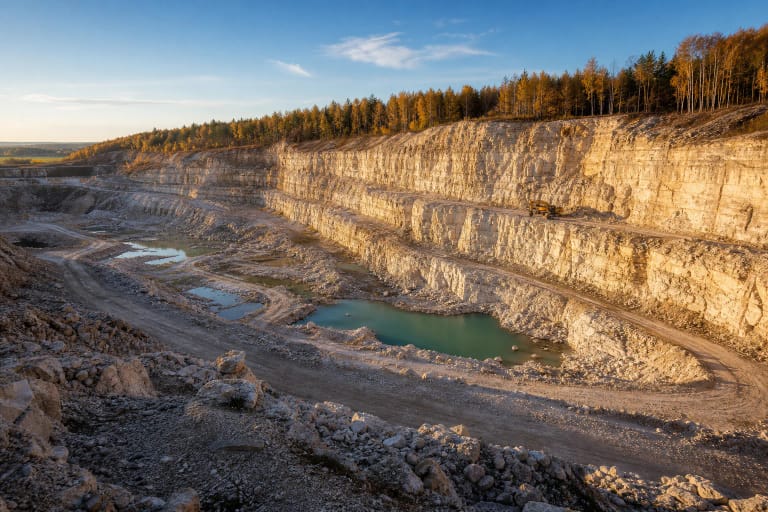
Šaltiškiai Clay Quarry lies in Akmenė District, around Draginiai village, roughly 5-7 km northeast of Papilė. The municipal visitor guide gives the address as Pragalvio Street 1, Draginiai; the coordinates 56.173667, 22.846132 identify the quarry area, but always agree the exact excursion meeting point with the guide.
This is not an ordinary geological trail, viewpoint, or abandoned quarry that can be entered through the first gap in a fence. Heavy machinery operates in the deposit, and steep or unstable slopes are present, so official visiting information clearly prohibits independent access.
Visitors enter only on a pre-arranged guided excursion. Akmenė District Municipality confirms that guides organise quarry tours, while its visitor guide provides contact and language information. Before travelling, agree not only on the date but also the meeting point, route, and safety conditions.
Triassic geology, rather than a tourist filter, made the clay red
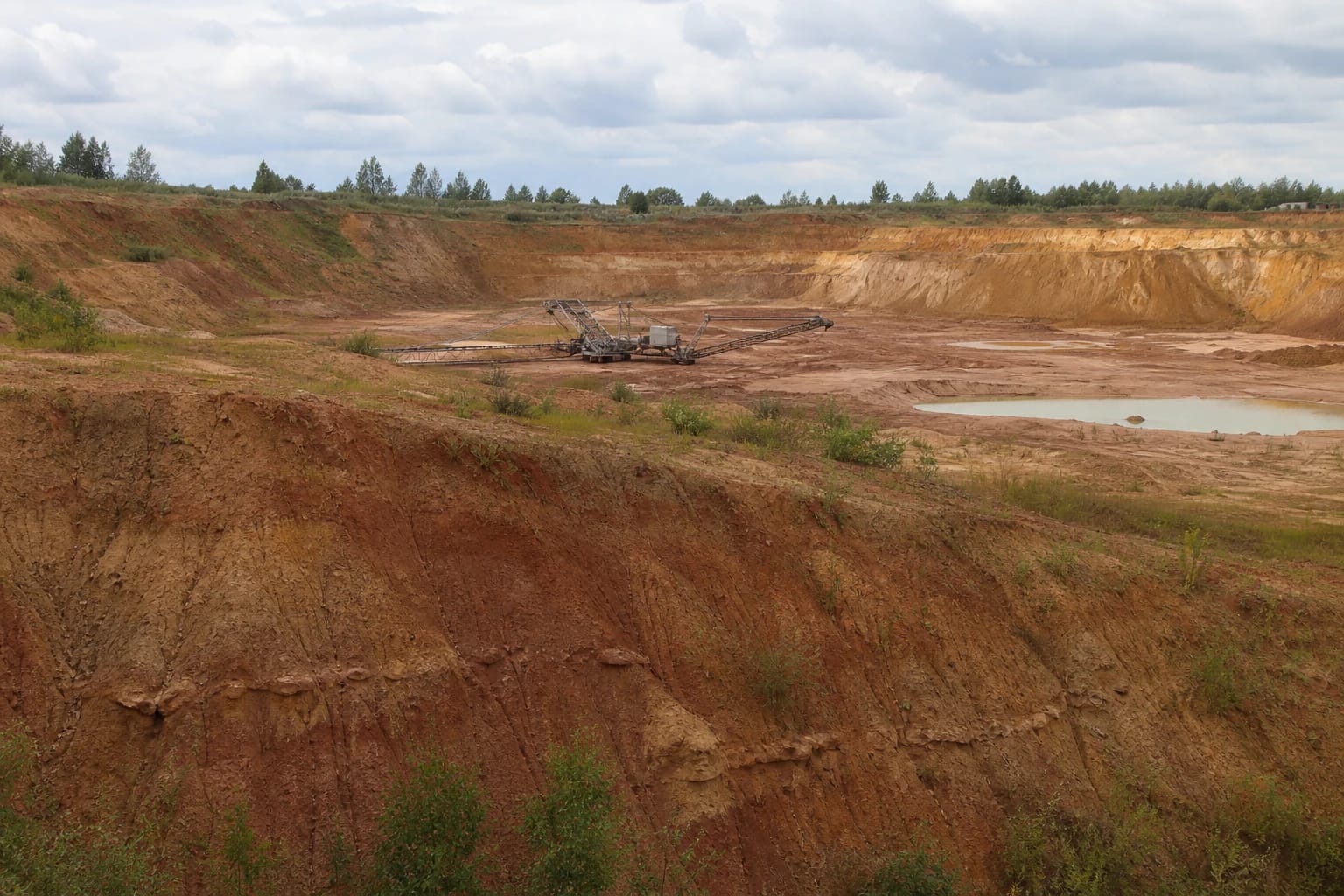
In the Early Triassic, about 250 million years ago, alluvial sediments accumulated here in a desert climate. Over millions of years, the weathering of biotite and hornblende released iron that gave the clay beds their brown and reddish-brown colour.
VLE describes the Šaltiškiai deposit as one of Lithuania's largest: its area is about 127 hectares, and its resources were estimated at roughly 8 million cubic metres in 2012. Lower Triassic Nemunas Formation clay is covered by Quaternary and Jurassic deposits, while the useful clay layer reaches about 100 m in places.
The quarry resembles a Martian landscape because one panorama brings together iron-rich clay, excavated terraces, sparsely vegetated slopes, and water basins. It is a comparison, not a reason to take risks for a photograph: view the clearest layers from the safe point chosen by the guide.
The mining story can be read in the railway and machinery
Šaltiškiai clay is used to make cement, and VLE notes that a railway connects the deposit with Akmenė Cement in Naujoji Akmenė. Municipal information describes walking and tracked excavators, so the industrial machinery here is not scenery installed only for visitors.
The old section operated from 1971 to 1992, yielding about 17 million cubic metres of clay before being reclaimed as an artificial lake approximately 52 m deep, 1 km long, and 600 m wide. VLE says the new section has been worked since 1983, so photographs from different years may show different stages of the quarry.
On an excursion, notice not only the colour but also how the railway, excavator scale, terraces, and water explain the material's journey from geological layer to cement production. Approach machinery, rails, slopes, or water only when the guide and operator rules allow it.
The phytosaur find adds a palaeontological layer
In 2010, two jaw fragments and three teeth of a phytosaur were found in the Šaltiškiai clay quarry. VLE calls them the oldest phytosaur remains found in the world; they are kept at the Akmenė District Museum. The quarry is therefore the geological context of the find, while the museum is the place to see the specimen.
Phytosaurs were Triassic reptiles that resembled crocodiles, but this resemblance does not mean that prehistoric animals live in the quarry's present pools. The excursion connects the age of the sediments, the underground layers, and a specific scientific find rather than inventing an entertainment legend.
Akmenė District Museum has organised expeditions to the quarry to look for rocks and boulders for its collections. Visitors should not dig, collect clay, or remove fossils independently: the quarry rules, guide, and lawful museum research take precedence over a personal souvenir.
A safe excursion begins with the rules, not a descent into the pit
Before driving out, check that the chosen guide is receiving visitors that day, which language the programme uses, how long it lasts, and where the group meets. The quarry's work rhythm, moving machinery, weather, and temporary operator restrictions can change the route.
Wear closed non-slip shoes and clothes that can get clay on them, bring water, and protect a phone from dust and rain. Sandy or muddy ground, steep slopes, and longer walking mean that the territory is not a verified pushchair route or a place for anyone who requires level access.
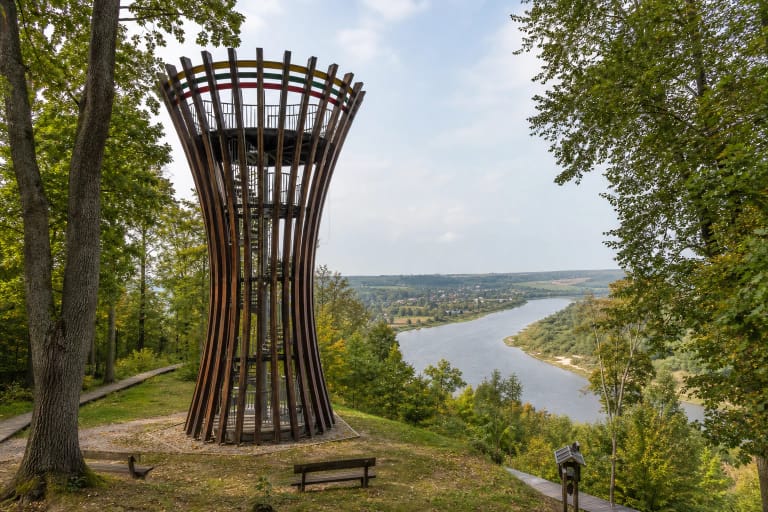
Do not cross barriers, climb quarry edges, walk beneath slopes, touch machinery, or leave the group. After the excursion, continue more safely in Ventos Regional Park, Papilė, or the Akmenė District Museum rather than looking for another unauthorised quarry entrance.