- Place
- Papilė, Akmenė District Municipality
- Region
- Venta Regional Park
- Type
- geological educational trail with an observation tower by a Jurassic-period outcrop
- Address
- Papilė, left bank of the Venta, Akmenė District
- Coordinates
- 56.14700, 22.78500
Jurakalnis geological educational trail
Jurakalnis: a window into the Jurassic period
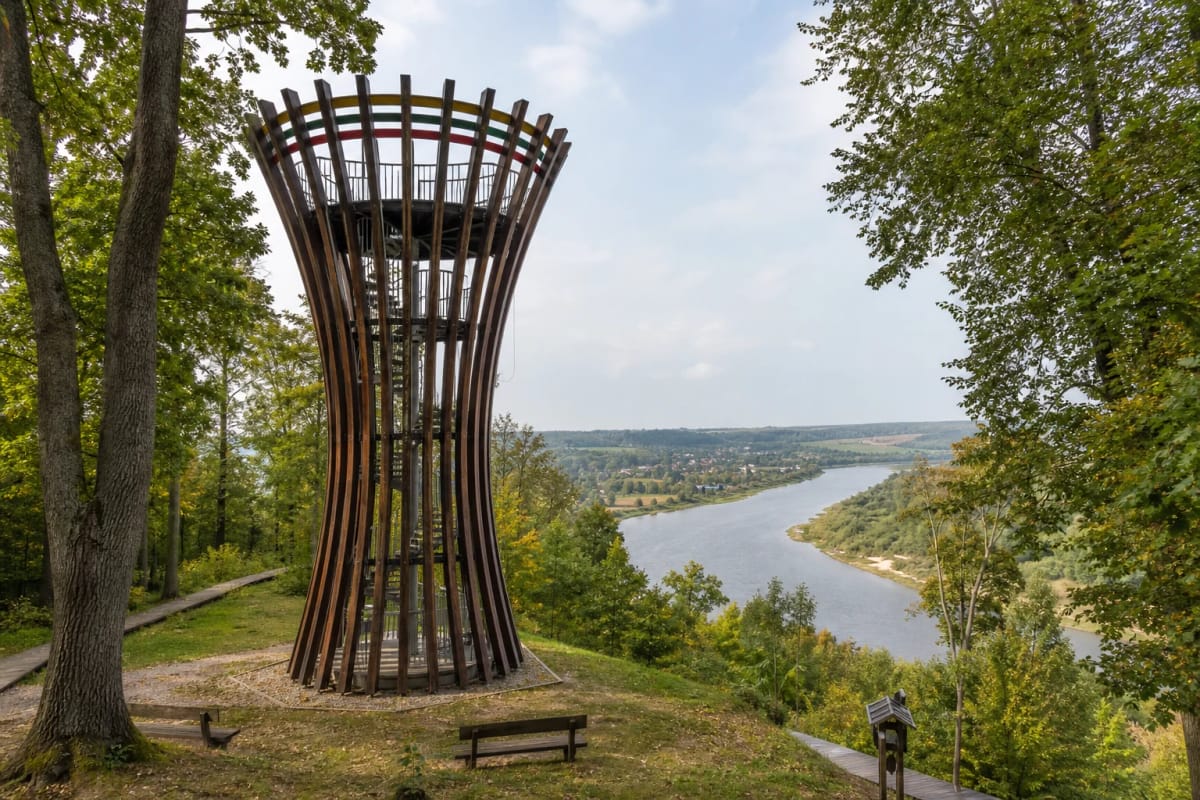
The Jurakalnis geological educational trail and observation tower are in Papilė, Akmenė District, in Venta Regional Park, on the left bank of the Venta opposite the town. The trail's principal geological feature, the Jurakalnis ravine outcrop and spur, has been protected as a geological natural-heritage object since 1960.
The outcrop matters because it exposes Jurassic-period rocks. Protected-area descriptions call it the only Jurassic-period outcrop in Lithuania currently suitable for research, opening processes from about 130-150 million years ago. That strong phrase should be presented as the protected-area assessment, not as an unsupported absolute claim.
Outcrop, ammonites, and the Venta
The outcrop is about 9.6 m high, while the ravine where it appears is 10-12 m deep and about 260 m long. Beneath a thin Quaternary layer, upper and middle Jurassic clay layers are visible. The outcrop is rich in fossil marine molluscs, especially ammonites; one species name commemorates Papilė.
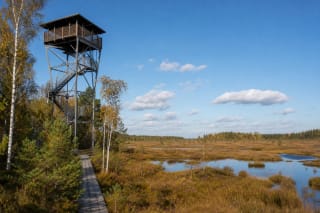
Linear erosion continually exposes the rocks, making them accessible for research. Around the site lies the scenic Venta valley with river bends, and from the approximately 15 m observation tower visitors can see Papilė, the Venta, the outcrop, and Papilė hillforts.
The trail and Simonas Daukantas memory
The roughly 4 km educational trail was installed in 2012, and the observation tower was completed in early 2015. The route begins at the Simonas Daukantas Museum in Papilė, crosses the Venta, and leads past Papilė hillfort to the outcrop, with information stands about the Earth's crust, the Ice Age, and local nature.
Papilė is inseparable from historian Simonas Daukantas, who spent his final years in the town and died there in 1864. His grave stands on Papilė hillfort with a 1930 monument by sculptor Vincas Grybas, and the town has a Daukantas memorial museum. Jurakalnis therefore joins geology with Lithuanian cultural history.
How to visit Jurakalnis Trail
The trail and tower can be visited freely and without a ticket; allow one to two hours for the full route. At research time, protected-area information stated that descent by stairs from the tower toward the Venta may be restricted because of landslide risk, so check the latest information before travelling.
The popular nickname about a dinosaur-age graveyard is only a vivid phrase: the fossils found here, ammonites and belemnites, are marine molluscs, not dinosaurs. Jurakalnis combines well with the Daukantas Museum, Papilė hillforts, Akmenė quarries, and other Venta Regional Park sites.